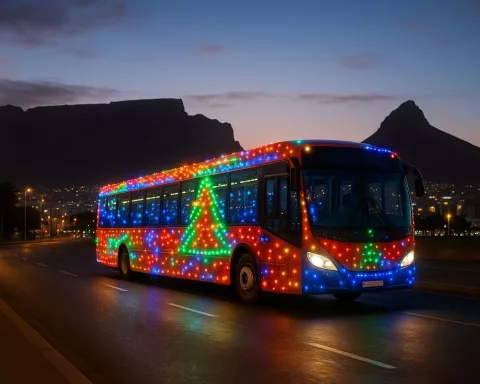
Cape Town’s holiday traffic is a huge mess, thanks to a tiny problem: drivers ‘creeping’ into busy intersections. This little move blocks everything, making traffic jams way worse and even stopping emergency vehicles. Things get even tougher with more cars and hot weather. So, don’t be a ‘creep’ and keep those intersections clear!
Why does traffic get so bad in Cape Town during the festive season?
Cape Town’s festive season traffic jams, particularly due to “creeping” into blocked intersections, are worsened by a 30% increase in vehicles, high temperatures affecting braking, and the psychological rush of holiday drivers. This micro-habit significantly reduces traffic flow, causing extensive delays and potentially blocking emergency services.
Part 1 – The Domino in the Driver’s Seat
Cape Town’s summer spirit is loud: squeaky beach thongs, ice-cream drips, rental-car parcel shelves sagging under bodyboards. Yet the season’s unofficial soundtrack is the hiss of stationary brake pads and the low thud of forehead-against-steering-wheel. Within hours of schools closing in early December, the city’s arteries burst at the seams. Into this joyful chaos the municipality has spray-painted a two-word warning that looks like a Twitter burn: DON’T BE A CREEP.
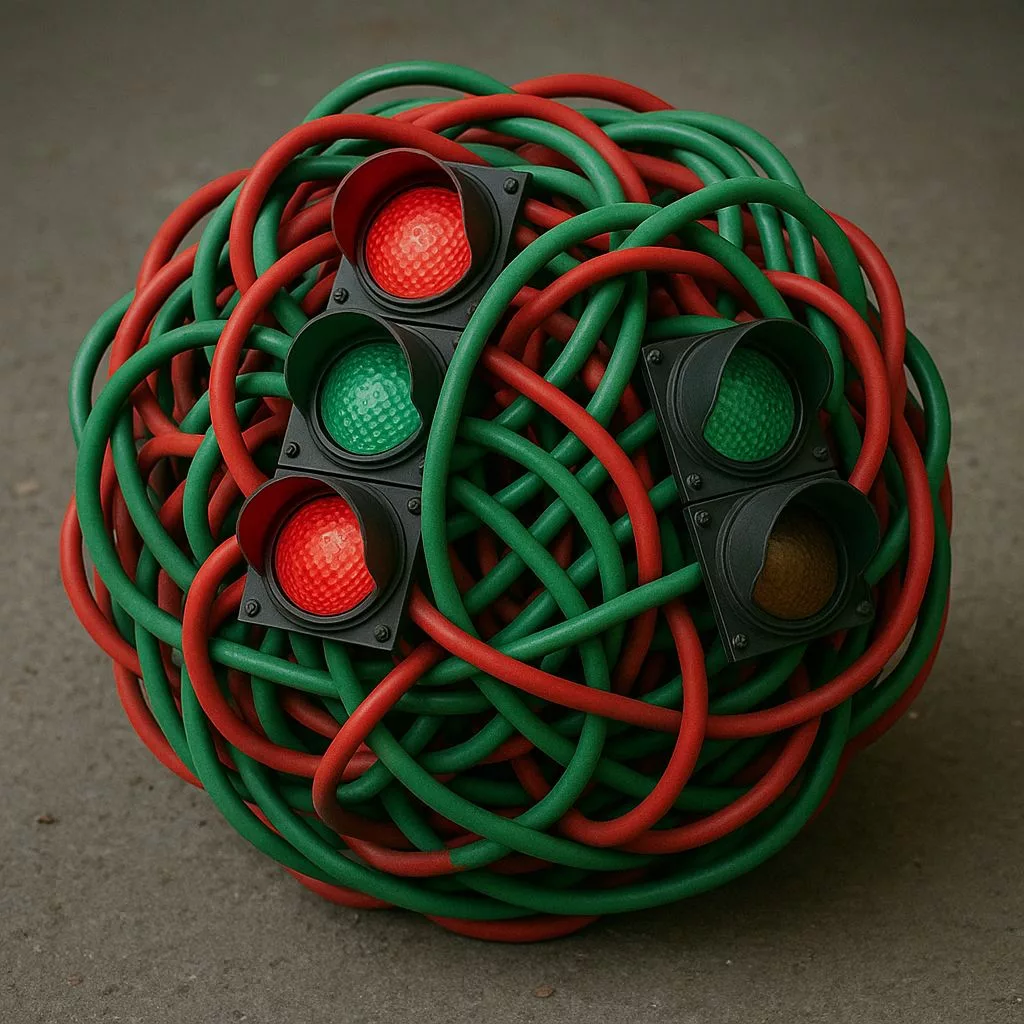
The insult is intentional. “Creep” here does not describe your dating etiquette; it nails the microscopic move of rolling forward when the far side of the crossing is obviously jammed. One driver does it, then the next, and within 60 seconds the lights turn green for the opposite stream and nobody can budge. Saturation flow – the 1 900 cars per lane per hour that glide through on a perfect green – instantly crashes to nil. Regaining those lost seconds is exponential, not linear: four full cycles can vanish while everyone shuffles like awkward dancers.
Engineers clocked 37 creep-locks one December morning on a single Strand–Buitengracht approach between 09:00 and 13:00. The tailback stretched 2,3 km in each direction and every vehicle surrendered 11 minutes. Multiply that by the 18 000 cars that funnel through in a four-hour band and the city donated 198 000 minutes of human life to pure frustration – the equivalent of watching “Titanic” 2 700 times back-to-back, minus the soundtrack.
And the bloodless math becomes flesh-and-bone urgency when a Roeland-Street fire engine needs 3,6 m to swing into Buitengracht. One taxi straddling the hashed box narrows the gap to 2,8 m, forcing paramedics to beg, bully and reverse three lanes of metal before they can reach a cardiac case upstairs at Life Vincent Pallotti. Seconds morph into lifetimes because somebody wanted to save one light cycle.
Part 2 – Why the Holiday Grid is a Different Animal
For 47 weeks of the year Cape Town’s pavement is asked to juggle 1,1 million internal trips a day. Between 15 December and 5 January the figure balloons to 1,45 million, super-charged by 190 000 hire cars and 430 cruise coaches shuttling passengers from the harbour to the Cableway. The network must suddenly stretch 30 %, yet its last major redesign happened in 1994 when engineers added the N1/N2 spaghetti tangle.
Heat works like a silent steroid. Sun-baked blacktop hits 62 °C, softens tyre rubber and lengthens braking distance by more than a tenth. Drivers, feeling vaguely gluey, nudge forward to “escape” the furnace they themselves are creating. Sunset only folds at 20:05, so the psychological rush hour stretches from dawn braai run to post-beach milk-shake mission.
The creep itself follows a predictable five-step script. First, the eye latches onto a tantalising three-metre pocket on the far side and edits out the motionless queue just beyond. Second, the brain discounts a hypothetical R500 fine because “I’ll be out before the camera blinks”. Third, the car ahead edges, providing social proof that inching is normal. Fourth, once the front axle kisses the stop-line paint, reversing is framed as defeat. Finally, the lights flip red and the driver becomes a cork in the bottle, sweating through a playlist that started with holiday vibes and dissolved into existential dread.
Part 3 – War-Room, Wallet-Hit and the Future of Getting Caught
High above Hertzog Boulevard the Transport Management Centre pulses like a mini-NASA. One wall of 1 247 CCTV tiles glows amber when occupancy nudges 85 %, crimson at 95 %. At that moment an algorithm spits out a “probability-of-creep” score fed by queue length, pedestrian density and drizzle – yes, light rain hikes creeping by 18 % because windshields blur and drivers yearn to bolt. Operators can lengthen green time (feeding fresh creeps), dispatch an officer with a handheld Vinci radio, or buzz motorcycle marshals lounging in the shadow of the Nelson Mandela Boulevard flyover. Average rescue: three minutes 42 seconds.
Down on the asphalt officer Aisha November has already written 73 creep tickets since October. “Sorry, I didn’t notice,” is the universal plea, yet front wheels remain cocked at eleven-o’clock, predators ready to spring. Fines open at R500 but leap to R1 500 if pedestrians must thread between stationary cars. Two demerit points accompany every citation; accrue 15 and your licence hibernates for three months. From February 2026, should council adopt the latest by-law, three creep convictions in 24 months will earn a complimentary tow to the Goodwood depot, already swollen with 420 cars seized during the 2025 drunk-driving sweep.
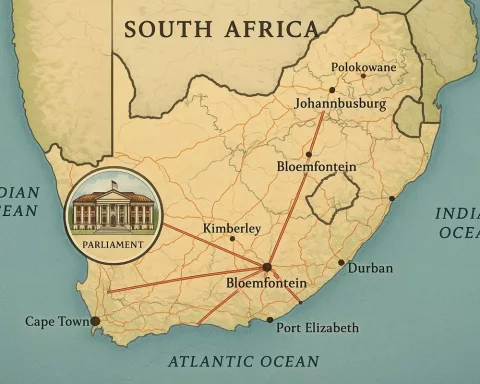
Even harsher medicine waits in the wings. Parliament is chewing on a bill that would let cities certify their own camera evidence; if passed, fines will arrive by mail and payment compliance is expected to vault from a shrug-worthy 42 % to above 80 %. Insurers have quietly warned that they will load premiums once that threshold ticks over. Meanwhile Qualcomm-powered edge cameras, able to tell a lawfully waiting delivery van from a sedan creeping straight, have nailed false positives down to 2 %. LiDAR “curtains” that profile axle pairs in real time are being bench-tested, and a draft policy already allows the city to mail a R750 “education ticket” to first-time camera creeps before the real punch lands.
Part 4 – Paint Tricks, Habit Decay and Your Escape Route
Because engineering can sometimes outrun enforcement, crews have rolled out “KEEP INTERSECTION CLEAR” legends two metres tall in thermoplastic that glows under LED street-light. Ten pilot sites feature 3D optical speed humps – painted white bars that appear to rise from the tarmac – cutting approach speed by 7 % and slicing violation rates by 34 % in the first six weeks. The catch: after two months regular commuters grew wise and creep crept back, proving the brain needs fresh optical gossip to stay honest.
None of this negates the blunt truth in Regulation 305(3) of the National Road Traffic Act: you may not enter a junction unless the exit is unmistakably free. Green light does not equal green light; clear asphalt does. London enforces the same rule with 900 smart cameras nicknamed “yellow vultures”; Cape Town still trusts retinas and motorbikes, for now.
So the next time December heat shimmers off the tar and a tiny gap winks at you across the white stripes, remember the maths: one selfish roll equals 11 minutes of collective life support erased, a fire engine trapped, an ice-cream melting in the glove box and a fine that can blossom into a tow-truck ride. Wave the guy behind you past if you must, crank the festive playlist, and stay behind the stop line until the opposite end of the box yawns wide open. That is the only creep-free recipe for reaching the beach before sunset, preserving both your licence and a stranger’s heartbeat somewhere up on the seventeenth floor.
[{“question”: “
Why does traffic get so bad in Cape Town during the festive season?
“, “answer”: “Cape Town’s festive season traffic jams are notoriously bad due to a combination of factors. The primary culprit is drivers \”creeping\” into busy intersections when the far side is already jammed, blocking cross-traffic. This problem is exacerbated by a significant increase in vehicles (around 30% more than usual), high temperatures that affect braking distances and driver behavior, and the psychological rush of holiday drivers eager to reach their destinations. This micro-habit drastically reduces traffic flow and can even prevent emergency vehicles from passing.”},
{“question”: “
What is a ‘creep’ in the context of Cape Town traffic?
“, “answer”: “In Cape Town traffic, a ‘creep’ refers to the act of a driver rolling their vehicle forward into an intersection even when the exit side of the intersection is clearly blocked or not yet clear. This seemingly small action, when done by multiple drivers, quickly leads to the entire intersection becoming gridlocked, causing significant delays for all directions of traffic, including those with a green light.”},
{“question”: “
How much time is lost due to ‘creeping’ into intersections?
“, “answer”: “The time lost due to ‘creeping’ is substantial. A study on a single Strand–Buitengracht approach found 37 ‘creep-locks’ in just one morning. This resulted in tailbacks stretching 2.3 km in each direction, with each vehicle losing 11 minutes. When multiplied by the thousands of cars, this equates to hundreds of thousands of minutes of human life lost to frustration, highlighting the massive cumulative impact of this micro-habit.”},
{“question”: “
What are the dangers of intersection blocking for emergency services?
“, “answer”: “Intersection blocking, especially by ‘creeping’ vehicles, poses a critical danger to emergency services. Even a single vehicle blocking a hashed box or straddling an intersection can narrow the available space needed for large emergency vehicles like fire engines or ambulances to maneuver. This can force paramedics and other first responders to waste precious time begging, bullying, or reversing traffic, potentially costing lives in time-sensitive situations like cardiac emergencies.”},
{“question”: “
How is Cape Town trying to combat the ‘creeping’ problem?
“, “answer”: “Cape Town is employing multiple strategies to combat ‘creeping.’ These include public awareness campaigns with clear warnings like ‘DON’T BE A CREEP,’ increased enforcement through traffic officers issuing tickets (fines starting at R500 and going up to R1,500 if pedestrians are affected), and the use of technology like CCTV monitoring in the Transport Management Centre. Future measures might include enhanced camera evidence, higher payment compliance for fines, and even more advanced LiDAR technology to identify offenders.”},
{“question”: “
What can drivers do to avoid being a ‘creep’ and contribute to better traffic flow?
“, “answer”: “To avoid being a ‘creep’ and help improve traffic flow, drivers must adhere to Regulation 305(3) of the National Road Traffic Act: never enter a junction unless the exit is unmistakably free. A green light does not automatically mean it’s safe to proceed if the space beyond the intersection is blocked. Drivers should wait behind the stop line until the opposite side of the intersection is completely clear, even if it means waiting through an extra light cycle. This simple act prevents gridlock, saves collective time, and ensures clear paths for emergency vehicles.”}]