Operation Phakisa was a successful multi-sector collaboration aimed at tackling marine resource-related offenses, illegal ranching, fishing, and harvesting, drug distribution, and the influx of illegal immigrants in Namakwa district. It involved various departments and SAPS units and celebrated several victories, including the seizure of marine resource products and the arrest of offenders. The operation showcased the effectiveness of a coordinated approach in addressing a wide array of issues.
Operation Phakisa: A Victory of Collective Action in Namakwa District
Operation Phakisa was a collaborative endeavor that aimed to eradicate marine resource-related offenses, tackle issues of unlawful ranching, fishing, and harvesting, fight against drug distribution, and the influx of illegal immigrants. It involved various departments and SAPS units and celebrated several victories, including the seizure of marine resource products and the arrest of offenders. The operation showcased the effectiveness of a multi-sector approach in addressing a wide array of issues.
A Harmonized Mission
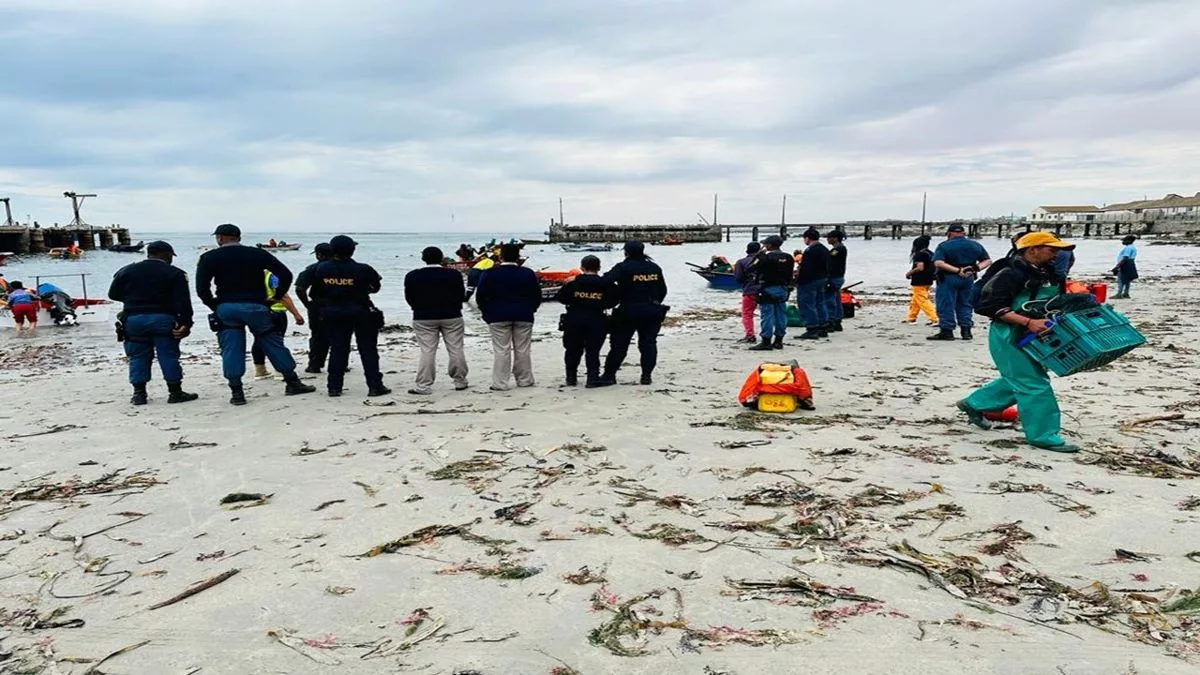
Kicking off on Thursday, the 16th of November 2023 and drawing to a close three days later, Operation Phakisa materialized as a significant collaborative endeavor that spanned the coastline of the Namakwa district, from Port Nolloth to Hondeklipbaai. The initiative was led by Col Kholakele Sontsi, the Provincial Commander for Public Order Police (POP), and Mr. Thulani Mthombeni from the Department of Forestry, Fisheries, and Environment. Their combined efforts, along with the strategic guidance of Captain James Peters and Lt Col Boitumelo Seleke, embodied the essence of collaboration and effectiveness within the public service sector.
A fusion of several departments and SAPS units, including the Department of Home Affairs Immigration Services, South African Revenue Services (SARS), Customs Unit, SAN Parks, SAPS Provincial Proactive Policing, Springbok K9, POP Unit, Crime Intelligence, and the Vehicle Crime Investigation Unit, Operation Phakisa was devoted to eradicating marine resource-related offenses. It set out to tackle issues of unlawful ranching, fishing, and harvesting, while also broadening its scope to fight against drug distribution and the influx of illegal immigrants.
Engaging Public Participation
An essential component of the operation was the special permission granted to the public to engage in commercial cray fishing. In conformity with the Marine Living Resource Act, 1998 (Act no 18 of 1998), this authorization enabled them to possess and transport a specified quantity of West Coast Rock Lobster fish (crayfish), thus encouraging a sense of lawful engagement and community contribution to marine life conservation.
The operation had an intricate plan and involved a host of actions and activities such as compliance and permit inspections, vehicle checkpoint (VCP’s), stop and searches, foot and vehicle patrols along the coastal regions, and raids at identified residences for illegal drugs and commodity smuggling.
The VCP’s were particularly praiseworthy, with three conducted on the Port Nolloth/Alexander Bay road and the Port Nolloth/Kleinsee road. During this exercise, a whopping total of 76 vehicles and 121 individuals were halted and searched. This rigorous approach played a crucial role in maintaining law and order, showcasing the well-executed strategy of the operation.
Notable Successes
Moreover, Operation Phakisa celebrated several victories, underlining the effectiveness of this multi-sector approach. A significant triumph was the seizure of marine resource products valued at around R16,720. The arrest of a 37-year-old Chinese man for possession of abalone and marine resource products underscored the operation’s dedication to legal compliance. Further, traffic fines totaling R8,500 for offenses under the Road Traffic Act, 93/1996 were issued, highlighting the operation’s commitment to overall legality.
The operation also managed to apprehend and process eight illegal immigrants by the DHA Immigration Services officials. These successes stand as a testament to the operation’s effectiveness, with all apprehended individuals scheduled to appear in the Port Nolloth Magistrate’s Court shortly.
As the operation wrapped up, the Northern Cape Acting Provincial Commissioner, Maj Gen Luntu Ngubelanga expressed his appreciation to the vigilant public for their cooperation during the operation. He stressed the societal benefit of such operations, commenting on the crucial role of law enforcement officers in robustly safeguarding marine resources.
Essentially, Operation Phakisa showcased a victorious implementation of a multidisciplinary approach in addressing a wide array of issues, from marine conservation to immigration. It served as a compelling instance of the power of coordinated action, laying a foundation for future initiatives and operations.
1. What was the aim of Operation Phakisa?
Operation Phakisa aimed to tackle marine resource-related offenses, illegal ranching, fishing, and harvesting, drug distribution, and the influx of illegal immigrants in Namakwa district.
2. Who was involved in Operation Phakisa?
Operation Phakisa involved various departments and SAPS units, including the Department of Home Affairs Immigration Services, South African Revenue Services (SARS), Customs Unit, SAN Parks, SAPS Provincial Proactive Policing, Springbok K9, POP Unit, Crime Intelligence, and the Vehicle Crime Investigation Unit.
3. When did Operation Phakisa take place and how long did it last?
Operation Phakisa took place on Thursday, the 16th of November 2023, and ended three days later.
4. What were some of the activities involved in Operation Phakisa?
The activities involved in Operation Phakisa included compliance and permit inspections, vehicle checkpoint (VCP’s), stop and searches, foot and vehicle patrols along the coastal regions, and raids at identified residences for illegal drugs and commodity smuggling.
5. What were some of the successes of Operation Phakisa?
Operation Phakisa celebrated several victories, including the seizure of marine resource products valued at around R16,720, the arrest of a 37-year-old Chinese man for possession of abalone and marine resource products, and the apprehension and processing of eight illegal immigrants by the DHA Immigration Services officials.
6. What was the significance of Operation Phakisa?
Operation Phakisa showcased the effectiveness of a multi-sector approach in addressing a wide array of issues, laying a foundation for future initiatives and operations. It also highlighted the importance of law enforcement officers in protecting marine resources and maintaining overall legality.