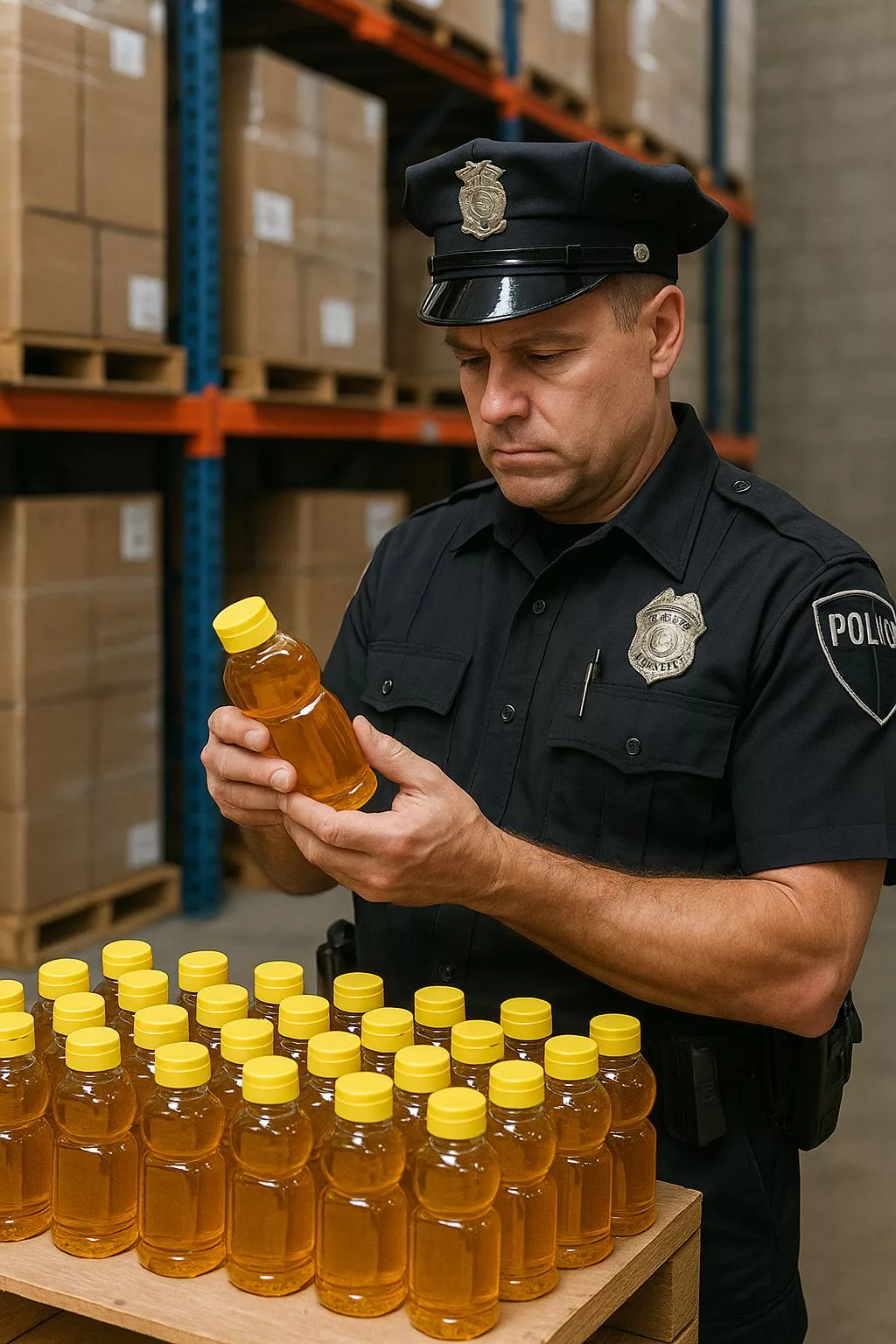
South Africa launched “Operation Sweet Truth” to stop fake honey sales. Police and food experts raid places, finding syrup mixed with a tiny bit of real honey. This fake honey tricks people and harms health, especially for babies and diabetics. The law is now tough, with big fines and jail time. They use special tests to find the fakes super fast. This helps real beekeepers and makes sure people get true, safe honey.
What is “Operation Sweet Truth”?
“Operation Sweet Truth” is a large-scale food-fraud investigation in South Africa targeting fake honey. It involves food-safety inspectors, police, and beekeepers raiding premises to impound adulterated products and arrest offenders, using advanced forensic techniques to distinguish real honey from syrup mixtures.
- Buffalo City Metro, Eastern Cape, April 2025*
1. 04:30 – Engines Rev in the Fog
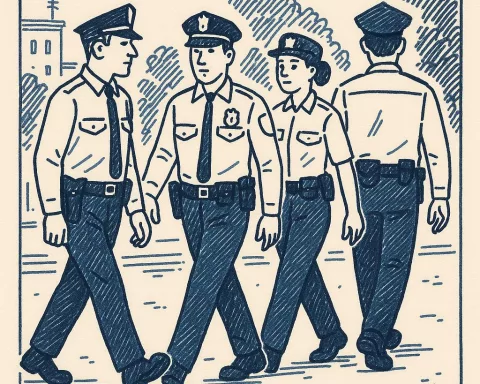
Headlights cut through low-lying mist as twenty-two unmarked vans roll out of the East London forensic campus. No sirens yet; the drivers want the element of surprise. Inside the convoy: food-safety inspectors in navy bibs, SAPS tactical officers checking R5 rifles, two Labradors wagging tails, and, unusually, two commercial beekeepers zipped into full white apiarist suits.
Their quarry is a 42-item hit list: wholesalers, township spaza shops, a spice emporium, and one evangelical church that trucks in “Jericho miracle honey” by the thousand-litre drum. Every address was mapped after six months of undercover buys, DNA pollen traps, and microscopic RFID caps that record each time a bulk container is opened.
At 04:45 the blue lights flash once – a single yelp that scatters street dogs and signals the start of “Operation Sweet Truth,” the largest food-fraud blitz the province has ever seen.
2. Why Honey? Because It’s Liquid Gold
Globally, only olive oil and milk are faked more often. The con is simple: brew a cocktail of cheap rice or beet invert syrup, tint it with cane caramel, drip in 5 % real honey for smell, then flood the rest with unregistered Chinese fructose that costs one-third of local nectar.
South Africa is an ideal target. Citizens now spoon 650 g per person each year, double the 2010 figure, yet local beehives deliver only 2 000 t of the 5 500 t needed. The 3 500 t gap arrives in ships and trucks, creating a tariff-code grey lane where anything syrupy can sneak in under heading 0409.
UCT researchers tested 2024 retail shelves and discovered 67 % of branded honey and 89 % of township bulk dip failed basic compliance. One bottle was 34 % rice syrup; another logged HMF (hydroxymethylfurfural) at 220 mg/kg – triple the legal ceiling – proof it had been boiled and stripped of identity before rebottling.
3. The Law That Turns Syrup Into Evidence
The weapon is the Agricultural Product Standards Act 119 of 1990. Eighteen amendments have turned the once-sleepy statute into a courtroom shark. Section 7(1)(b) criminalises selling any honey that misses the SANS 1046 benchmark; maximum punishment now sits at R12 million or ten years in jail – parity with rhino-horn smuggling.
Inspectors carry red quarantine stickers; peel one off and you’ve added an obstruction charge. Police clutch brand-new SAPS 521 “food-fraud” dockets, amber-coloured so no one can plead mix-up at court.
Best of all, the Act allows “instant recall.” No civil trial, no delays – if the NMR spectrometer says fake, the drum is sealed on the spot.
4. Sunrise at the Church of Sticky Blessings
By 06:10 teams fan through Mdantsane. Inside a converted cinema, 1 200 x 500 g bottles branded “Jericho Miracle Honey – Revelation 10:10” bulge from fermentation gas. A back room hides 20 one-thousand-litre totes of dark invert syrup; ant corpses dot the rims – classic high-water-activity bait.
Pastor Elias Mhlaba appears waving a receipt for “communion-wine concentrate.” Inspectors photograph matching lot codes on totes and retail bottles; the pastor is cuffed and booked into Mdantsane CAS 84/4/2025.
The sniffer dogs ignore the syrup completely – training teaches them to blank sucrose but bark at rice syrup. Their silence confirms zero authentic nectar; even Labradors know the difference.
5. Chemistry on a Tailgate – 22-Minute Verdict
A Toyota Quantum minibus now serves as a pop-up lab. Technicians run three tests curb-side:
– Portable 400 MHz NMR – spectrum matched against a 1 500-reference South-African-honey library.
– EA/LC-IRMS* * – spots cane or corn sugars at 0.1 % adulteration.
– qPCR* * – hunts for indigenous aloe or eucalyptus pollen; absence screams fake.
Results ping an encrypted WhatsApp group within 22 minutes; by 07:00 the strike force knows only four of 18 Buffalo City labels pass muster.
6. From Gauteng to the Coast – Following the Syrup Trail
Eastern Cape raids are chapter two. In October 2024 inspectors impounded 1 059 drums in Gauteng; labels pointed to Durban harbour and an East-London wholesaler now under lock and key. Forensic accountants traced barcode overlaps, mapping the smuggle arc: Yangtze delta → Suez → Durban → East London → Queenstown → Mthatha.
Minister Steenhuisen tweeted the seizure would “follow the syrup trail south like a migratory swarm.” Today’s arrests close that loop.
7. Health, Hives and Hijacked Childhoods
Fake honey is not a petty scam; it’s a public-health landmine.
– Diabetics* * expecting low-GI fructose instead guzzle high-trehalose rice syrup; a 2023 SAMRC study links this to a 0.9 % HbA1c spike within three months.
– Infants * given contaminated soothers at Frere Hospital last year triggered 11 neonatal gastro cases; Bacillus cereus spores thrived in the corn-starch extender.
– Antibiotic-resistance genes*, hitch-hiking on Chinese industrial glucose, colonise human gut flora.
Worst find of the day: 4 000 kg of tainted syrup already ordered for 38 000 government-sponsored early-development centres. Instant recall stops tomorrow’s feeding-scheme disaster.
8. The Economics of Real Bees
Pollination by honey bees underpins R10.3 billion in South African agriculture – apples, sunflowers, macadamias, litchis and 82 other crops. Each 1 % rise in counterfeit market share knocks 0.34 % off beekeeper income, pushing micro-apiarists below survival line.
Flip the coin and the upside glitters. One Langstroth hive averages 30 kg honey, 2 kg wax, 0.5 kg propolis and 1 kg royal jelly yearly. Input cost: R2 800; gross margin: R4 200 – outperforming dry-land maize per hectare.
To protect that future, the province pairs every raid with a “honey integrity kiosk.” Traders who sign up for certified bulk receive 30 % subsidies via the Department of Agrarian Transformation; 31 new vendors enrolled today.
9. High-Tech, Low-Tech, No-Tech – The Toolbox
- Pollen Wallet blockchain app – scan a QR, watch hive GPS, beekeeper ID and lab certificate populate live.
- Iso-Stable isotope beads – laser-drilled into caps, they migrate into honey; customs scanners flag any dilution.
- BeeSAR satellite – nightly bloom-biomass maps expose exporters who claim wild fynbos but lack matching flowering signatures.
Even the dogs are upgrading. Four Belgian Malinois graduate in July, able to sniff 0.05 % rice-syrup adulteration – one teaspoon in a bathtub.
10. A Global Mismatch South Africa Could Lead
Codex still can’t agree on a single honey definition: EU allows 10 % C4 sugar, China zero, USA tolerates 50 ppb glyphosate, South Africa tolerates none. Fraudsters exploit the vacuum.
But change looms. A UN working group meets in Rome this October to vote on a unified NMR standard. South Africa – sole African state with a portable NMR lab in routine enforcement – has a rare chance to chair the reference committee and set the bar for the planet.
11. Voices from the Shelf Front
Nolusindiso Bokwana, manager of a 200 m² Duncan Village spaza, watches red stickers slap onto 24 bottles of “Goldy’s Honey Flavoured Syrup.”
“People want the cheapest sweet. I didn’t know it could sicken babies. If government brings real honey at R35 not R28, I’ll switch tomorrow.”
Across town, third-generation beekeeper Khaya Tshangana loads 90 kg of ivy honey.
“Last year I begged shops to buy at R65 a kilo. Today they phone me. Enforcement is the best marketing we ever had.”
12. After Action – 17 Hours, 11 700 Litres, 17 Arrests
By 19:00 the tally is final:
– 42 premises raided, 38 search warrants executed;
– 11 700 ℓ of fake honey and 3 400 ℓ of raw syrup impounded;
– 17 arrests (10 wholesalers, 3 retailers, 2 clerics, 2 truckers);
– 11 criminal dockets, 5 asset-forfeiture probes;
– 29 compliance notices, 6 prohibition orders, 2 port detention directives;
– 4 brands cleared as authentic;
– 31 new vendors join Pollen Wallet.
The dogs earn 12 tennis balls; the mobile lab burns 17 helium canisters and one inverter.
13. Night Riders – The Swarm Moves On
As the convoy snakes back to base, headlights blink on like fireflies. Senior inspector Thandiwe Jack scrolls a digital map; today’s red pins are already plotted. Zoom out and the cursor drags west – next week Grabouw’s apple blossom will lure bees and bandits alike.
For tonight, Eastern Cape shelves are cleaner, toddlers safer, beekeepers richer. And outside Queenstown, 60 km away, a million honest bees vibrate into dusk, ventilating the scent of real nectar under a moon that may, at last, favor their ancient craft.
[{“question”: “What is Operation Sweet Truth?”, “answer”: “\”Operation Sweet Truth\” is a large-scale food-fraud investigation in South Africa aimed at stopping the sale of fake honey. It involves police, food experts, and beekeepers conducting raids, impounding adulterated products, and arresting offenders. They use advanced forensic techniques to distinguish real honey from syrup mixtures, ensuring consumer safety and supporting legitimate beekeepers.\””}, {“question”: “Why is honey a target for fraud, and how prevalent is it in South Africa?”, “answer”: “Honey is a prime target for fraud because it’s considered ‘liquid gold’ and is relatively easy to fake with cheap syrups. Globally, only olive oil and milk are faked more often. In South Africa, the demand for honey far exceeds local production, creating a 3,500-ton gap that is often filled with fraudulent products. Research in 2024 showed that 67% of branded honey and 89% of bulk honey sold in townships failed basic compliance tests, indicating widespread adulteration.\””}, {“question”: “What are the legal consequences for selling fake honey in South Africa?”, “answer”: “The sale of fake honey in South Africa is governed by the Agricultural Product Standards Act 119 of 1990. This law has been significantly strengthened, with maximum penalties now reaching R12 million in fines or ten years in jail, similar to penalties for rhino-horn smuggling. Inspectors can use ‘instant recall’ powers, meaning if a product is found to be fake using advanced testing, it can be sealed and removed immediately without lengthy civil trials.\””}, {“question”: “How does fake honey affect public health?”, “answer”: “Fake honey poses significant public health risks. For diabetics, who expect low-glycemic fructose, fake honey often contains high-trehalose rice syrup, which can cause a spike in HbA1c levels. Infants can be exposed to harmful substances like Bacillus cereus spores from corn-starch extenders in fake honey, leading to gastrointestinal issues. Additionally, antibiotic-resistance genes from industrial glucose used in fakes can colonize human gut flora, contributing to the broader problem of antibiotic resistance.\””}, {“question”: “What technologies are used to detect fake honey during Operation Sweet Truth?”, “answer”: “Operation Sweet Truth employs a range of high-tech and low-tech methods for detection. This includes portable 400 MHz NMR (Nuclear Magnetic Resonance) spectrometers to match honey spectra against a reference library, EA/LC-IRMS (Elemental Analysis/Liquid Chromatography-Isotope Ratio Mass Spectrometry) to detect cane or corn sugars at very low adulteration levels, and qPCR (quantitative Polymerase Chain Reaction) to identify pollen from specific plants like aloe or eucalyptus. Sniffer dogs are also trained to detect specific syrup types by ignoring sucrose and barking at rice syrup, indicating a lack of authentic nectar.\””}, {“question”: “How does Operation Sweet Truth support legitimate beekeepers?”, “answer”: “By cracking down on fake honey, Operation Sweet Truth protects the economic viability of real beekeeping. Counterfeit honey reduces market share and income for legitimate beekeepers. The operation also includes initiatives like ‘honey integrity kiosks’ where traders can sign up for certified bulk honey and receive 30% subsidies, encouraging the sale of authentic products. Technologies like the Pollen Wallet blockchain app provide transparency for consumers to verify the origin and authenticity of honey, further supporting honest beekeepers.\””}]