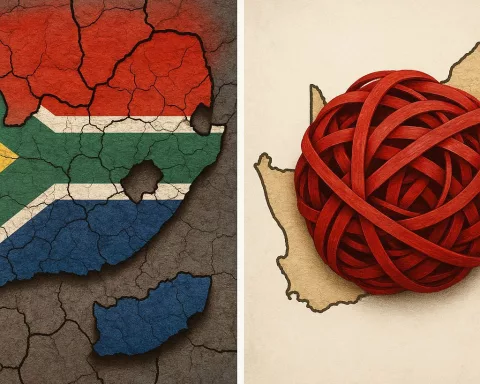

South Africa’s mergers and acquisitions process needs a big change to truly help people who were left out for a long time. The current system often hides deals behind closed doors, letting only big, old players keep control while many talented newcomers are pushed aside. The committee wants to make buyer choices clear and open, make sure disadvantaged people stay involved for real, and give them better financial support. By creating public lists and stronger laws, these reforms aim to make business ownership fair and lasting. This new path could turn tricky deals into powerful tools for shared success and true economic transformation.
How can South Africa’s mergers and acquisitions process be reformed to achieve true economic transformation?
South Africa can achieve true economic transformation in mergers and acquisitions by:
– Ensuring transparency in buyer selection
– Enforcing lasting participation of historically disadvantaged persons (HDPs)
– Enhancing financial support via the Transformation Fund and state entities
– Centralizing HDP information for matching in deals
– Embedding reforms in law for accountability and sustained impact.
Grappling with Deep-Seated Inequality
The South African Parliament’s Portfolio Committee on Trade, Industry, and Competition convened recently, determined to unravel the persistent challenges within the country’s mergers and acquisitions (M&A) landscape. Their gathering in Cape Town’s storied halls was about more than commercial transactions—it was a reckoning with the country’s unresolved legacy of inequality. Decades after apartheid, structural barriers continue to shape who gets to participate in the economy and who remains locked out, no matter the rhetoric that fills boardrooms and political forums.
The committee members listened intently as the Competition Commission presented its latest data. They recognized that, while the Broad-Based Black Economic Empowerment (B-BBEE) policy seeks to foster inclusion, its impact often falls short in the real world. The mechanisms designed to usher historically disadvantaged South Africans (HDPs) into the heart of the economy have, too often, turned into formalities lacking substance. Despite policies on paper, exclusion persists—sometimes hidden, sometimes overt—leaving many South Africans wondering whether genuine transformation is truly underway.
This frustration grew more palpable as the committee examined anecdotal evidence and industry feedback. Far too often, “transformation” appears as a checkbox on a form rather than a guiding principle for reimagining ownership and opportunity. Stories abound of deals where HDPs appear as window dressing—present in name, but excluded from meaningful participation. It’s clear to the committee that for transformation to become a reality, processes need not only to change, but to do so fundamentally.
The Opaque Realities of Buyer Selection
One of the most glaring obstacles to authentic transformation lies in how sellers select buyers in M&A transactions. The committee’s examination revealed that sellers—usually large corporations or multinationals—enjoy unchecked discretion when choosing who will acquire their assets or businesses. Transparency is often lacking, leaving little room for accountability or scrutiny. Even as the Competition Commission reviews the outcomes, it does not intervene at the critical juncture where the new owner is chosen.
This lack of oversight creates a landscape where old power structures simply replicate themselves. HDPs and emerging entrepreneurs find themselves locked out, not because of a lack of talent or ambition, but because the system does not favor their inclusion. The absence of a formalized process for involving transformation watchdogs like the B-BBEE Commission or support entities like the National Empowerment Fund (NEF) further entrenches these patterns. As a result, a handful of established players—often with deep historical ties—continue to dominate, leaving new entrants scrambling for scraps.
The committee heard firsthand that, without rules demanding openness and fairness in buyer selection, transformation risks becoming little more than a veneer. The repeated exclusion of HDPs from meaningful ownership and control not only undermines the spirit of the country’s economic policies but also erodes public trust in the entire regulatory system. If transformation is to be more than a slogan, the process of selecting buyers must become transparent, accountable, and genuinely inclusive.
Advancing Structural Reforms: Recommendations with Teeth
Faced with these systemic shortcomings, the committee compiled a robust set of recommendations aimed at reengineering the M&A environment for true transformation. These proposals challenge entrenched norms and aim to embed fairness and inclusivity deep within the M&A process.
Transparency at Every Step
The committee’s first and most urgent recommendation is to shine a light on the buyer selection process. Sellers should make public their criteria and rationale for choosing buyers, especially regarding the inclusion of HDPs. By opening up this black box, the process can become more welcoming to new entrants and less susceptible to patronage or favoritism. This straightforward reform holds the promise of making transformation tangible, not just theoretical.
Guaranteeing Lasting Participation
Recognizing the risk of tokenism, the committee suggests enforcing lock-in periods for HDP partners involved in M&A transactions. This would ensure that their involvement lasts and is not simply a box checked for the sake of regulatory compliance. The measure would prevent the revolving door phenomenon, where the same few individuals are cycled through deals without ever achieving lasting economic empowerment. By requiring sustained participation, the system could foster real business growth and skills transfer among HDPs.
Clarifying and Mobilizing Financial Support
Access to capital remains a major hurdle for HDPs seeking to participate in sizable transactions. The committee calls for clear rules and enhanced communication about the purpose and scope of the Transformation Fund. It also encourages stronger, action-oriented partnerships between key state entities such as the NEF, the Public Investment Corporation (PIC), and the Industrial Development Corporation (IDC). By streamlining access to loans, equity funding, and financial guarantees, these institutions could level the playing field and enable more meaningful participation in M&A activities.
Centralizing Information and Scrutiny
To support broader participation and transparency, the committee recommends establishing a central registry—likely managed by the NEF—where eligible HDP partners are listed and can be matched with potential transactions. This platform would mirror successful databases in other industries and help companies identify suitable HDP participants quickly and easily. Furthermore, the committee insists that the details of all financing arrangements, including loans and equity structures for HDP deals, be made public. This would help root out “fronting”—where HDPs appear on paper but exercise no real control—and allow for community oversight.
Embedding Change in Law and Practice
To ensure these reforms have staying power, the committee urges the Minister to introduce new regulations under section 78 of the Competition Act and requests that the Competition Commission issue updated guidelines under section 79. By codifying transformation requirements in legislation and official practice, these changes would move beyond aspiration to become a permanent fixture in South Africa’s economic landscape. The committee also proposes ongoing monitoring of M&A outcomes—tracking not only immediate compliance but also the long-term impact on HDP empowerment.
Envisioning a Future of Shared Opportunity
The committee’s recommendations mark a decisive shift in the approach to economic transformation. By moving beyond rhetoric and demanding both transparency and accountability, Parliament is pushing for a future where South Africa’s economy serves all its people, not just a privileged few. These proposed changes do not merely tinker at the margins; they aim to rewrite the rules of engagement.
South Africa stands at a crossroads, confronting the legacies of its past while forging a new path toward inclusive growth. The committee’s proposals echo global movements for social justice and corporate accountability, yet they remain firmly rooted in the country’s particular history and ongoing struggles. By insisting on openness, fairness, and robust oversight, lawmakers are seeking to ensure that transformation is not a passing phase, but a permanent transformation of the nation’s economic fabric.
The journey ahead will be complex and contested. Yet in the committee’s determination, there’s a sense of momentum—a belief that, with political will and community engagement, South Africa’s mergers and acquisitions can become not just engines of profit, but tools for real and lasting change. Each reform, each act of transparency, and each new partnership brings the country closer to fulfilling the vision of shared prosperity that has animated its democracy since 1994. The work is far from over, but the path forward is clearer than ever.
FAQ: Overhauling South Africa’s Mergers and Acquisitions for True Economic Transformation
1. Why does South Africa’s mergers and acquisitions (M&A) process need reform for economic transformation?
South Africa’s M&A process currently lacks transparency and often enables established, historically dominant players to maintain control, sidelining talented newcomers—particularly historically disadvantaged persons (HDPs). Despite policies like Broad-Based Black Economic Empowerment (B-BBEE), the real impact on inclusive ownership and participation has often been limited. Reform is needed to dismantle these structural barriers, ensuring meaningful inclusion, lasting ownership for HDPs, and equitable economic opportunities that reflect true transformation beyond mere compliance.
2. What are the main obstacles to transformation in the current M&A framework?
The key obstacles include:
– Lack of transparency in how sellers select buyers, which limits accountability and fairness.
– The unchecked discretion sellers have, often perpetuating old power structures.
– Tokenistic involvement of HDPs that do not translate into real ownership or control (commonly called “fronting”).
– Insufficient financial support and unclear access to capital for HDPs to participate meaningfully.
– Absence of a centralized system to match HDPs with M&A opportunities, reducing their visibility and chances.
3. What reforms are being proposed to improve transparency and fairness in buyer selection?
The committee recommends:
– Making buyer selection criteria and rationales public to open the process to scrutiny.
– Involving transformation watchdogs like the B-BBEE Commission and funding entities such as the National Empowerment Fund (NEF) at the buyer selection stage.
– Creating a central registry of eligible HDP partners to facilitate better matching with buyers and sellers.
– Public disclosure of financing arrangements related to HDP participation to prevent fronting and promote accountability.
These reforms aim to ensure that buyer selection is not an opaque, closed-door process but a fair and inclusive one.
4. How will financial support for HDPs be enhanced under the new recommendations?
Financial support improvements include:
– Clearer communication about the role and scope of the Transformation Fund.
– Strengthened partnerships between the NEF, Public Investment Corporation (PIC), and Industrial Development Corporation (IDC) to streamline access to loans, equity funding, and guarantees.
– Better coordination to ensure that HDPs have practical, timely access to capital for meaningful participation in M&A deals.
Such support is crucial to overcoming capital barriers that have historically excluded HDPs from owning and controlling businesses.
5. What legal changes are suggested to make these reforms permanent?
The committee encourages:
– The Minister to introduce new regulations under section 78 of the Competition Act to embed transformation requirements.
– The Competition Commission to issue updated guidelines under section 79, reflecting the new focus on transparency and lasting HDP participation.
– Ongoing monitoring mechanisms to track not only compliance but also the long-term impact of M&A transactions on empowering HDPs.
Embedding these rules in law ensures that transformation is not a temporary initiative but a sustained part of South Africa’s economic governance.
6. What is the envisioned outcome if these reforms are successfully implemented?
If the reforms succeed, South Africa’s M&A landscape will:
– Be more transparent, equitable, and accountable.
– Guarantee lasting, meaningful participation for HDPs in business ownership and control.
– Transform M&A transactions from mere profit-driven deals into powerful tools for shared prosperity and inclusive economic growth.
– Restore public trust in economic policies and institutions by demonstrating real commitment to overcoming historical inequalities.
– Help build a democratic economy that benefits all South Africans, fulfilling the promise of economic transformation since 1994.
This vision aligns South Africa with global movements toward social justice while addressing the country’s unique historical and structural challenges.
If you have more questions or want to learn about how specific institutions like the NEF or the Competition Commission will play their roles, feel free to ask!