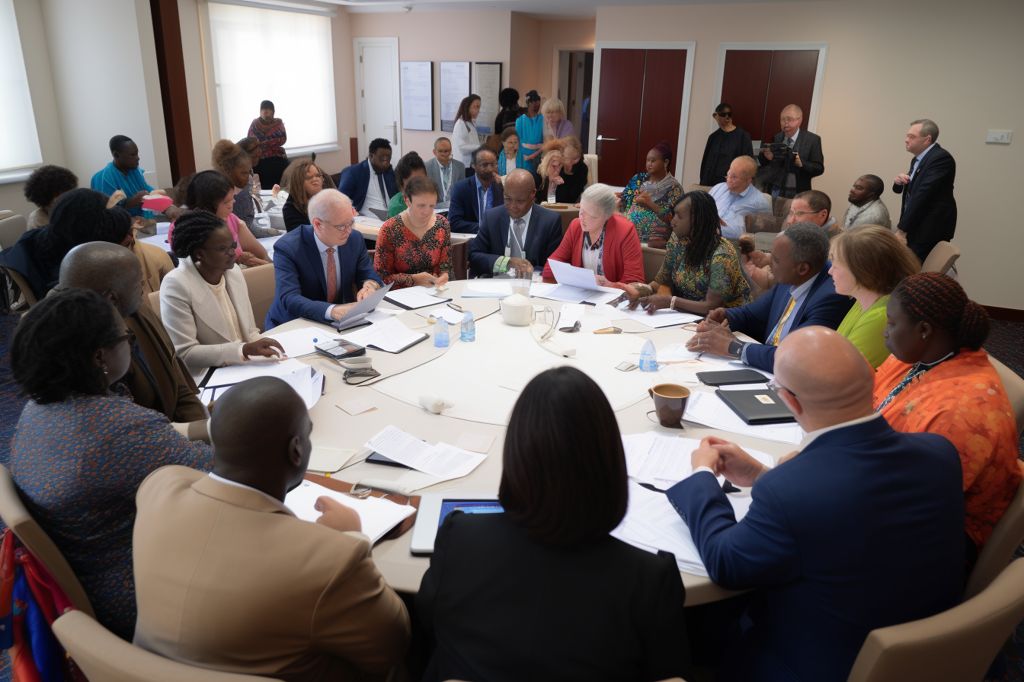
President Cyril Ramaphosa recently addressed the 2nd Presidential Health Summit at the Birchwood Hotel in Boksburg, Gauteng, reflecting on the Presidential Health Compact signed four years ago. The summit brought together stakeholders from various sectors to develop short and long-term solutions to challenges facing South Africa’s healthcare system.
The Impact of COVID-19
The COVID-19 pandemic disrupted the implementation of the nine pillars of the Compact, highlighting the need for agility and adaptability in response to prevailing conditions and lessons learned. Despite the challenges, South Africa’s health systems have proven to be remarkably resilient.
Pathway to National Health Insurance
Stakeholders have called for a stocktake of South Africa’s COVID-19 response and its learnings as the country resumes the pathway towards National Health Insurance (NHI). The National Health Insurance Bill was introduced in Parliament in August 2019 and is expected to be debated in the National Assembly by June 2023 and then considered in the National Council of Provinces.
Implementing the pillars of the Compact is key for South Africa’s health system to be prepared for NHI. There is a need to reassess and redefine the country’s health priorities to align them with the attainment of the Sustainable Development Goals by 2030 and the African Union’s New Public Health Order.
African Union’s New Public Health Order
The AU’s New Public Health Order is a continental health security policy anchored by five pillars: strengthened public health institutions, increased domestic financing of health, attaining biotech sovereignty through local pharmaceutical manufacturing, building a capable health workforce, and fostering respectful, action-orientated partnerships.
Universal Health Coverage
Achieving Universal Health Coverage falls under SDG 3, namely Good Health and Wellbeing. The objective is to ensure that everyone can access quality health services without incurring financial hardship and promote health equity, reducing health disparities by providing essential health services to all individuals, regardless of their socio-economic status or geographic location.
The objective of NHI is to provide access to quality healthcare services to all South Africans regardless of their socio-economic status or geographical location. It aims to reduce health disparities between different population groups and regions of the country and protect individuals and families from the financial burden of healthcare expenses.
Priorities for Achieving Universal Health Coverage
To achieve this vision, the government needs to prioritize several key areas: funding, strong governance and leadership by the Department of Health, stepping up investment in healthcare infrastructure, developing a motivated, capable, compassionate workforce, ensuring essential medicines and medical devices are available in all healthcare facilities, advancing local production of medical countermeasures, and adopting a zero-tolerance approach to corruption in the healthcare sector.
Collaboration for a Healthier Society
President Ramaphosa urged the government, private sector, civil society organizations, and individuals to work together to create a society where everyone can access the resources needed for a healthy life. He stressed the need for policies that address poverty, education, housing, transportation, and environmental factors that impact health outcomes.
In conclusion, President Ramaphosa reiterated South Africa’s commitment to achieving Universal Health Coverage by 2030 in line with the Sustainable Development Goals. He emphasized the need to work together and focus on the shared vision of creating a brighter future for everyone. South Africa’s healthcare system has proven to be resilient, and with the right policies and priorities in place, it can provide access to quality health services for all.