The O.J. Simpson chase was a captivating event that took place on June 17, 1994, as millions of Americans watched the former football star turned fugitive being pursued by law enforcement through Southern California’s highways. The chase interrupted significant sports events and led to a spike in deliveries from quick-service restaurants. For the family of Ron Goldman, who had been brutally murdered alongside Simpson’s former wife, Nicole Brown Simpson, just five days prior, the chase was a harrowing reminder of their painful tragedy. The chase remains a poignant symbol of America’s complex relationship with race, fame, and media.
What was the O.J. Simpson chase?
On June 17, 1994, millions of Americans watched on live television as O.J. Simpson was pursued by law enforcement in a white Ford Bronco through Southern California’s highways. The chase interrupted significant sports events and led to a spike in deliveries from quick-service restaurants. The chase was a harrowing reminder for the family of Ron Goldman, who had been savagely murdered alongside Simpson’s former wife, Nicole Brown Simpson, just five days prior.
The Infamous Chase
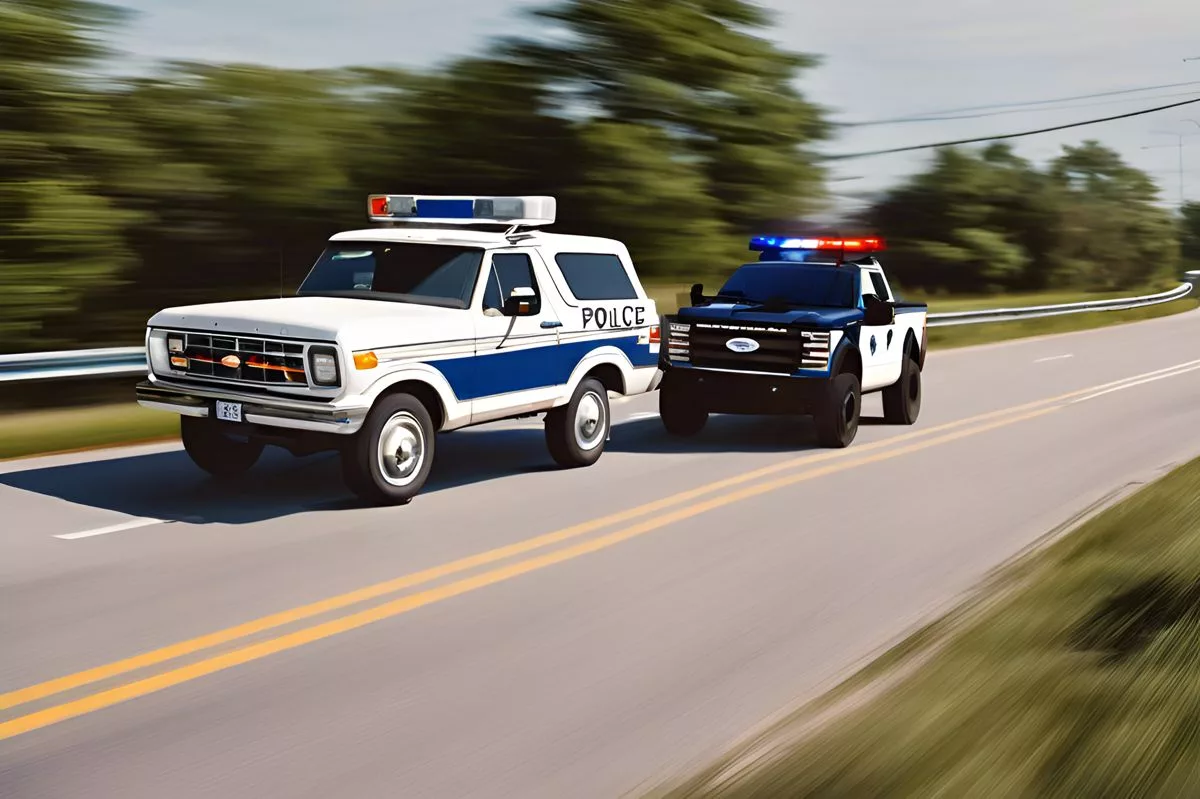
Few incidents in modern American history have stirred the collective consciousness as intensely as the chase involving the former football star turned fugitive, O.J. Simpson. It was a bright afternoon on June 17, 1994, when the nation was spellbound, watching a white Ford Bronco carrying the contentious figure weave its way through Southern California’s highways, followed by a pack of law enforcement vehicles. This globally televised event enthralled an estimated 95 million Americans, who remained riveted to their TV screens, their daily activities abruptly halted by the unfolding spectacle.
The chase, imbued with theatrical undertones, interrupted significant sports events and led to a spike in deliveries from quick-service restaurants such as Domino’s Pizza. The viewers, entranced by the unfolding drama, were reluctant to tear themselves away from their television sets. For Kim Goldman, an onlooker, the event held a deeply personal meaning. Her brother, Ron Goldman, had been savagely murdered alongside Simpson’s former wife, Nicole Brown Simpson, just five days prior. Thus, this chase was a harrowing reminder of the family’s painful tragedy that, like an unhealed wound, continued to cause anguish.
The Controversial Verdict
In 1995, Simpson’s unexpected acquittal in what was coined the “Trial of the Century,” sent shockwaves throughout the nation. The ruling, which allowed the renowned athlete and Hollywood performer to walk free, was starkly divided along racial lines, exposing the underlying tensions within American society. In an interesting turn of events, Simpson was deemed responsible for the fatalities in a 1997 civil lawsuit and was directed to compensate the Goldman family $33.5 million in damages — an amount that, to a large extent, remains unsettled.
The Public’s Fascination with High-Speed Pursuits
The captivating appeal of the chase was not solely tied to Simpson’s infamy. Dr. Geoffrey Alpert, a professor at the University of South Carolina and an expert on police chases, posits that the public’s interest in high-speed pursuits is deeply rooted. He suggests that this obsession, somewhat comparable to the exhilaration of watching unpredictability play out in NASCAR races, harks back to the wild west era of horseback chases following bank robberies.
The infamous Bronco, which was driven by Simpson’s friend Al Cowlings during the nerve-wracking pursuit, now lies in a crime museum in Tennessee. Its existence serves as a palpable reminder of that enthralling afternoon, seemingly resonating with the echoes of history. There were even rumors of a tour company in Los Angeles contemplating offering rides in the notorious vehicle along the same highways where the fateful chase took place.
The Aftermath of the Chase
Despite the enthusiasm of the spectators who crowded the overpasses that day, holding up signs with phrases like “Run O.J. Run” and “Go O.J.”, Simpson ultimately surrendered. But for Kim Goldman, this brought no closure. Simpson’s release from prison in 2017, after a nine-year sentence for an unrelated armed robbery, merely reopened old wounds. Until his demise, Simpson led a seemingly quiet life in Las Vegas, often spotted on the city’s golf courses.
Enduring Impact
This dramatic event, which unfolded on the sunny highways of Southern California, continues to echo as a poignant symbol of America’s complex relationship with race, fame, and media. It offers a chilling glimpse into a nation captivated by a moment that remains as enthralling as it was unsettling.
1. What was the O.J. Simpson chase?
The O.J. Simpson chase was a captivating event that took place on June 17, 1994, as millions of Americans watched the former football star turned fugitive being pursued by law enforcement through Southern California’s highways.
2. What was the impact of the chase on American society?
The chase interrupted significant sports events and led to a spike in deliveries from quick-service restaurants. For the family of Ron Goldman, who had been brutally murdered alongside Simpson’s former wife, Nicole Brown Simpson, just five days prior, the chase was a harrowing reminder of their painful tragedy. The chase remains a poignant symbol of America’s complex relationship with race, fame, and media.
3. What was the controversial verdict of the O.J. Simpson case?
In 1995, Simpson’s unexpected acquittal in what was coined the “Trial of the Century,” sent shockwaves throughout the nation. The ruling, which allowed the renowned athlete and Hollywood performer to walk free, was starkly divided along racial lines, exposing the underlying tensions within American society.
4. Why are high-speed pursuits so captivating to the public?
According to Dr. Geoffrey Alpert, a professor at the University of South Carolina and an expert on police chases, the public’s interest in high-speed pursuits is deeply rooted. He suggests that this obsession, somewhat comparable to the exhilaration of watching unpredictability play out in NASCAR races, harks back to the wild west era of horseback chases following bank robberies.
5. What was the aftermath of the chase?
Despite the enthusiasm of the spectators who crowded the overpasses that day, holding up signs with phrases like “Run O.J. Run” and “Go O.J.”, Simpson ultimately surrendered. But for Kim Goldman, this brought no closure. Simpson’s release from prison in 2017, after a nine-year sentence for an unrelated armed robbery, merely reopened old wounds.
6. What is the enduring impact of the O.J. Simpson affair?
This dramatic event, which unfolded on the sunny highways of Southern California, continues to echo as a poignant symbol of America’s complex relationship with race, fame, and media. It offers a chilling glimpse into a nation captivated by a moment that remains as enthralling as it was unsettling.