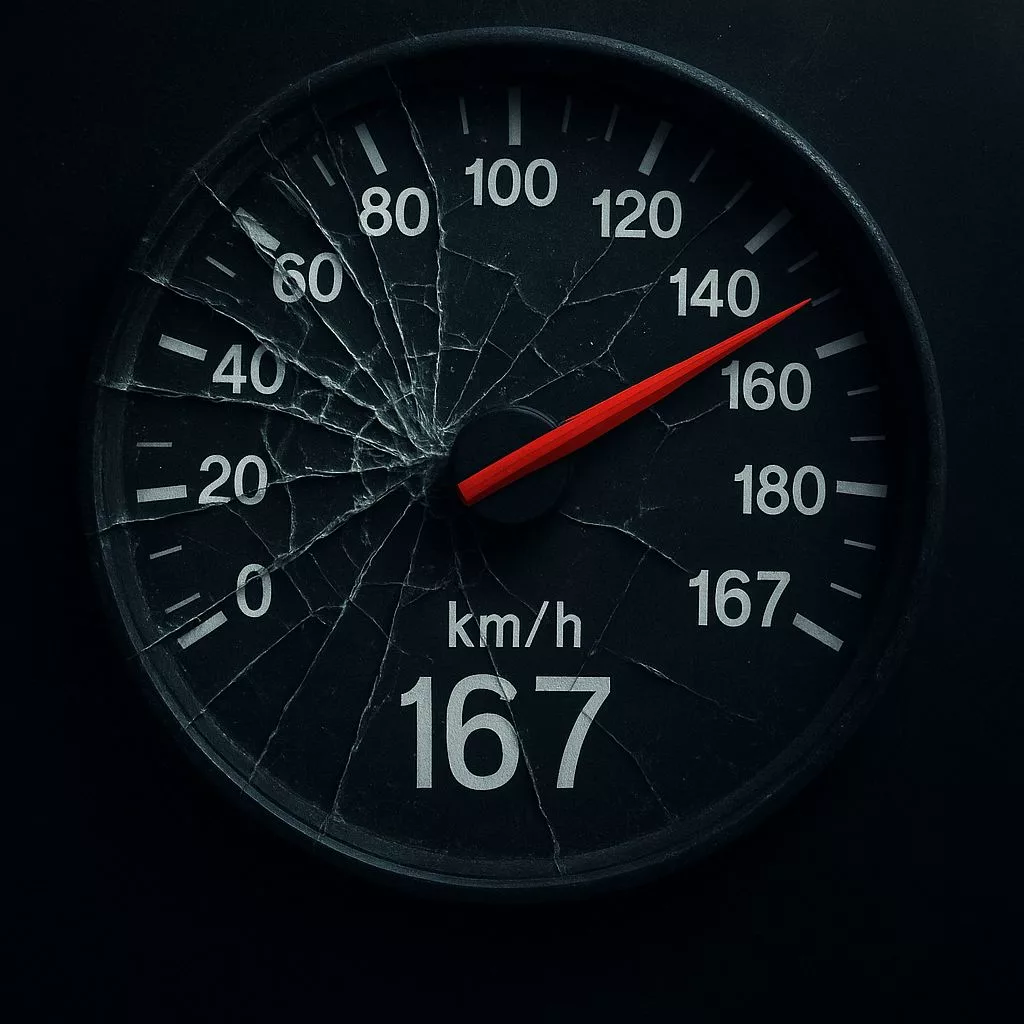
The Western Cape faced a terrible week, with 34 lives lost and 103 arrests on its roads. Speeding, drinking, and tired drivers made the roads very dangerous, especially for people walking or on bikes. One driver was even caught going 167 km/h, much faster than allowed. Many people are very sad because of these crashes, and authorities are trying new ways to make the roads safer.
What factors contribute to the high number of road fatalities in the Western Cape during December?
Several factors contribute to the surge in Western Cape road fatalities in December, including a significant increase in vehicle traffic, higher alcohol consumption, driver fatigue from long journeys, and hazardous weather conditions like invisible mist on roads. These elements combine to create a deadly environment, especially for vulnerable road users.
1. Flash of Light, Final Exclamation Mark
At two minutes to midnight on 28 December 2025, the N2 near Somerset West blinked white. A traffic camera captured a BMW saloon screaming past at 167 km/h where 120 is the ceiling. That single frame ended the week’s horror story – yet it was only the post-script. Between the 22nd and the 28th the province’s roads wrote a chilling balance sheet: 27 collisions, 34 deaths, more than half vulnerable road-users. Behind every number is an unopened gift under a tree, a WhatsApp chat left on “on my way,” or a pair of flip-flops that will never leave the car floor.
The dead arrived in three broad groups: fourteen on foot, seven on bicycles, nine on motorcycles. The remaining four were vehicle occupants ejected during rollovers or head-ons. In only five of the 27 incidents were seatbelts worn correctly; airbags deployed in seven.
Forensic teams finished sketching 19 crash sites; eight dockets still wait for lab results. Skid-mark trigonometry shows average impact speeds 42 km/h above posted limits. The worst hour turned out to be 03:00-04:00, when long-haul arrivals from Gauteng intersect nightclub stragglers and early-market pedestrians.
2. Why December Turns Deadly
The Western Cape’s population balloons every December. SARS border logs show a 38 % jump in vehicle entries from 15 December to 3 January. Rental yards grow from 9 200 cars in November to 16 800, and the Garden Route’s residents double overnight.
Three accelerants mix with the traffic surge. First, extra beer: SABMiller records 2.7 million additional litres trucked in during the last two weeks of the year. Second, body-clock failure: an AA poll shows 42 % of inter-province drivers leave Gauteng after sunset, hitting the Cape’s outskirts just as circadian lows strike. Third, stealth weather: berg-wind nights dry the tar only on top, leaving an invisible mist that bikers compare to black ice. Four motorcycles crashed on the R44 within 48 hours for exactly that reason.
3. Anatomy of the Carnage
Investigators group the 27 events like this: eight single-vehicle rollovers where booze and speed topped the list; six pedestrian strikes at dusk on unlit rural roads; four head-ons born of illegal overtaking; three rear-end shunts blamed on tail-gating phones; three motorcyclists sliding on diesel; two cyclists clipped inside the one-metre passing buffer; one multi-car pile-up inside a fog pocket near De Doorns.
Grain haulers created what bikers now call “the diesel trilogy.” On 24, 26 and 27 December, trucks climbing the six-percent gradient outside Caledon shed fuel from loose filler caps. Two riders died; a third survived only because his Kevlar jeans melted and glued him to the tarmac, stopping him short of a guardrail.
4. 103 Arrests, Zero Festive Cheer
Officers logged 2 448 patrol hours at 199 roadblocks. Drink-driving dominated: 73 arrests, average blood reading 0.19 g/100 ml – almost four times the legal ceiling. The oldest culprit, a retired teacher, was stopped at dawn on Christmas carrying a beach picnic; the youngest, an 18-year-old learner still on a code-8 permit, blew 0.17 at 02:30 in Stellenbosch.
Fifteen people presented false papers – 14 forged cards and one fake operator permit. Eight landed in cells for reckless behaviour, among them a 19-year-old live-streaming at 145 km/h on Chapman’s Peak. Seven simply had too many unpaid fines; each owed more than R8 000.
5. Speed: the Repeat Offender
Laser guns tagged 301 drivers; two out of five were caught on only three corridors: N1 after the Huguenot Tunnel, N2 down Sir Lowry’s Pass, and the R300 between Kuils River and Mitchells Plain. The record-setting BMW was a showroom-fresh 340i whose software limiter had been relaxed to 280 km/h. The 32-year-old owner said he was “testing new intakes.” The car now sits in a pound while BMW SA audits the dealership flash.
Average-speed cameras switched on along the 40 km Grabouw-Botrivier section trimmed mean velocity from 127 km/h to 109 km/h in three days, proving tech can tame temptation when political will holds.
6. The Invisible Victims
-
Pedestrians*
Fourteen of the foot-traffic fatalities wore dark clothing; only three carried any reflective item. Drone mapping shows drivers had, on average, 1.2 seconds to react – half the international design standard. -
Cyclists*
Seven died, five on the R44 commuter ribbon between Stellenbosch and Rooi-Els. A promised R42 million bike lane will cover just 8 km of the 34 km corridor – completion date 2027. -
Motorcyclists*
Nine perished, six on adventure bikes larger than 800 cc. Tire tests revealed three were running road-biased rubber at 2.9 bar – too hard for gravel, slicing contact patch by almost a fifth.
7. Enforcement Evolves
Beyond roadblocks, four-kilogram drone-mounted Lidar pods hover 60 m above congestion knots. An AI model ingests their feed and forecasts shock-wave collisions 90 seconds early; operators staged twelve pre-emptive lane closures, preventing an estimated four crashes.
Seventeen unmarked “ghost” VW Polos mingle with holiday traffic; drivers radio ahead to uniform teams. Meanwhile 240 TSiBA College students offered free breath tests outside pubs; 1 372 motorists blew, 82 chose to sleep in their cars rather than risk the road.
8. Counting the Cost
Using the RTMC’s 2024 value of statistical life (R7.8 million), the 34 deaths equal roughly R264 million in societal damage. Insurers logged a 28 % spike in holiday claims, adding another R1.3 billion to the provincial loss ratio. A Hermanus whale-boat company cancelled three excursions when seven staff members needed bereavement leave after losing relatives on the road.
9. Global Lessons, Local Urgency
Norway replaced four high-risk intersections with turbo-roundabouts and cut injury crashes by 70 %. Victoria, Australia forces every first-time DUI offender to fit an alcohol interlock; repeat offences fell 64 % within three years. Rwanda sells R15 reflective vests at toll gates and enforces their use at night – pedestrian deaths dropped 38 %.
Closer to home, the Western Cape plans glow-in-the-dark lane paint on a 5 km De Doorns pilot, a buffered bike lane on the R44, and dynamic LED speed signs that drop the limit in 10 km/h slices when congestion thickens.
10. Deadlines Already Printed
- 30 January 2026: Cabinet lekgotla reviews the December death tally; MEC Sileku must table intervention plans by 28 February.
- 15 March: Parliament debates RAF solvency – expect harsher DUI sentencing proposals.
- 1 April: Pedestrians on R-roads must wear reflective ankle bands after dusk; a R10 fine is secondary to insurer liability shifts.
- June: Courts may grant bail for DUI only if the accused installs an alcohol interlock – constitutional challenges loom.
11. Stories That Refuse to Fade
Traffic officer Aphiwe Maki still hears the question from a six-year-old girl: “Is my daddy in trouble?” The man was so drunk he asked for a gin-and-tonic while being charged.
The Helderberg Hooligans bike club now pools cash for diesel-spill kits stored at the Caledon garage. Member Riaan Kriel says, “We can’t wait for government; we mark, we sweep, we ride again.”
In Delft, Nazeema Mohammed collects discarded reflective sashes, washes them, and hands them back at taxi ranks. She’s given out 3 000. “Call me Auntie Sash,” she laughs. “If one stops one car, that’s victory.”
12. The Horizon – Data, Behaviour, Asphalt
South Africa halted real-time crash-data releases after the 2019 RAF breach. The promised Provincial Crash Observatory remains “under procurement,” meaning algorithms will digest December 2025 blood patterns only by winter 2026 – too late for next holiday. Until then, every tail-gate, every WhatsApp video, every late-night overtake continues to scribble new data points on warm asphalt.
The 34 ghosts of Christmas week still ride shotgun along the N2, the R44, the diesel-slicked pass outside Caledon. Their silence is louder than any siren.
What was the overall impact of the “Seven Bloody Days” on Western Cape roads?
During a terrible week in the Western Cape, 34 lives were lost and 103 arrests were made on the roads. This period saw a significant number of collisions, with more than half of the fatalities being vulnerable road users such as pedestrians, cyclists, and motorcyclists. The human cost is immeasurable, with many families left grieving, and the economic toll is estimated at over R264 million in societal damage from the deaths alone, plus an additional R1.3 billion in insurance claims.
What were the primary causes of the road fatalities during this period?
The main causes of the fatalities were a combination of speeding, drinking and driving, and driver fatigue. Investigators identified specific patterns, including eight single-vehicle rollovers linked to alcohol and speed, six pedestrian strikes on unlit rural roads at dusk, four head-on collisions due to illegal overtaking, and three rear-end shunts attributed to distracted driving (tail-gating phones). Factors like invisible mist and diesel spills also contributed to motorcycle accidents.
How many arrests were made and for what offenses?
Authorities made 103 arrests during the period. The majority, 73 arrests, were for drink-driving, with an average blood alcohol reading almost four times the legal limit. Other arrests included 15 individuals for presenting false papers (forged licenses or permits), eight for reckless behavior (such as live-streaming while speeding), and seven for having too many unpaid fines, each owing over R8,000.
What was the highest speed recorded by a traffic camera?
A BMW saloon was caught by a traffic camera on the N2 near Somerset West going 167 km/h, significantly exceeding the 120 km/h speed limit. The driver, a 32-year-old, claimed he was “testing new intakes” on his showroom-fresh 340i, which had its software limiter relaxed to 280 km/h. The car was impounded, and BMW SA is auditing the dealership involved.
What specific measures are being taken or planned to improve road safety in the Western Cape?
Beyond traditional roadblocks and patrols, new enforcement methods include drone-mounted Lidar pods that forecast collisions, allowing for pre-emptive lane closures. Unmarked “ghost” VW Polos are also being used to radio ahead to uniform teams. Future plans include glow-in-the-dark lane paint for a pilot section in De Doorns, a buffered bike lane on the R44, and dynamic LED speed signs that adjust limits based on congestion. These initiatives draw inspiration from successful global strategies in Norway, Australia, and Rwanda.
Who were the most vulnerable road users during this deadly week?
Vulnerable road users accounted for more than half of the fatalities. Fourteen pedestrians died, often wearing dark clothing with minimal reaction time for drivers. Seven cyclists perished, primarily on the R44, highlighting the need for improved infrastructure like bike lanes. Nine motorcyclists also lost their lives, with some incidents linked to diesel spills and incorrect tire pressure for road conditions.