South Africa in 2025 is a land of big challenges and tough times. Miners face danger, and nature fights back with wildfires and invasive plants. Cities struggle with broken power and old buildings, while people find clever ways to make a living. Despite all this, folks are still fighting for what’s right and trying to make a better future.
What challenges does South Africa face in 2025?
South Africa in 2025 grapples with diverse challenges including mining tragedies, ecological crises like invasive species and wildfires, infrastructure decay, power outages, and social issues such as poverty and gender-based violence, all set against a backdrop of resource scarcity and political bureaucracy.
- A mosaic stitched from 20 photo-driven dispatches*
1. When the Earth Bites Back
- Stillfontein, 5 January, before dawn*
A winch wails like a cracked cathedral organ. Three-hundred-odd metres under the Highveld grass, the final shift of 2024 has turned into the first tragedy of 2025. The lift that usually gleams gold for safety now surfaces the colour of gunpowder, daubed with rust-red dust and a dried ribbon of blood. Miners crouch shoulder-to-shoulder, chins on knees, breathing through cupped palms; the tunnel air still carries the aftertaste of explosives and panic. More than two hundred ascend; seventy-two stay below. Names crackle across a hand-held radio while a woman kneels on crusher-chip gravel, sliding a snapped rosary between her fingers; she found the beads in the glove-box of a pickup that may never again belong to her husband. No one mentions that the roster is “preliminary”; when the country’s sole state geneticist is on leave, DNA matches crawl.
- Albert’s Dam, Johannesburg, early February*
University rower Anja knives her scull through a mat of salvinia so dense it feels like carving green suede. The weed doubles its weight every two days; from orbit the reservoir looks like a mis-placed fairway. Officials still debate an imported weevil that munched the plant in Sri Lanka, but paperwork suffocates the plan – who will feed the beetles once the buffet is gone? Meanwhile backyard engineers shovel the weed into hand-presses, turning it into R20 “eco-coal” sacks that smoke with a sweet camphor scent. Anja’s oar blades drip liquid silver; the plant’s velvety hairs hoard mercury blown in from power-stations eighty kilometres away. Later, lab results will show lead in her blood triple the legal limit, yet at sunrise she keeps pulling, racing the light.
- Silvermine, Cape Peninsula, April*
A wildfire gallops twenty-two metres every sixty seconds – fast enough to hear the roar. Egyptian geese lift off, webbed feet still wet, sketching twin vapour trails that vanish before a lens can catch them. Heat snaps a protea that first cracked the soil while Van Riebeeck still had hair. Fire-fighters spray a new orange-peel gel that smells like breakfast marmalade; honey-bees dive at boots, fooled into thinking the mountain is blooming. A drone televises its own death: plastic melts, the stream freezes on a single frame – an ant shielding larvae with its body. City ecologists will count 1 300 flame orchids turned to ash; each needs seven winters before it flowers again, so spring 2032 will arrive one movement short.
2. Cities of Makeshift Futures
- Eldorado Park, 14 January, after midnight*
The soccer field built in 1978 now hosts no night games – its floodlight pylons were long ago stripped for copper. One tower still glows, upside-down: looters stole the bulbs and turned reflector dishes into DIY aerials for an open network called @ParkWiFi. Inside the sagging goal net a homeless man known only as “September” tucks his body, sneakers placed beside him like votive offerings. The soles glow faintly – he collects phosphorescent algae from a nearby swamp, convinced the slime eats athlete’s foot. Scientists call the organism Nostoc commune, a cyanobacterium hardy enough to survive outer-space vacuums; in Eldorado Park, staying alive feels equally extra-terrestrial.
- Mitchells Plain, late November*
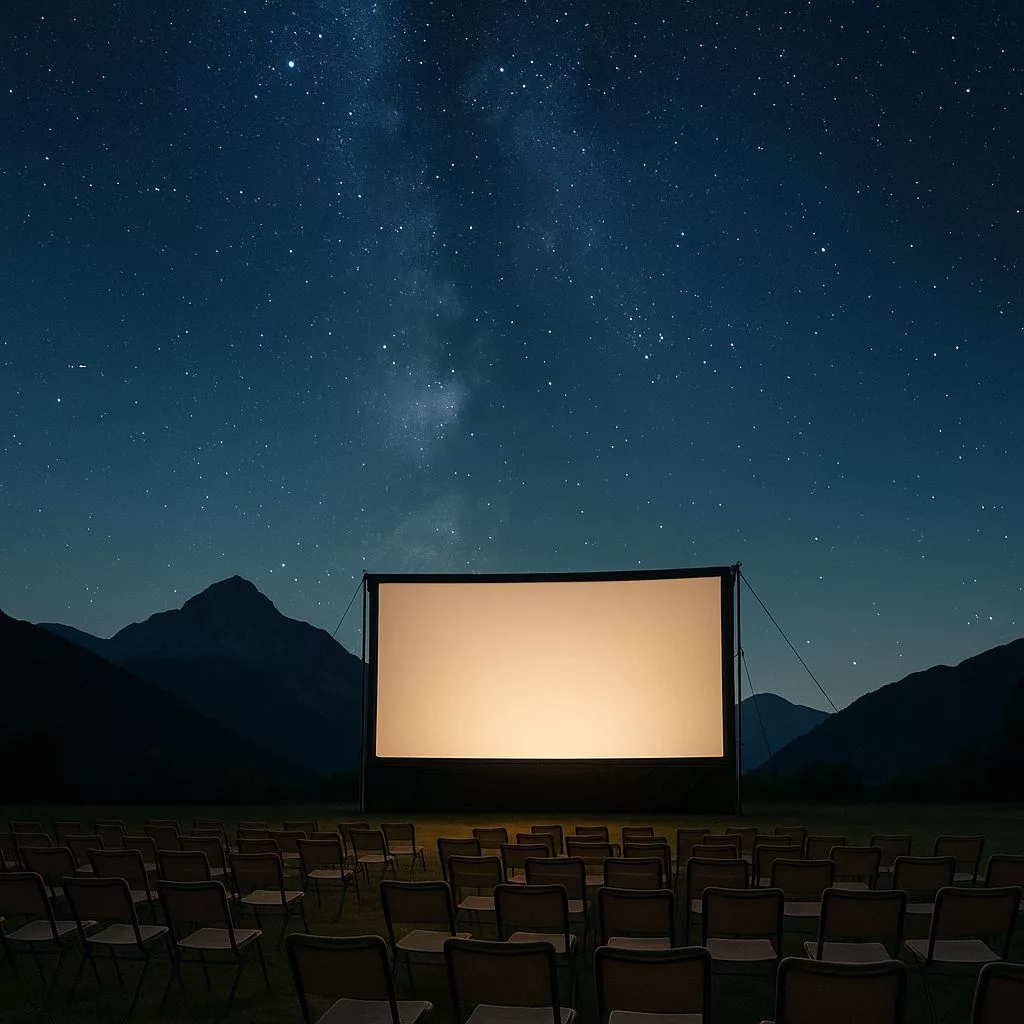
A sheet, an iron and a rebuilt lawnmower engine create the township’s only cinema. Every seventeen minutes the generator hiccups, firing a back-beat that syncs with Wakanda’s force-field blasts. Kids who have never climbed a mall escalator cheer when their own alleyways flash across the makeshift screen. Entry is free; popcorn costs two rand, profit channelled into ballet lessons held in a former gang safe-house. The barre is a broomstick nailed between murals of Calvin Klein cologne and a 26s gang tag. Ashwin, twelve, rises onto cracked running shoes she calls “emergency pointe shoes.” When the credits end, the bed-sheet becomes a rain-awning for a midnight sandwich stall – art and survival swap costumes without interval.
- Rondebosch, mid-November*
A twenty-one-year-old mechatronics student zips through load-shed traffic on an e-bike whose battery is metered by the minute. Seventy-three cents per kilometre – he recites the national fuel-adjustment formula while gluten-free wraps, oat milk, biltong for a Labrador named Kafka and a single Tinder-rose bounce in his pannier. He gambles on a campus short-cut that could shave four minutes and earn him a R500 fine. A podcast predicts drone deliveries will erase riders by 2027; he grins – somebody still has to tell the drone which dog is a Rottweiler and which is just a hungry Labrador.
3. Bargains with Soil, Water and Sky
- Knoflokskraal, Grabouw, February twilight*
At !Uri Tama – “Home of Taste” in Nama – dinner is venison bobotie under spekboom salsa, the menu printed on seed paper diners are invited to bury on their way out. Electricity arrives via a cracked wind-turbine blade that whistles in C-minor; the resident guitarist tunes to it nightly. Water is tighter than cash: guests receive glass beads – red for a litre, blue for five – when the beads are gone, so are the taps. Outside, a nursery sign offers the only investment advice that matters: “Plant what will outlive the bite marks of your own time.”
- Ha Makhanya, Lesotho, dawn, April*
Blood-orange rosehips bob in steel pails bound for a German skincare firm promising “high-altitude collagen.” Kids skip rope with thorny branches, chanting in Sesotho as they tally each jump. Mme Mpho, 68, covers her smile with a balaclava holed exactly where laugh-lines crease. She has never seen a living rose bloom – harvest follows the petals’ fall – yet she senses ripeness better than a calendar. Buyers demand traceability, so every sack carries GPS coordinates; Mme Mpho jokes satellites know her hillside before her own son remembers the path.
- Tugela-Vaal Canal, October afternoon*
Weak-tea water carries the continent’s clichés – bilharzia, crocodiles, currents – yet children still dive in. Sihle drifts on a maize-sack raft, hooking yellowfish he sells for ten rand to bridge builders. Government wants 200 km of fence; farmers reply that cattle matter more than cousins. Engineers estimate 38 000 droppers; Sihle reckons that equals one post for every swimmer since 1970. A WhatsApp group called “Canal Freedom” posts GPS holes cut under each full moon; the river keeps its own ledger of feet and fingerprints.
4. Bodies on the Line
- Wynberg Main Road, December heat*
Babu’s Footwear opened the year the Union Jack came down; today Naresh Kooverjee still writes receipts by hand because his grandfather’s duplicate book has space left. The shop exhales leather and betel; 3 248 wooden lasts tower out back, an archive of feet – cops, nurses, exiled jazz singers. Naresh experiments with pineapple-husk “leather” but hides the samples; the neighbourhood swears by cow. A bowl of elaboga seeds sits by the till: take one, make a wish, leave a memory – transactions measured in soles and souls.
- Constitutional Hill, early December*
Below the old Women’s Jail, protesters lie on hot bricks, bodies spelling SIZA – “help” in Xhosa. A fifteen-year-old drone pilot, self-taught in a roofless library, captures the image for a Cape Town news site. Twenty-eight minutes pass, matching the average postponement of a gender-based-violence trial. Tourists arrive; kids turn chalk outlines into hopscotch. Thandiwe, domestic worker, joins on her lunch break, stands when her phone buzzes – time to fetch her employer’s toddler. The ghost of her silhouette smudges beneath sneaker soles, a fleeting petition erased by the tread of ordinary life.
- St Lucia Estuary, mid-December, after midnight*
Hippos climb Main Street like plump bureaucrats stamping documents of hunger. They pause at a drive-thru, accepting coleslaw tribute; a guesthouse owner leaves sugar-cane tolls and receives thirty kilograms of fertiliser in triplicate. Spanish tourists live-stream the parade; 2 000 viewers watch tusks the size of baguettes glisten under neon. By four a.m. the mammals slide back into the estuary, hoofprints filling with starlit seawater that cradles the Southern Cross upside-down. The municipality once promised a hippo-proof fence; the hippos laughed, kept the receipt, and return each season to remind everyone that some borders remain imaginary.
[{“question”: “
What are some of the primary environmental challenges South Africa faces in 2025?
\n
South Africa in 2025 is battling severe environmental issues. Wildfires, like the one in Silvermine, are a recurring danger, consuming vast tracts of land and unique flora. Invasive species, such as the dense salvinia weed in Albert’s Dam, choke waterways and disrupt ecosystems. Pollution from power stations leads to heavy metals like mercury and lead contaminating water sources, affecting both wildlife and human health.
\n”,”answer”: “”},{“question”: “
How are South Africans innovating to overcome infrastructure and resource scarcity?
\n
Despite infrastructure decay and resource scarcity, South Africans are finding innovative solutions. In Eldorado Park, stripped floodlights for copper have led to DIY aerials for community Wi-Fi. Residents in Albert’s Dam are transforming invasive salvinia into ‘eco-coal.’ Communities are creating makeshift cinemas with repurposed materials in places like Mitchells Plain, and e-bike delivery services are navigating traffic and load-shedding challenges, highlighting a spirit of ingenuity and resilience.
\n”,”answer”: “”},{“question”: “
What is the state of mining and worker safety in South Africa in 2025?
\n
The mining sector in South Africa remains fraught with danger. As seen in the tragedy at Stillfontein, accidents can lead to significant loss of life, with recovery and identification processes often slow due to bureaucratic hurdles and resource limitations, such as the country’s sole state geneticist being on leave. This highlights ongoing concerns about worker safety and the systemic issues within the industry.
\n”,”answer”: “”},{“question”: “
How are communities addressing water scarcity and food security?
\n
Communities are implementing creative solutions for water scarcity and food security. At !Uri Tama in Knoflokskraal, water is meticulously rationed using a bead system, and menus are printed on seed paper encouraging planting. In Ha Makhanya, Lesotho, rosehips are harvested for commercial use, providing income. Along the Tugela-Vaal Canal, children fish for sustenance, showcasing local adaptations to resource challenges.
\n”,”answer”: “”},{“question”: “
What social and political issues are highlighted in South Africa in 2025?
\n
South Africa in 2025 continues to grapple with significant social and political challenges. Gender-based violence remains a critical concern, with protests highlighting the slow pace of justice. The persistence of poverty and homelessness is evident, with individuals like ‘September’ finding refuge in unexpected places. Political bureaucracy and resource scarcity also impede progress on environmental and infrastructure projects.
\n”,”answer”: “”},{“question”: “
How do wildlife and human settlements interact in areas like St Lucia Estuary?
\n
In places like St Lucia Estuary, there’s a unique and often challenging interaction between wildlife and human settlements. Hippos are known to roam Main Street at night, interacting with human infrastructure and even receiving ‘tributes’ from residents. This highlights the ongoing tension and adaptation required when human expansion encroaches on natural habitats, often with wildlife demonstrating a remarkable ability to adapt to altered landscapes.
\n”}]