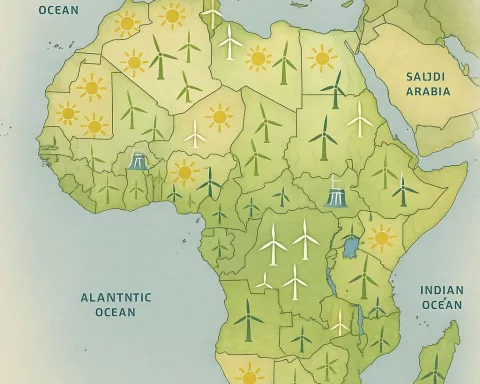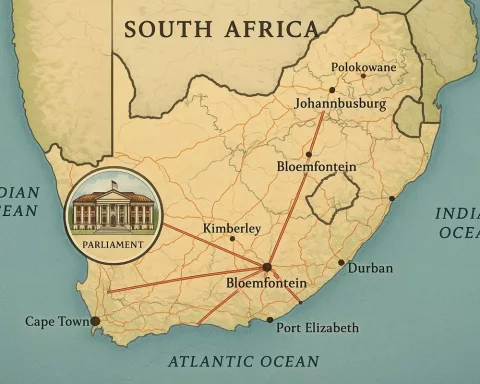

Paul Mashatile envisions South Africa as a leader in renewing the global economy by focusing on industry, green energy, and digital technology. As the G20 Chair, he pushes for fair and lasting growth with strong partnerships worldwide. His hope is to build stronger, greener industries in Africa that create jobs and protect the planet. Mashatile’s vision is bold and hopeful, inviting the world to work together for a future where Africa plays a key role in global progress.
What is Paul Mashatile’s vision for South Africa’s role in global economic renewal?
Paul Mashatile envisions South Africa leading global economic renewal through industrialisation, green technology, and digital transformation. As G20 Chair, he promotes fair, sustainable growth, resilient supply chains, and strong international partnerships to drive Africa’s inclusive development and global economic influence.
Setting the Stage: South Africa Steps Up
Deputy President Paul Mashatile’s appearance at the China International Supply Chain Expo in Beijing was more than ceremonial—it marked a crucial chapter in South Africa’s quest to shape international economic dynamics. The Expo, renowned for spotlighting cutting-edge developments in supply chain management, buzzed with excitement as Mashatile delivered his keynote. His address blended pragmatic strategies with bold aspirations, signaling South Africa’s determination to redefine its place in the global arena.
Mashatile’s remarks gained extra weight given the current international climate. The world faces a series of interconnected crises: supply chains remain fragmented, inequality continues to rise, and the call for sustainable growth grows more urgent. In this context, South Africa’s recent appointment as Chair of the G20—a group representing the majority of the world’s economic power—gives it a unique platform. The G20’s influence stretches across financial markets, trade policies, and international development, touching billions of lives.
The Deputy President’s speech reflected the optimism of a nation conscious of its increasing influence. He laid out a vision grounded in fairness and transparency, advocating for cross-border business rooted in mutually beneficial principles. His rallying cry for a global economic system governed by clear and consistent rules carried echoes of historic gatherings like the Bandung Conference, where newly independent countries first forged a shared path towards self-determination.
Pillars for Progress: Industrialisation, Green Technology, and Digital Transformation
Mashatile didn’t stop at generalities. He highlighted three strategic areas he views as critical for Africa’s advancement: industrial development, sustainable technology, and digital infrastructure. For him, these are more than buzzwords—they are the engines that can drive meaningful, inclusive growth for a continent often left on the sidelines of globalization.
Industrialisation offers both opportunities and lessons. In the early 20th century, cities in Europe and North America transformed dramatically through mass production and mechanization, generating wealth but also deep social and environmental challenges. African leaders like Mashatile seek to chart a different course, aiming for growth that also respects ecological limits. He advocates for an approach where industrial progress goes hand-in-hand with environmental stewardship, drawing inspiration from movements like Bauhaus that integrated artistry, industry, and sustainability.
Sustainable technology forms another cornerstone of South Africa’s international strategy. The reality of climate change—manifested in droughts, floods, and economic strain—hits hardest among the world’s most vulnerable. In business districts and technology hubs across South Africa, young innovators test solar panels, biogas solutions, and waste-to-energy technologies. They blend homegrown wisdom with global research, working to avoid the pitfalls of development paths reliant on fossil fuels.
Mashatile’s encouragement for China and fellow G20 partners to invest in Africa’s renewable energy sector springs from this innovative mindset. He recognizes that simply exporting resources is no longer a viable model. Instead, he proposes that green industry should become a wellspring for job creation, sustainable prosperity, and regional leadership in clean energy.
Digital infrastructure also claims a prominent spot in his vision. Across Africa, from bustling cities like Lagos to emerging tech centers in Nairobi, digital connectivity transforms economies and lives. Mobile payments have become ubiquitous, and online access now brings education to remote communities. Mashatile stressed the urgency of expanding broadband coverage, building robust data centers, and promoting the growth of digital platforms designed and led by Africans.
Partnerships and Pragmatism: Turning Vision into Reality
Strategic collaboration stands at the heart of Mashatile’s approach. He views South Africa’s G20 presidency as an opportunity to strengthen bonds—not just with China, but with a network of international stakeholders. His announcement of an upcoming procurement mission, scheduled to coincide with the G20 Leaders’ Summit, reflects a practical commitment to fostering new economic relationships. By welcoming buyers, importers, and distributors to South Africa, the Deputy President aims to convert diplomatic discussions into concrete business opportunities.
This spirit of partnership draws on the lessons of past international summits. The historic Bretton Woods Conference of 1944, for instance, laid the foundations for institutions like the IMF and World Bank, forever altering the global economic landscape. Mashatile’s vision, though shaped by different circumstances, seeks a similar impact—placing Africa at the heart of economic negotiations and decision-making.
The G20 itself presents both opportunities and challenges. Its members represent the lion’s share of global GDP and trade, but their interests are far from identical. As Chair, South Africa must balance diplomacy with decisive leadership. Mashatile’s focus on achieving tangible benefits for the Global South recalls the origins of the Non-Aligned Movement and the ongoing quest for a fairer, more multipolar world order.
Recent disruptions—from the COVID-19 pandemic to geopolitical tensions—underscore the urgency of building resilient supply chains. The pandemic exposed the fragility of existing systems, as logistical bottlenecks and supply shortages rippled across continents. Leaders like Mashatile understand that true resilience demands diversification, innovation, and robust international cooperation.
The Road Ahead: Shaping a Connected and Sustainable Future
Walking the exhibition halls in Beijing, one senses the potential for transformative change. Displays of automation, sustainable packaging, and digital logistics solutions hint at a future defined by collaboration and adaptability. Delegates from every corner of the globe exchange ideas, forging connections that could soon anchor new ventures in Africa’s industrial zones or solar projects in the remote Karoo. Today’s international expos recall the grandeur of World’s Fairs from centuries past—yet the focus has shifted from competition to collective progress.
Mashatile’s narrative fits into a larger cultural transformation taking place within South Africa. The country, long marked by its struggles, now radiates a sense of pragmatic hope. Its leaders, shaped by a rich and often tumultuous history, understand the importance of inclusion and the necessity of cooperation. They speak the language of partnership, fully aware that no society thrives in isolation.
Looking at the current moment, one finds echoes of historical movements that bridged divides—between the old and the new, the local and the global, the practical and the visionary. From the Renaissance and Harlem Renaissance to the rise of Afrofuturism, history reminds us that real transformation arises where ideas intersect. While Mashatile’s message centers on economics, it carries the spirit of creative reinvention.
Across South Africa, the next generation debates the promise of green hydrogen and blockchain technology. Artists in Johannesburg’s creative districts capture the pulse of renewal, while farmers test innovative irrigation systems powered by the sun. These local stories, woven throughout the national tapestry, reflect the broader pursuit of sustainable advancement.
Mashatile’s invitation—to seize emerging opportunities, build strong partnerships, and share expertise—extends far beyond diplomatic gatherings. He calls on a new generation to shape not only the evolution of supply chains but the destiny of Africa itself. The path forward will demand resilience, collaboration, and creative thinking. History shows that progress unfolds through persistence, dialogue, and the steadfast belief that a more connected, fair, and prosperous world lies within our grasp.
FAQ: South Africa’s Vision for Global Economic Renewal under Paul Mashatile
1. What is Paul Mashatile’s vision for South Africa’s role in the global economy?
Paul Mashatile envisions South Africa as a leader in renewing the global economy by prioritizing industrialization, green energy, and digital transformation. As Chair of the G20, he promotes fair and sustainable growth, resilient supply chains, and strong international partnerships to drive inclusive development in Africa and enhance its global economic influence.
2. Why is South Africa’s chairmanship of the G20 significant?
South Africa’s G20 chairmanship is historic as it gives the country a unique platform to influence global economic policies affecting billions. It allows South Africa to advocate for fairer trade rules, sustainable development, and greater inclusion of the Global South in international decision-making. Mashatile uses this role to foster cooperation and ensure Africa’s priorities are integral to the global economic agenda.
3. What are the key pillars of Mashatile’s strategy for Africa’s advancement?
Mashatile highlights three strategic pillars:
– Industrialization: Promoting manufacturing and industrial growth that respects environmental limits.
– Green Technology: Encouraging renewable energy development and sustainable innovations to combat climate change.
– Digital Transformation: Expanding broadband access, digital infrastructure, and technology-driven services to improve economic participation and connectivity across Africa.
These pillars aim to create jobs, boost economic resilience, and position Africa as a global leader in sustainable development.
4. How does Mashatile propose to build stronger partnerships globally?
Mashatile emphasizes pragmatic collaboration through diplomatic engagement and economic initiatives like procurement missions that connect international buyers with African producers. He stresses partnerships based on mutual benefit, transparency, and clear rules, drawing lessons from past global summits to achieve tangible economic outcomes, particularly for the Global South.
5. How does South Africa plan to address challenges like fragmented supply chains and inequality?
Recognizing the fragility exposed by recent global crises such as the COVID-19 pandemic, Mashatile advocates for diversifying supply chains, investing in innovation, and strengthening international cooperation. His approach focuses on creating resilient, inclusive economic systems that reduce inequality and ensure sustainable growth benefiting all communities.
6. What role does digital technology play in Mashatile’s vision for Africa?
Digital technology is central to Mashatile’s vision as a tool for expanding economic opportunities and social inclusion. Initiatives to increase broadband coverage, develop data centers, and support African-led digital platforms aim to transform education, finance, and commerce across the continent. This digital revolution is seen as essential for Africa to leapfrog traditional development stages and compete globally.
If you have more questions about South Africa’s economic strategies or the G20 chairmanship, feel free to ask!