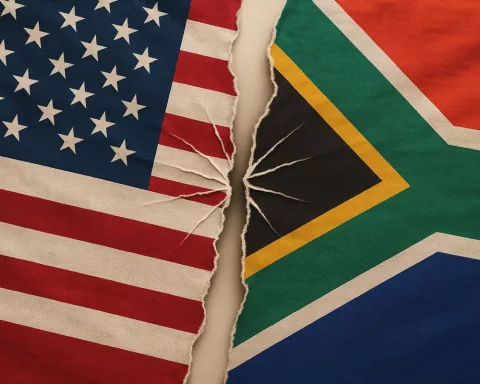
South Africa faces a big challenge as the US plans to add a 30% tariff on many exports starting in 2025. This hit will hurt important industries like car-making and steel, and also make citrus fruit and wine much more expensive to sell in America. Thousands of jobs in factories and on farms could be lost, hurting local communities. South Africa must find new markets and work hard with US leaders to soften the blow. Despite the storm ahead, the country’s people stay hopeful and ready to fight for their future.
What impact will the new US tariffs have on South Africa’s industry and agriculture?
The US’s planned 30% tariffs on South African exports from August 2025 threaten key sectors by:
– Hurting automotive and steel manufacturers
– Increasing costs for citrus and wine exporters
– Risking thousands of jobs in industry and agriculture
– Straining local economies and supply chains
South Africa must diversify markets and seek diplomatic solutions to mitigate these effects.
Shadows Over Morning Industry: The Looming US Tariff Threat
As dawn breaks over Johannesburg, the everyday rhythms of South African industry pulse on—conveyor belts churning, welders igniting flashes of light, and citrus groves drenched in the cool glow of winter. Despite these familiar scenes, a new sense of uncertainty has crept into the hearts of business owners and workers alike. The reason: the United States plans to slap a 30% tariff on a broad array of South African exports starting in August 2025. This decision, announced by President Donald Trump’s administration, could radically reshape trade dynamics, calling into question the future stability of entire communities that rely on these vital export markets.
The reality has hit home for business leaders, who now find themselves pivoting from cautious hopefulness to urgent contingency planning. News of the tariffs has reverberated throughout the nation, from high-powered executive suites to the gritty production floors of the Eastern Cape, and deep into small farming villages. Busi Mavuso, CEO of Business Leadership South Africa, does not mince words—she describes the situation as a direct threat to the very existence of many smaller exporters. What was once a concern about market fluctuations has now become an existential crisis for a significant slice of the economy.
The automotive sector, often held up as a crown jewel of South Africa’s industrial output, is especially vulnerable. Since April, car manufacturers have already faced a cumulative 35% in tariffs, eroding profits and putting intense pressure on smaller parts suppliers. The specter of additional US tariffs only amplifies these challenges, setting off alarm bells among factory owners and workers who depend on a stable supply chain to keep their businesses—and their communities—afloat.
Industry Under Siege: Auto, Steel, and the Echoes of Hard Work
Towns like Uitenhage and Port Elizabeth have long defined themselves by their close ties to automotive manufacturing. Last year alone, they sent R35 billion worth of high-end vehicle components to the United States, with small enterprises responsible for nearly a third of these exports. The new tariffs threaten to do more than cut into company profits; they jeopardize the livelihoods of entire communities—mechanics, toolmakers, freight handlers, and families who have, for generations, relied on the steady hum of industry.
The pressure extends far beyond the car assembly lines. South Africa boasts a proud heritage in producing steel and aluminium, crucial to construction and manufacturing across the region. Plants that once stood as symbols of the nation’s industrial ambition now face a daunting future. While exports of raw materials such as platinum, chrome, and coal remain exempt from the latest tariffs, finished goods manufacturers are on the front lines, absorbing economic blows that ripple throughout their local economies.
These developments challenge more than just balance sheets—they strike at the very identity of regions built on industry. The anxiety is reminiscent of the industrial decline seen in Britain’s North or America’s Rust Belt in decades past. South African communities that have weathered waves of economic change now brace for another storm, as the global marketplace redraws its boundaries and leaves them vulnerable to forces far beyond their control.
Fields of Promise Under Pressure: Agriculture and Its Allies
The consequences of tariffs reach into the rolling agricultural lands of the Western Cape and Limpopo, where citrus groves and vineyards have long provided a living for thousands. The United States serves as a crucial winter market for South African citrus growers, purchasing around R1.8 billion in fruit annually and supporting some 140,000 jobs. For these farmers, the threat of a 30% tariff on their exports is not a distant worry—it is an immediate, practical concern that could make their produce prohibitively expensive for American consumers.
Wine producers face a similar predicament. South African vintners have a storied tradition, blending European grape varieties with local know-how to produce bottles that travel the world. When a bottle of Shiraz finds its place on a Californian shelf, it represents more than just trade; it carries a narrative of resilience and cultural exchange. The proposed tariffs put this story at risk, making it harder for South African wine to compete abroad and potentially cutting off a vital source of income for countless workers.
The pain does not end with those who work the fields. The intricate network of suppliers, transportation companies, packaging firms, and service providers all depend on the smooth flow of agricultural exports. When farmers lose access to key markets, the entire rural economy—already vulnerable to weather and shifting prices—faces additional stress. Mavuso’s warnings about the “knock-on effects” of tariffs are no exaggeration: a change in one link of the supply chain can send shockwaves through every connected business, from the packhouse to the port.
A Web of Dependence: Communities, Crisis Memory, and the Search for Solutions
Modern commerce is a tapestry woven from countless interdependencies. When the automotive or agricultural sectors stumble, the consequences echo throughout the broader economy. Shipping firms see fewer containers leaving South African ports; packaging suppliers record shrinking order books; transport companies find their trucks sitting idle. The effects accumulate, threatening to unravel local economies that rely on the steady movement of goods and services.
South Africa’s experience during the Covid-19 lockdown offers a sobering parallel. When the pandemic shut down businesses, the government stepped in with emergency support schemes, wage subsidies, and relief funds to keep the economic engine running. Busi Mavuso now calls for similar interventions, urging authorities to establish a “tariff shock fund” and new employer relief programs. However, confronting the fallout from US tariffs will require more than short-term fixes. Businesses must look for new markets, renegotiate trade agreements, and invest in alternative supply chains—an effort that will demand coordination, creativity, and patience.
Diplomatic channels between Pretoria and Washington are now working overtime, with South African officials seeking to soften the impact of the proposed tariffs. The country’s history includes moments of bold negotiation and strategic realignment, from the founding of the Southern African Customs Union to the post-apartheid reintegration into the global economy. Today, even a small concession—such as reducing the tariff from 30% to 10%—would be celebrated as a major victory. The struggle is not only financial; it is psychological, a challenge to maintain hope and determination in the face of adversity.
Economists advise businesses to diversify their export destinations, pointing to existing trade agreements with the European Union, China, and Middle Eastern partners. Yet, redirecting sizable volumes of exports is no easy feat. South African producers must adapt to new regulatory environments, build unfamiliar business relationships, and overhaul logistics networks. The journey mirrors the spirit of exploration embodied by early navigators like Bartolomeu Dias and Vasco da Gama—bold, necessary, fraught with hurdles, but essential for survival.
For now, South African industry and agriculture persist, moving goods to the docks, filling trucks, and tending fields. The road ahead remains uncertain, shaped by choices made in distant capitals but lived daily in communities across the nation. Whether through diplomacy, innovation, or sheer resilience, South Africa’s response to this tariff shock will define not just its economic future, but the spirit of its people in the face of global headwinds.
FAQ: Understanding the Impact of US Tariffs on South Africa
1. What are the new US tariffs and when will they take effect?
The United States plans to impose a 30% tariff on a wide range of South African exports starting in August 2025. These tariffs will primarily target key sectors such as automotive parts, steel products, citrus fruits, and wine. The aim is to protect US industries but this move poses significant challenges for South African exporters who rely heavily on the American market.
2. How will these tariffs affect South Africa’s automotive and steel industries?
South Africa’s automotive sector, especially in towns like Uitenhage and Port Elizabeth, faces a severe threat. These areas export billions worth of vehicle components to the US, and many small businesses depend on these sales. The tariffs will increase costs, reduce profits, and may force companies to downsize or close, putting thousands of jobs at risk. Similarly, steel and aluminium manufacturers, important to construction and manufacturing, will see decreased competitiveness in the US market, potentially leading to factory closures and economic strain in industrial regions.
3. What impact will the tariffs have on South African agriculture, especially citrus and wine?
Agriculture, particularly citrus growers in the Western Cape and Limpopo and South African wine producers, will be hit hard. The US is a vital market, buying about R1.8 billion of citrus annually and supporting roughly 140,000 jobs in farming and related sectors. A 30% tariff could price South African fruit and wine out of the US market, causing lost sales, job cuts, and ripple effects throughout rural economies including suppliers, transporters, and packaging companies.
4. What steps is South Africa taking to address and mitigate these tariff impacts?
South Africa is pursuing a multi-pronged approach:
– Engaging in diplomatic talks with US officials to reduce the tariff rate or secure exemptions.
– Encouraging businesses to diversify export markets, leveraging existing trade agreements with Europe, China, and the Middle East.
– Calling for government support measures such as a “tariff shock fund” and employer relief programs to help industries and workers adjust.
– Investing in alternative supply chains and new trade partnerships to reduce dependence on the US market.
5. How will these tariffs affect local communities beyond the direct exporters?
The tariffs threaten to unravel entire local economies. Job losses in factories and farms will impact families and reduce spending in communities. Service providers such as freight companies, packaging firms, and shipping ports will see decreased demand, leading to wider economic slowdowns. The situation echoes past industrial declines seen in other countries and raises concerns about long-term regional economic stability.
6. Is there hope for South Africa to overcome these challenges?
Yes. Despite the looming tariffs, South Africans remain resilient and hopeful. The country has a history of navigating complex global challenges through innovation, strategic diplomacy, and economic diversification. By expanding into new markets, advocating for tariff relief, and supporting affected industries and workers, South Africa aims to protect its economic future and preserve livelihoods. The journey forward will require creativity, cooperation, and patience but is essential for long-term sustainability.