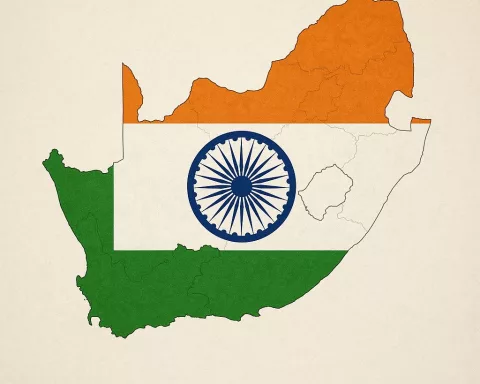
South Africa is launching a massive five-year plan to crush Foot-and-Mouth Disease for good. They’re upgrading labs, getting tons of vaccines, and working with villages to tag and track every animal. This tough new strategy, backed by big money, aims to reopen a R7 billion beef trade with countries like China and the EU. They’re using strict rules, new tech, and even special meetings with local leaders to make sure no sick animal slips through. It’s a full-on war to protect their cattle and bring back their valuable beef exports!
What is South Africa’s new strategy to combat Foot-and-Mouth Disease (FMD)?
South Africa has implemented a five-pillar strategy to achieve “FMD-free with vaccination” status. This comprehensive plan includes synchronized efforts in lab upgrades, vaccine shipments, village extension work, and export red tape, aiming to reopen R7 billion in beef trade to markets like China, the EU, and Saudi Arabia.
1. The Blueprint: One Strategy, Five Pillars, Zero Tolerance
Agriculture Minister John Steenhuisen has torn up the old script on Foot-and-Mouth Disease. Instead of reactive fire-fighting, Pretoria now owns a single, time-stamped war plan that yokes lab upgrades, vaccine shipments, village extension work and export red tape into one synchronised timeline. The goal: “FMD-free with vaccination” status before the current administration faces the ballot box again. For the first time, cabinet has signed off on quarterly jab quotas and promised the public a live, province-by-province serology dashboard – no more annual PDFs buried on an obscure web page.
Five operational pillars carry the load. Each pillar has its own budget line, its own joint-ops committee chaired by the Director-General, and permanent seats for provincial vets, the Agricultural Research Council (ARC), commercial vaccine houses and organised industry. Uninterrupted vaccine flow, mass animal ID, strict movement control, intense lab surveillance and an eleven-language awareness blitz will run in parallel, not in silos. The payoff is measured in tonnes of red meat: regaining access to China, the EU and Saudi Arabia, markets that spent R6.8 billion on South African beef in 2021 before the shutters slammed shut.
The shift in tone is unmistakable. Where previous plans listed “aspirations,” this one prints delivery dates and fines. Roadblocks will scan QR codes, trucks that dodge checkpoints forfeit R25 000 on the spot, repeat offenders lose their transport licence for a year. Even diplomats will feel the change – export certificates will carry digital watermarks traceable to the exact dip-tank where the animal was tagged.
2. Cold Chain & Cold Cash: How Vaccines Will Move Faster Than the Virus
From 15 January 2026, a million monovalent doses will leave the Botswana Vaccine Institute every month, pre-packed in 200-dose cold boxes that phone home every half-hour. South African Airways Cargo has ring-fenced pallet space on the Tuesday and Friday Gaborone–Johannesburg legs, trimming lead time to 36 hours and eliminating the 8 % spoilage that used to haunt the hand-off at OR Tambo. If communal coverage tops 85 %, an extra half-million doses can be called off the shelf within seven days.
Domestic supply is catching up. At Onderstepoort, bulldozers are already shaping a 2 000 m² formulation hall that will push out 15 million multivalent doses a year against SAT-1, SAT-2 and SAT-3, the three serotypes still circulating north of the Limpopo. A bioreactor train – donated by the Bill & Melinda Gates Foundation – will enter validation in October 2026, while KfW bankrolls an on-site fill-finish line that ends the expensive round-trip of bulk antigen to Europe and back. Until then, Botswana keeps the pipeline full; afterwards, South Africa controls its own destiny.
Money is no longer an afterthought. Treasury has locked in R900 million over the medium-term expenditure framework, the EU’s SA-EU Development Fund tops that up with a R400 million grant, and the Red Meat Producers’ Organisation chips in R300 million from a R5-per-head slaughter levy that started in October 2025. The BRICS New Development Bank covers the remaining gap with 15-year loans at 2.5 % interest, betting that future beef receipts will dwarf today’s debt. A R150 million contingency purse sits at the Land Bank, ready to fund emergency ring-vaccination if an exotic serotype jumps the fence.
3. Tags, Trucks and Technology: The New Rules of Moving Meat
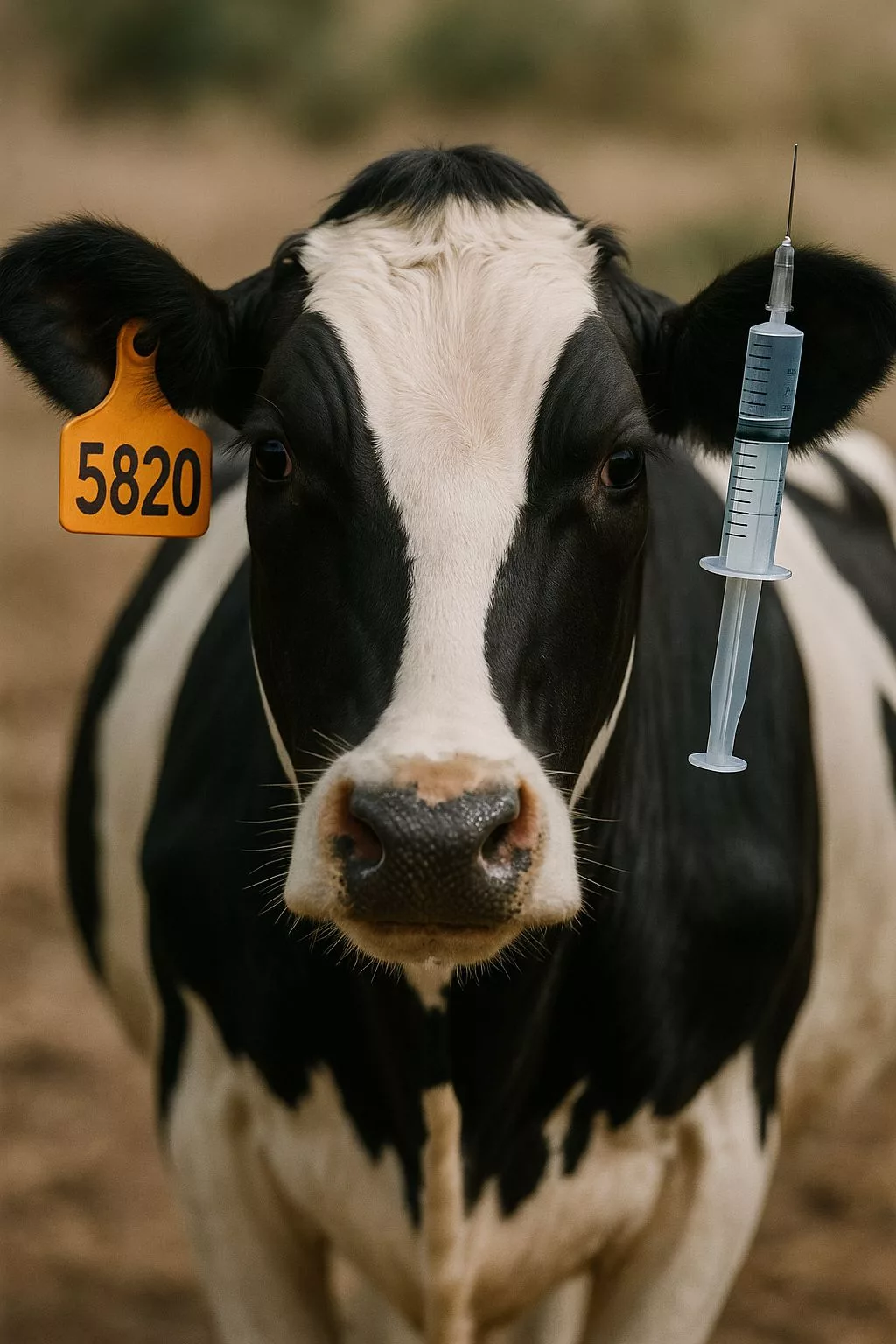
Midnight on 14 January 2026 is the last time a cow can legally cross a South African road without a 12-digit RFID button in its ear. Within seven days of birth, every calf, lamb, kid or piglet must carry a low-frequency tag whose number is uploaded via 3G routers at 1 150 communal dip-tanks and 380 abattoirs. An Android app called “FMD Tracker” lets any farmer, buyer or inspector scan the tag and see, in real time, vaccination dates, movement permits and lab results. Commercial herds may join gradually, but communal stock will not receive a movement permit until the local chief certifies 100 % tag coverage. The target: 12 million cattle and 22 million small-stock logged by June 2027.
The old provincial map has been binned. Fourteen colour-coded veterinary zones – green, amber, red, grey – are updated nightly and ignore political borders. A digital permit generated through the same LITS platform is compulsory for any live cloven-hoofed animal, fresh meat, unpasteurised milk or untreated hide that crosses a zone line. At 220 new roadblocks, animal-health technicians armed with handheld readers verify each QR code against the central Oracle database. Trucks that try to detour trigger automatic number-plate cameras and an instant R25 000 fine; do it again and you sit out a 12-month licence suspension. Feedlots within 30 km of an outbreak must now pre-vaccinate all incoming cattle and prove antibody titres ≥1:64 before the gates open.
Data flows both ways. Results from Onderstepoort’s real-time PCR machines – capacity doubled to 2 400 samples a day – hit the same dashboard within 24 hours. A courier grid modelled on the HIV-lab network ensures that swabs collected before 09:00 anywhere in the country reach the high-containment unit by 16:00. A new one-year postgraduate diploma, co-hosted by the ARC and the University of Pretoria, will mint 42 fresh FMD diagnosticians every February, half of whom will rotate through Botswana’s regional reference lab to keep skills regional, not just national.
4. Chiefs, Checkpoints and China: The Human Edge of a Virus War
Government is betting R60 million over two years that culture and science can share the same kraal. One-hundred-and-twenty field facilitators, fluent in SeTswana, isiZulu, Xitsonga and Sesotho, will host evening “kraal meetings” lit by solar projectors, explaining why a vaccinated bull remains a fertile bull. Radio dramas will air on 18 SABC regional stations during prime time, and a WhatsApp hotline promises same-day veterinary feedback for any photo of a suspicious hoof lesion. Traditional leaders have already negotiated 480 fixed vaccination days that align with monthly dipping, cutting extra handling costs to near zero.
Export doors will reopen only when data, not diplomacy, swing them wide. South Africa must document 24 consecutive months without viral circulation in vaccinated populations, backed by six-monthly blood surveys of 120 000 sentinel animals. A September 2025 side-letter with Beijing allows a phased comeback: first deboned beef from under-30-month feedlots, then vacuum-packed primal cuts once 80 % national herd coverage sticks for 18 months. The maiden 25-tonne forequarter shipment is pencilled for Durban harbour in October 2026, provided a CCTV-monitored export compartment passes EU audit. Private abattoirs are rushing to install lairage cameras so Chinese inspectors can log in from Shanghai and watch certified cattle stay separated from the rest.
Before the first jab ever enters a shoulder muscle, the system will be stress-tested. In February 2026, “Operation Hoofbeat” will simulate a mock outbreak in the Free State, complete with cold-chain failures, data-blackouts and social-media rumours. All 1 800 communal animal-health technicians must finish training by March, and 3.5 million cattle along the Zimbabwean border need tags in their ears before the winter vaccination wave rolls out in April. The countdown has started; the dashboard is already live.
What is South Africa’s new strategy to combat Foot-and-Mouth Disease (FMD)?
South Africa has implemented a five-pillar strategy to achieve “FMD-free with vaccination” status. This comprehensive plan includes synchronized efforts in lab upgrades, vaccine shipments, village extension work, and export red tape, aiming to reopen R7 billion in beef trade to markets like China, the EU, and Saudi Arabia.
What are the five pillars of South Africa’s new FMD strategy?
The five operational pillars of South Africa’s FMD strategy include uninterrupted vaccine flow, mass animal identification, strict movement control, intense lab surveillance, and an eleven-language awareness blitz. Each pillar has dedicated funding, joint-operations committees, and involves various stakeholders including provincial vets, the Agricultural Research Council (ARC), vaccine manufacturers, and the organized industry.
How is South Africa ensuring a consistent and effective vaccine supply?
From January 15, 2026, South Africa will receive one million monovalent vaccine doses monthly from the Botswana Vaccine Institute, with expedited delivery. Domestically, a new formulation hall at Onderstepoort will produce 15 million multivalent doses annually against SAT-1, SAT-2, and SAT-3 serotypes. Significant funding from various sources, including Treasury, the EU, Red Meat Producers’ Organisation, and the BRICS New Development Bank, ensures financial backing for vaccine procurement and production.
What new technologies and regulations are being implemented for animal identification and movement control?
By January 14, 2026, all cloven-hoofed animals will require a 12-digit RFID button in their ear, with data uploaded via 3G routers at dip-tanks and abattoirs. An “FMD Tracker” Android app will allow real-time access to vaccination dates and movement permits. New colour-coded veterinary zones will replace provincial maps, and digital permits will be mandatory for animal and product movement, enforced by 220 new roadblocks with automated fines for violations.
How is South Africa engaging local communities and traditional leaders in the FMD fight?
South Africa is investing R60 million over two years to integrate culture and science. 120 field facilitators, fluent in various local languages, will host “kraal meetings” to educate communities. Radio dramas and a WhatsApp hotline will provide information and feedback. Traditional leaders have also coordinated fixed vaccination days aligned with monthly dipping schedules to improve efficiency and reduce costs.
What are the export targets and conditions for South African beef?
South Africa aims to regain access to markets like China, the EU, and Saudi Arabia, which previously accounted for R6.8 billion in beef exports. Reopening these doors depends on documenting 24 consecutive months without viral circulation in vaccinated populations, supported by six-monthly blood surveys. A phased comeback with China is planned, starting with deboned beef, and an EU audit will ensure compliance with their standards, including CCTV monitoring in export-certified abattoirs.