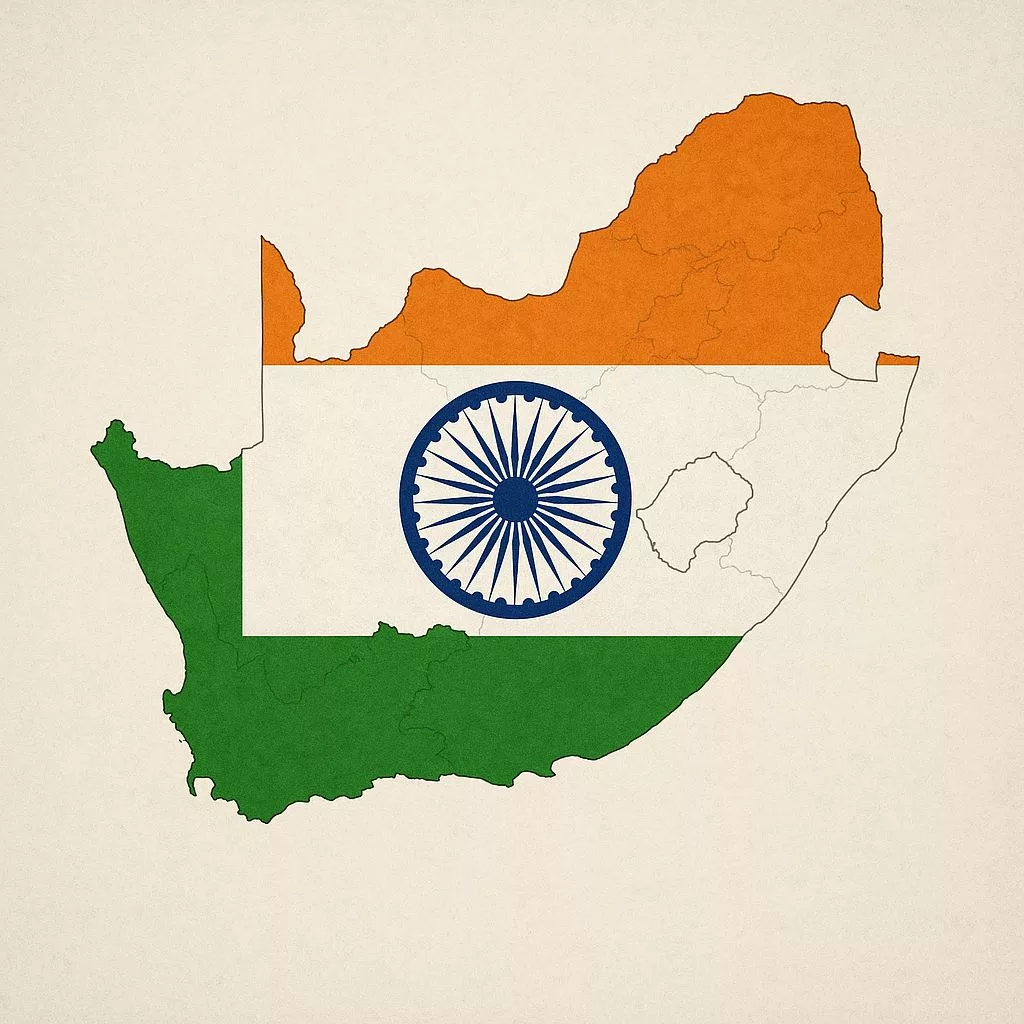
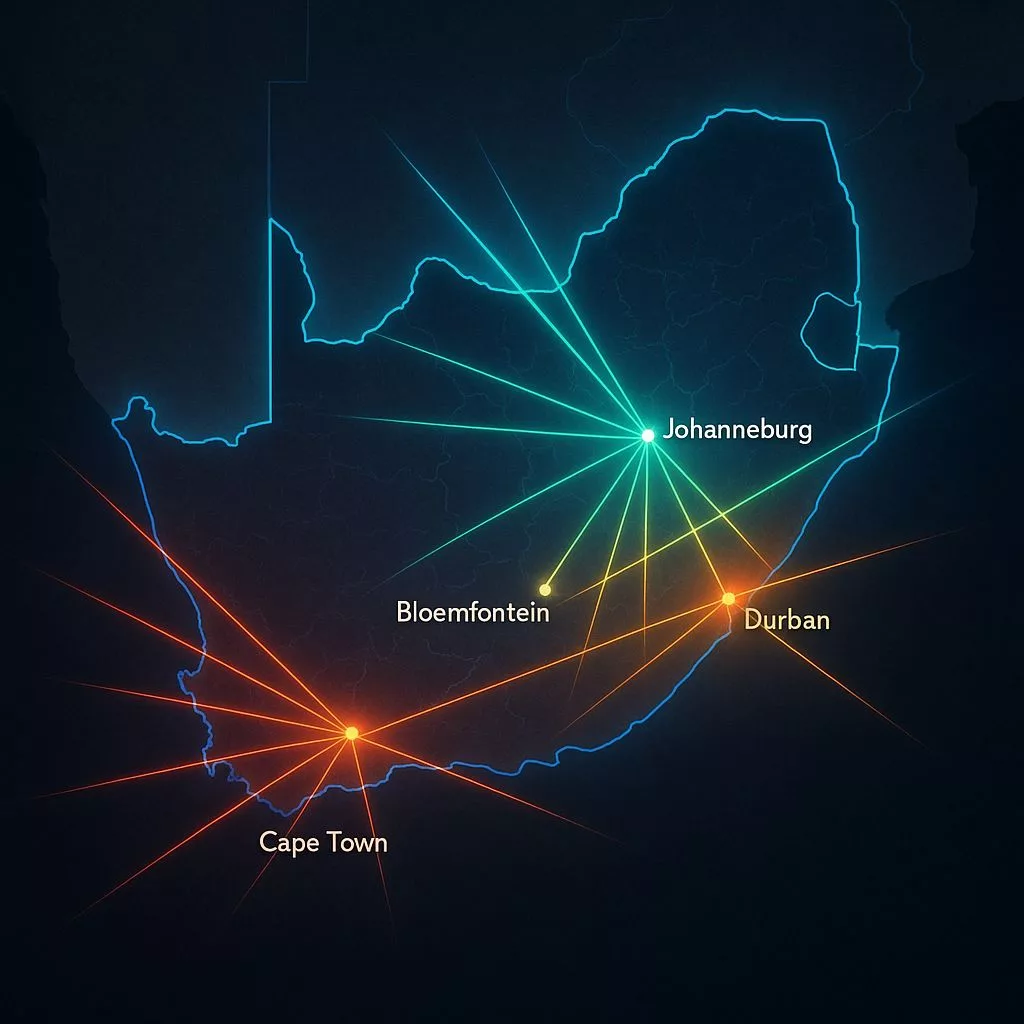
In November 2025, South Africa saw a massive 3.1 million people cross its borders. This huge number of visitors, especially 2.37 million non-citizens, made it the busiest November for foreign entries since before COVID hit in 2019. It was like a river of people flowing in, showing how popular South Africa had become again.
What was the total number of human crossings into South Africa in November 2025?
In November 2025, South Africa recorded a total of 3,104,092 human crossings. This figure highlights a significant surge in foreign visitors, with 2.37 million non-citizens entering the country, marking the busiest November for foreign entries since 2019’s pre-COVID peak.
1. The Clock Resets at Midnight
When the calendar flipped to 1 November 2025, every electronic turnstile at OR Tambo, every ink pad at Beitbridge, every ship-crew scanner in Durban harbour flicked back to zero. Thirty days later the tally stood at 3 104 092 human crossings – one every 0,84 seconds. Stack those souls next to Namibia’s entire population and the line would still spill over. Yet, in planetary terms, it is a whisper: 0,038 % of all humans alive. The real story is density: 2,37 million crossings belonged to non-citizens, the busiest November for foreign feet since 2019’s pre-COVID peak.
The surge did not arrive evenly. Mid-month, a Friday-to-Monday bulge added 112 000 extra movements as Indian wedding parties, German eco-tourists, and Zimbabwean pharmacists landed in overlapping waves. Air-traffic controllers coined the phrase “orange crush” because the flight-progress board at OR Tambo glowed orange with delay warnings for 38 continuous hours. By contrast, the usually frantic Cape Town route looked almost sleepy; its jumps came after 22:00, when long-haul red-eyes from São Paulo and Frankfurt touched down within 17 minutes of each other three nights in a row.
Behind the raw figure lies a mosaic of motives. Only 19 % of the 3,1 million stayed longer than a week; the rest were day-trippers, couch-surfers, cargo-mules, wedding guests, or vaccine dodgers. Each carried a barcode, a scent trace, a pocket of cash, or a suitcase of frozen fish – tiny plot lines that together write the nation’s most dynamic ledger.
2. OR Tambo, Lebombo, Cape Town: Three Ribbons of Light
Inside Stats SA’s data-visualisation studio, November’s traffic becomes a living fibre-optic sculpture. Each traveller is one glowing ribbon, colour-coded by port. OR Tambo International contributes 1,089 million ribbons, blazing sunrise-orange. Lebombo border post with Mozambique adds 412 000 strands of leaf-green that snake toward Mpumalanga’s farms. Cape Town International donates 298 000 ribbons painted midnight-blue, because 63 % of its passengers arrive on overnight flights from Europe and South America. The ribbons twist, braid, and fray, showing corridors that pulse and corridors that sag.
The sunrise-orange strand peaks between 05:30 and 08:00, when five wide-body jets can dock simultaneously and each arrival gate disgorges 520 passengers within 14 minutes. The leaf-green ribbon, in contrast, thickens on Friday afternoons when 70-seater coaches reach the frontier nose-to-tail, turning the N4 into a crawling caravan of diesel and destiny. Midnight-blue ribbons shimmer latest of all; they gain colour after the sun sets, when cabin lights dim and flight attendants collect last-minute landing cards over the dark Atlantic.
Policy analysts watch the ribbons the way stockbrokers watch tickers. A sudden thinning of the green strand on 18 November warned of an unannounced change in Mozambique’s exit-fee policy; Pretoria phoned Maputo, confirmed the rumour, and agreed to a joint press release before lunchtime. Conversely, an unexpected bulge in sunrise-orange on 25 November triggered an emergency meeting that produced an extra immigration booth and a pop-up duty-free cart within 24 hours. Data, painted as light, becomes decisions rendered in steel, glass, and overtime shifts.
3. SADC’s Rolling Living-Rooms
Citizens of the 15-nation Southern African Development Community face no visa requirement for stays under 90 days, but they do face 18-hour bus rides and the arithmetic of empty wallets. Intercape, Eldo, and Greyhound sold 1,4 million coach tickets during the month; 92 % were bought in cash within 24 hours of departure. Each bus becomes a mobile village: suitcases of dried fish in the hold, pre-schoolers asleep across two seats, pastors screening sermons from USB sticks, and chickens in cardboard boxes that cluck whenever the driver down-shifts on the Drakensberg escarpment.
Once inside South Africa, the average SADC visitor spends 4,7 nights but books only 1,3 nights in a formal hotel. The rest of the time vanishes into the nation’s vast invisible hospitality layer: backyard cottages that advertise by WhatsApp, churches that rent pews as beds for R 60, and sofas offered by cousins-of-cousins in Hillbrow high-rises. Statisticians call this the “sofa surplus,” an unmeasured sponge that soaks up a million bed-nights a month. The payoff surfaces in supermarket data: whenever Mozambican schools close, inner-city Joburg stores sell out of 5 kg maize-meal sacks and 2-litre cooking-oil bottles by noon, because visitors cook thank-you meals for their hosts.
The corridor is not friction-free. On 11 November, a broken crankshaft immobilised two Greyhound coaches at the Mantsole weigh-bridge, stranding 112 passengers for nine hours. Entrepreneurs appeared within minutes: a woman sold vetkoek and polony slices from a cooler box; a mechanic offered a used shaft for R 12 000 cash; a pastor set up a portable keyboard and collected R 2 300 in “seed offerings.” By dusk a replacement coach arrived, the drivers swapped cargo, and the convoy rolled on – an impromptu economy born of steel fatigue and human grit.
4. Germans, Brazilians, and the Scent of Money
Lufthansa flight LH 572 touches down at 06:10 every single day. In November it delivered 45 972 Germans, the largest monthly cohort ever recorded. They arrive clutching printed itineraries colour-coded by biome: lime-green for fynbos hikes, ochre for succulent-Karoo drives, chestnut for bushveld safaris. Before leaving Frankfurt, each tourist receives a prepaid Mastercard loaded by Landesbank; the card blocks ATM withdrawals in townships, herding 78 % of spend into accredited lodges and wine estates. The result: Germans outspend British visitors 2,3 to 1, yet less than a fifth of their rand trickles into street-side craft markets.
Nine time-zones away, LATAM’s new São Paulo runway launches a 10 463 km black-sky service that departs GRU at 23:55 and lands at JNB at 15:05 the following afternoon. Brazilians discovered they could squeeze a cheetah selfie into the same trip: the return flight leaves at 21:30, gifting six hours of daylight for safari snaps. November’s load factor hit 92 %, and one family dropped R 198 000 on a private Kalahari tracking experience paid in bitcoin, converted on arrival by a Stellenbosch fintech start-up. The route’s success nudged Airports Company South Africa to repaint gate A21 with green-and-yellow murals and to stock Guaraná soda in the duty-free fridge.
Even the air itself is monetised. OR Tambo’s new biometric corridor sniffs every arrival for “smellprints” – volatile compounds that betray long-haul fatigue and, more importantly, shopping budgets. Research shows a 14-hour aldehyde signature predicts high spend with 87 % accuracy. When the sensors match a profile, Duty-Free South Africa pings a digital coupon to the traveller’s phone; single-malt whisky sales jumped 19 % in November, adding R 12 million to tills. Thus, the scent of jet-lag becomes the smell of money, captured, digitised, and bottled into quarterly reports.
The month ends, but the data lives on. By March 2026 every record – age, port, purpose, shampoo brand – will be anonymised, hashed, and uploaded to UNWTO servers in Nairobi and Montreal. Algorithms will grind the numbers into rebound curves for semi-peripheral economies, turning living, breathing travellers into 22-variable ghosts that train models no human will ever read. A 30-day November, shrunk to vectors, will outlast every suitcase, every sofa, every barracuda sold before dawn – an afterlife more durable than the footprints that first crossed the border.
[{“question”: “What was the total number of human crossings into South Africa in November 2025?”, “answer”: “In November 2025, South Africa recorded a total of 3,104,092 human crossings. This figure highlights a significant surge in foreign visitors, with 2.37 million non-citizens entering the country, marking the busiest November for foreign entries since 2019’s pre-COVID peak.”}, {“question”: “Which entry points saw the most traffic and what were their primary characteristics?”, “answer”: “OR Tambo International Airport was the busiest, contributing 1.089 million crossings, largely characterized by early morning arrivals. The Lebombo border post with Mozambique added 412,000 crossings, seeing peak traffic on Friday afternoons from 70-seater coaches. Cape Town International Airport contributed 298,000 crossings, with 63% of its passengers arriving on overnight flights from Europe and South America, primarily after 10 PM.”}, {“question”: “What percentage of visitors stayed longer than a week in South Africa during November 2025?”, “answer”: “Only 19% of the 3.1 million visitors stayed longer than a week. The majority were day-trippers, couch-surfers, wedding guests, or individuals with other short-term motives.”}, {“question”: “How did visitors from the Southern African Development Community (SADC) typically travel and where did they stay?”, “answer”: “SADC citizens primarily traveled by bus, with 1.4 million coach tickets sold. They largely relied on informal accommodation such as backyard cottages, church-provided beds, or staying with relatives, with only 1.3 nights on average booked in formal hotels. This informal hospitality network is referred to as the ‘sofa surplus’.”}, {“question”: “Which nationalities were notable for their spending habits and travel patterns in November 2025?”, “answer”: “Germans, totaling 45,972 visitors, were notable for their high spending, outspending British visitors 2.3 to 1, largely due to prepaid Mastercards that directed 78% of their spend to accredited lodges and wine estates. Brazilians, arriving via a new direct flight, seized opportunities for short, high-spending safaris, with one family spending 198,000 Rand on a private Kalahari experience paid with Bitcoin.”}, {“question”: “How is technology being used to enhance operations and revenue at South African gateways?”, “answer”: “Advanced data visualization techniques are used to monitor traffic flows in real-time, enabling quick responses to policy changes or surges in arrivals. OR Tambo International Airport also implemented a biometric corridor that uses ‘smellprints’ to predict high-spending travelers, allowing Duty-Free South Africa to targeted digital coupons, which led to a 19% increase in single-malt whisky sales.”}]