South Africa’s Deputy Minister Bernice Swarts unveiled the 2025 National Biodiversity Assessment, a groundbreaking report. This “living ledger” acts as a mirror to show the truth, a compass to guide decisions, and an alarm clock to warn of danger. It was written by over 490 people, many from groups not usually included. This report will change how South Africa makes decisions about land, money, and nature, turning scientific facts into real-world action to protect the country’s precious wildlife and plants.
What is the 2025 National Biodiversity Assessment?
The 2025 National Biodiversity Assessment is South Africa’s fourth national ecological assessment, but the first to be a “living ledger” co-authored by a diverse group of over 490 individuals. It serves as a mirror, compass, and alarm clock, influencing policy, budgets, and borders by integrating scientific data into decision-making across various sectors in South Africa.
A Garden of Firsts: Cape Town Becomes the Epicentre of Ecological Accountability
On the morning of 28 October 2025, Kirstenbosch’s stone benches overflowed with botanists, mayors, fishers, funders and storytellers. Deputy Minister Bernice Swarts stepped onto the podium framed by silver trees and television lenses, apologising for Minister Aucamp’s absence while instantly claiming the moment as a collective triumph. She reminded the crowd that the document being launched is the fourth – yet the first to read like a national autobiography rather than a scientific annex. More than 490 writers – half of them women, more than a third from communities once locked out of laboratories, and 12% young people whose first language is hope – co-authored this living ledger. The maths is moral: every page carries fingerprints once excluded from the archive of nature.
The Deputy Minister framed the Assessment as a mirror, compass and alarm clock. A mirror because it refuses to flatter; a compass because it insists that every rand, every regulation, every dream must be oriented toward life; an alarm because the snooze button on extinction has broken. She thanked the South African National Biodiversity Institute (SANBI) for turning data into democracy, and she saluted the 110 institutions that loaned their computers, boats, drones and grandmothers’ memories to the process.
Then came the continental trump card. Six weeks earlier, South Africa had closed the G20 Summit with an African president chairing for the first time. Delegates left Cape Town with communiqués that mentioned debt, vaccines, coal and coral in the same breath. The 2025 Assessment arrives as the scientific annex to those late-night negotiations, proving that African evidence can shape global rules rather than merely echo them.
From Footnotes to Frontlines: How the Assessment Rewrites Policy, Budgets and Borders
Inside the glossy covers lies a stealth revolution: the same maps now guide where roads may not go, where cattle may not graze, where ministers may not sign licences. The Deputy Minister listed the arenas – land-use tribunals, water-security war-rooms, fisheries courts, mining boards, municipal spatial plans – now legally obliged to open the Assessment before they open the gate.
She gave examples. The National Spatial Development Framework, once obsessed with freight corridors, now begins every chapter with the location of wetlands that keep hospitals cool and maize tall. The White Paper on Conservation – once a monochrome pamphlet – now carries colour-coded pages that quantify how reptiles prevent soil erosion and how estuaries absorb storm surges cheaper than seawalls. Provincial planners in Limpopo used the 2020 Assessment to refuse three shopping-mall applications on dune forests; the 2025 edition gives them thicker armour and thicker wallets, because Treasury has agreed that ecological infrastructure is a depreciable asset, not an externality.
Yet the most dramatic shift is in language. The Assessment forces economists to speak in tongues of dragonflies, forces engineers to convert cubic metres of floodwater into rand values of avoided disaster, and forces mayors to sign Memoranda of Understanding with mangroves. Biodiversity is no longer a lobbyist’s hobby; it is an economic sector that employs 400 000 people who plant, guide, count, patrol, weave, heal and teach. Every rand spent on clearing invasive wattles upstream saves nine rands in dam-desilting downstream; every hectare of renosterveld left standing keeps a pharmacy open for pollinators that insure R3 billion in annual fruit exports.
Triage in the Kingdom of Species: Rivers, Reptiles and the New Genetics of Loss
The applause faded when the Deputy Minister turned to the diagnoses. South Africa still owns 7% of the world’s plant species on 1% of its land surface, but that celebrity status is brittle. She began with water, the element that forgets nothing. Only 10% of the country’s landscape is classified as Strategic Water Source Areas, yet these mountain cathedrals supply more than half the dams that keep Johannesburg’s showers and Gqeberha’s Volkswagen plant running. They are bleeding: invasive gum trees gulp 7% of runoff; acid mine drainage tattoos granite; illegal sand mining re-channels arteries.
Freshwater fish carry the reddest list: 60% of yellowfish species could vanish before the next Assessment. Cartilaginous cousins – sharks and rays – mirror the collapse because estuaries where they once pupped have become parking lots. On land, reptiles are the new canaries. The Assessment detected a 34% decline in armadillo lizard sightings, not because the lizards moved but because illegal collectors sell them as faraway as Tokyo. Namaqualand, once the postcard of spring flowers, now exports succulents in wheelie bins; climate change arrives as daylight robbery, pushing succulents uphill until they run out of mountain.
For the first time anywhere, the Assessment includes genetic indicators – tiny thermometers inserted into the DNA of seemingly common species. Early results show allelic richness shrinking in springbok, in red grass, in the Cape honeybee. In other words, abundance can disguise erosion; the library is burning even when the shelves look full. South Africa will submit these microscopic vital signs to the Convention on Biological Diversity next year, becoming the first country to confess genetic uncertainty at the global altar.
From Diagnosis to Insurgence: 40 Million Green Dollars and the Jobs that Grow Back
The Deputy Minister closed with a battlefield promotion: knowledge must become insurgency. She announced that the Green Climate Fund has approved USD 40.1 million for an Ecosystem-based Disaster-Reduction programme that will translate every map in the Assessment into shovels, pay-slips and seedlings. Over the next eight years the money will rebuild 30 000 ha of wetlands that double as flood sponges, restore 800 km of coastal dunes that out-perform billion-rand seawalls, and plant 5 million mangrove propagules that grow into nursery grounds for fish and finance.
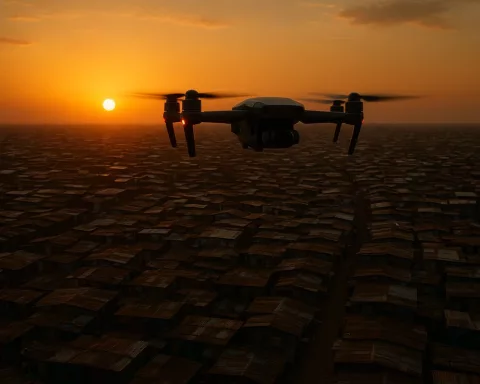
The project targets 52 small towns where unemployment is higher than sea levels. Traditional councils will co-sign tenders so that a goggo who knows where indigenous reeds grow becomes a sub-contractor paid climate-resilient wages. Municipalities will receive performance bonuses every time a restored wetland prevents a flood that never makes the news. The Deputy Minister promised that every rand will be traceable on a public dashboard, every job will be SMS-verified, and every hectare will be photographed quarterly by drones flown by young women trained in Cofimvaba and Atlantis.
She ended with a covenant. Biodiversity is no longer the domain of khaki uniforms; it is the grammar of water bills, the yield of pension funds, the lyrics of freedom songs. She called on CEOs to calculate risk the way actuaries calculate fire insurance, urged teachers to replace outdated wall-maps with the Assessment’s free app, begged journalists to headline dung beetles as often as dagga. Then she stepped back, allowing the Cape doctor wind to carry her final sentence across the gardens: “We have the map, we have the money, we have the mirror – let us now have the courage to change the reflection before the next drought, the next fire, the next lonely century asks why we paused.”
[{“question”: “What is the 2025 National Biodiversity Assessment (NBA)?”, “answer”: “The 2025 National Biodiversity Assessment is South Africa’s fourth national ecological assessment. It’s unique as the first ‘living ledger’ co-authored by over 490 diverse individuals, serving as a mirror, compass, and alarm clock to guide decisions related to land, money, and nature.”}, {“question”: “Who authored the 2025 NBA and why is its authorship significant?”, “answer”: “Over 490 individuals co-authored the 2025 NBA, including a significant number of women (half), people from previously excluded communities (over a third), and young people (12%). This diverse authorship is significant because it ensures a broad perspective and integrates voices often absent from scientific assessments, making it a ‘national autobiography’ rather than just a scientific document.”}, {“question”: “What are the main purposes of the 2025 NBA, as described by Deputy Minister Bernice Swarts?”, “answer”: “Deputy Minister Bernice Swarts described the 2025 NBA as a mirror, a compass, and an alarm clock. It acts as a mirror by showing the truth unflinchingly, a compass by guiding decisions towards life-sustaining outcomes (e.g., policy, budgets), and an alarm clock by warning of environmental dangers like extinction.”}, {“question”: “How will the 2025 NBA impact policy and decision-making in South Africa?”, “answer”: “The 2025 NBA will fundamentally change how South Africa makes decisions. Its maps and findings are legally obliging various sectors, including land-use tribunals, water-security war-rooms, fisheries courts, mining boards, and municipal spatial plans, to consider its data before major decisions. It will integrate scientific facts into real-world action, influencing policy, budgets, and even the language used in economic and engineering discussions.”}, {“question”: “What are some of the key findings or diagnoses presented in the 2025 NBA regarding South Africa’s biodiversity?”, “answer”: “The assessment highlights critical issues: only 10% of the country’s landscape are Strategic Water Source Areas, which are under threat from invasive species, acid mine drainage, and illegal sand mining. It notes a 60% decline risk for yellowfish species, a mirroring collapse in sharks and rays, and a 34% decline in armadillo lizard sightings due to illegal collection. For the first time, it also includes genetic indicators, showing shrinking allelic richness in species like springbok and Cape honeybee, indicating genetic erosion even in seemingly abundant populations.”}, {“question”: “What concrete actions and funding are being implemented based on the 2025 NBA’s findings?”, “answer”: “The Green Climate Fund has approved USD 40.1 million for an Ecosystem-based Disaster-Reduction programme. This funding will be used over eight years to rebuild 30,000 hectares of wetlands, restore 800 km of coastal dunes, and plant 5 million mangrove propagules. These projects aim to create jobs in 52 small towns, with traditional councils and municipalities involved, and every rand traceable on a public dashboard, ensuring accountability and local community benefit.”}]