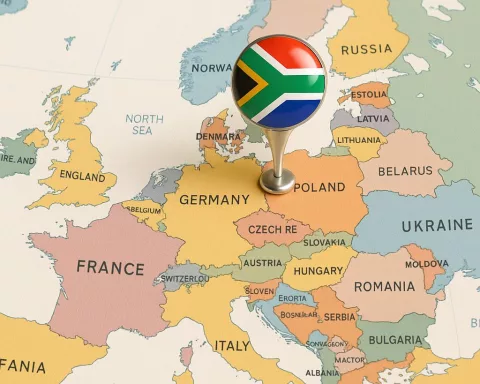

South Africa stands strong in supporting peace for Palestine, drawing on its own history of fighting apartheid. At a recent global conference, South African Justice Minister Ronald Lamola urged the world to act quickly to stop the violence and recognize Palestinian statehood. He stressed that lasting peace must come through law, dialogue, and respect for human rights – not through war or force. South Africa’s message is clear: justice and hope can overcome even the deepest conflicts when nations work together with courage and fairness.
What is South Africa’s role in championing the Palestinian cause?
South Africa advocates for a peaceful resolution to the Palestine conflict through legal frameworks, dialogue, and humanitarian aid. Drawing on its anti-apartheid experience, it calls for a two-state solution, immediate ceasefire, recognition of Palestinian statehood, and international law to ensure justice and lasting peace.
The Gathering of Hope and Accountability
The recent High-Level International Conference on the peaceful resolution of the Palestine question drew together diplomats, legal experts, and advocates from around the globe. Among the attendees stood Ronald Lamola, South Africa’s Minister of Justice, who brought with him not just policy proposals, but the moral weight of a nation that once battled its own system of institutional oppression. His speech set the tone for the meeting, urging the international community to take meaningful action before the chance for a just peace in Palestine fades.
From the outset, Lamola’s message resonated with urgency. He described the devastation unfolding in Gaza and warned that the world stands at a crossroads. South Africa’s steadfast opposition to violence, and its commitment to negotiation and legal process, offered a model for diplomatic engagement. Lamola called on delegates to recognize that their decisions hold real-life consequences for millions of people denied security, self-determination, and basic rights.
South Africa’s participation at this conference carried deeper significance than diplomatic routine. The country’s unique history, marked by the struggle against apartheid, imbues its stance with authenticity and empathy. Lamola’s remarks echoed the voices of those who endured injustice and emerged committed to reconciliation and the rule of law.
The Historical Legacy: Unfinished Promises
Understanding the current crisis in Palestine requires a look back at pivotal moments in international history. In 1947, the United Nations passed Resolution 181, advocating for the partition of British-controlled Palestine into separate Jewish and Arab states. While Israel achieved statehood soon after, Palestinians found themselves stateless and dispossessed, their right to self-determination deferred. This unresolved status has remained at the core of the Middle East’s most enduring conflict for nearly eight decades.
The Palestinian “Nakba,” or catastrophe, of 1948 saw hundreds of thousands displaced from their homes. For generations, this collective trauma has shaped Palestinian identity and global perceptions of the conflict. Lamola reminded the conference that international law enshrines the principle of self-determination, yet for Palestinians, it remains an aspiration rather than a reality.
The international community has repeatedly attempted to chart a course toward peace. The two-state solution – envisioned by the Oslo Accords, supported by numerous UN resolutions, and reaffirmed at diplomatic summits – still commands widespread support on paper. Yet, as Lamola highlighted, recent developments threaten to make this vision unattainable. The Israeli parliament’s recent discussions about extending sovereignty over large swaths of the West Bank and Jordan Valley could, if implemented, extinguish the prospects for a viable Palestinian state.
Confronting Violence and the Collapse of Diplomacy
October 7th marked a tragic escalation in the region, with violence taking a devastating toll on civilians. Lamola condemned all attacks on noncombatants and emphasized that South Africa rejects the logic of war, regardless of its source. He insisted that lasting security cannot be achieved through overwhelming military force or collective punishment, a principle that echoes South Africa’s own transition from conflict to reconciliation.
Lamola’s speech underscored the dangers inherent in abandoning established diplomatic frameworks. The “might-is-right” approach, he warned, undermines not just Palestinian rights but also the foundations of international order. He expressed concern that unilateral actions – such as settlement construction and annexation plans – represent not only violations of international law, but also existential threats to the two-state solution.
Historical precedents show that cycles of violence only deepen divisions. In South Africa’s experience, only sustained dialogue, backed by legal guarantees and international oversight, broke the logic of perpetual conflict. Lamola encouraged delegates to draw lessons from these struggles, recognizing that true security and peace require both justice and inclusion.
South Africa’s Principles: Legal Foundations for Peace
Throughout his address, Lamola articulated a clear framework for resolving the crisis – one rooted in law, dialogue, and respect for human dignity. He insisted that immediate recognition of Palestinian statehood must serve as a foundation for any renewed negotiations. Countries such as France, which have taken steps toward recognizing Palestine, set an example for others to follow. Lamola argued that symbolic gestures matter, but legal recognition brings tangible protection and legitimacy.
The South African minister also highlighted the persistent injustices faced by Palestinians, from the original displacement in 1948 to present-day restrictions and hostilities. He called on the United Nations Security Council to fulfill its mandate, urging decisive action to safeguard civilians and uphold the international legal order. Lamola emphasized that the legitimacy of global institutions depends on their willingness to enforce norms impartially, regardless of political considerations.
International law formed the backbone of Lamola’s proposals. He pointed to the work of groups like the Hague and Madrid Groups, which promote the primacy of legal frameworks over unilateral action. The International Court of Justice has issued advisory opinions and provisional measures on the Israel-Palestine dispute, but he lamented the lack of meaningful implementation. Lamola called on all states, not just Israel, to honor their obligations under global law, insisting that respect for legality remains the only sure path to a just peace.
Toward Practical Solutions and Global Solidarity
Lamola’s address was not limited to lofty ideals; it included specific, actionable steps. He advocated for an immediate and unconditional ceasefire, insisting that humanitarian considerations must override politics. He demanded the release of all hostages and political prisoners, recognizing the human cost of the conflict on both sides. He also condemned continued settlement expansion and the construction of separation barriers, describing them as obstacles to any sustainable resolution.
The minister underscored the need for sustained humanitarian relief and reconstruction, particularly in Gaza. Before healing and reconciliation can occur, basic needs – shelter, medical care, education – must be met. Lamola’s call echoed the work of international organizations risking their safety to deliver aid in the region’s most dangerous zones.
South Africa’s stance extends beyond government policy. The country’s solidarity with Palestine draws on shared experiences of exclusion and the struggle for equality. The anti-apartheid movement, with its boycotts and global campaigns, offers both a blueprint and a source of inspiration for those advocating Palestinian rights today. Lamola balanced this solidarity with a focus on legal norms, insisting that justice, not grievance, should guide international efforts.
A Call for Courage and Imagination
As the conference drew to a close, Lamola’s challenge remained: will the world meet its responsibility to both Israelis and Palestinians? With nearly eighty years gone since the partition of Palestine, the time for rhetorical commitments has passed. The international community faces a test of principle – one that demands not only empathy and memory, but also collective courage and imagination.
The vision of two states living side by side endures as a symbol of what is possible when legal guarantees, mutual recognition, and practical cooperation prevail over conflict. South Africa’s leadership, shaped by its journey from apartheid to democracy, offers a reminder that even the most deeply rooted divisions can yield to justice and peace. Only through sustained international effort and unwavering adherence to law and dialogue can the world hope to realize this vision for Palestine and Israel alike.
Word count: ~1,250 words
What is South Africa’s position on the Israel-Palestine conflict?
South Africa strongly supports a peaceful resolution to the Israel-Palestine conflict based on international law, dialogue, and respect for human rights. Drawing from its own history of overcoming apartheid, South Africa advocates for a two-state solution, immediate ceasefire, recognition of Palestinian statehood, and an end to violence and occupation. The country condemns attacks on civilians and rejects the use of military force or collective punishment as means to achieve peace.
How does South Africa’s history influence its stance on Palestine?
South Africa’s experience with apartheid deeply shapes its empathy and approach to the Palestinian cause. Having endured and overcome a system of institutionalized racial oppression, South African leaders see parallels in the Palestinian struggle for self-determination and justice. This history informs South Africa’s insistence on legal frameworks, reconciliation, and dialogue as the only sustainable path to peace, emphasizing that justice and hope can overcome even the deepest conflicts.
What key messages did Justice Minister Ronald Lamola deliver at the recent international conference?
Justice Minister Ronald Lamola urged the international community to act swiftly to end violence in Palestine and recognize Palestinian statehood. He emphasized that lasting peace must be grounded in law, dialogue, and respect for human rights – not war or force. Lamola highlighted the urgency of the situation in Gaza, condemned all attacks on civilians, and warned that unilateral actions like annexation threaten the viability of a two-state solution. He called for an immediate ceasefire, humanitarian aid, and adherence to international legal obligations by all parties.
What legal frameworks does South Africa support for resolving the conflict?
South Africa advocates for the full implementation of international laws and UN resolutions concerning Palestine. This includes respect for the right to self-determination, opposition to settlement expansions, and compliance with rulings from bodies such as the International Court of Justice. South Africa supports the work of diplomatic groups like the Hague and Madrid Groups that promote peaceful negotiations underpinned by legal guarantees. The country urges the United Nations Security Council to take decisive action to protect civilians and uphold international law impartially.
What practical steps does South Africa propose to address the current crisis?
South Africa calls for an immediate and unconditional ceasefire and the release of all hostages and political prisoners. It stresses the need for sustained humanitarian relief and reconstruction efforts, especially in Gaza, to meet essential needs such as shelter, medical care, and education. South Africa condemns ongoing settlement activities and separation barriers, viewing them as obstacles to peace. The country also encourages global solidarity inspired by its own anti-apartheid campaigns, emphasizing justice and legal norms as the foundation for international efforts.
Why does South Africa believe the two-state solution remains essential?
The two-state solution remains, in South Africa’s view, the most viable and just resolution to the conflict, allowing Israelis and Palestinians to coexist peacefully with mutual recognition and sovereignty. Despite decades of setbacks, South Africa insists that legal guarantees and negotiated agreements can overcome the deep divisions. The country warns that unilateral annexations and settlement expansions risk extinguishing this possibility, while renewed international commitment and courage can still revive hope for lasting peace grounded in justice and equality.