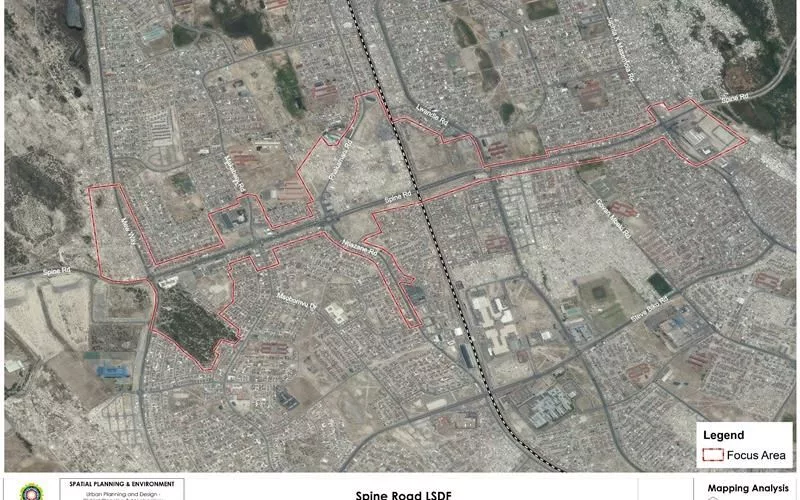
Cape Town’s Spine Road is getting a fantastic makeover! This 12-km stretch, once just a busy road, is transforming into a vibrant, green, and fair community. It will soon be home to 35,000 more people and create 12,000 new jobs. Imagine new homes, shops, and green spaces, all planned carefully to make life better for everyone. This project is a grand experiment for how cities can grow in a smart and caring way, showing the world how to build for nature and people.
What is the Spine Road project in Cape Town?
The Spine Road project is a 12-km urban development initiative in Cape Town, transforming a busy corridor into a model for dense, green, and inclusive growth. It aims to accommodate 35,000 extra residents and create 12,000 jobs through strategic zoning, sustainable infrastructure, and community-focused development across four key precincts.
1. The Paradox Becomes a Plan
Khayelitsha’s Spine Road is already the busiest strip you have never heard of. Every dawn-to-dusk cycle it funnels 60 000 riders, hawkers, scholars and factory hands along a thin 12-km seam. Yet the landscape refuses to act urban: scattered single-storey houses, backyard zinc shacks,_panel-beater yards and a taxi rank that bleeds pedestrians onto a shoulder barely wider than a supermarket trolley. On 4 December 2025 the City of Cape Town stamped a new legal map that flips the contradiction into opportunity. The adopted local spatial development framework does not tinker with potholes; it redraws every erf, lane and drainage ditch as programmable city fabric that can swallow 35 000 extra residents and 12 000 new pay-slips inside the same geography. A four-precinct playbook, enforceable by zoning law, is the engine.
2. Precinct One – Mew Way Gateway: Civic Dignity Where the Corridor Begins
The western mouth of Spine Road kisses the Mew Way interchange and the Philippi horticultural basin. Today 26 ha host a chaotic mosaic of backyard dwellings, spray-paint garages and a taxi rank that overflows onto a 1,4-metre verge. The new rules shrink car-dominated frontage by 18 % and gift 4,2 ha to a “civic spine.” A district court, a Home Affairs one-stop lounge and a 3 000 m² public plaza will anchor the node. The same plaza slab is engineered to sink and store floodwater when clouds burst, acting as a retention basin that keeps the downstream sewer from overflowing.
Justice Department accountants have already locked R210 million into the court building, while the basin is bank-rolled by a brand-new storm-water levy that bills private developers for every square metre they render impervious. Buses arrive next: a 700-metre median strip will be carved out to welcome MyCiti Phase 2C trunk coaches, the first time the service penetrates Khayelitsha proper. Platforms are dimensioned for 18-metre bi-articulated monsters able to move 7 000 commuters an hour in each direction, a figure that matches the demand forecast for 2035.
The redesign also buries a subtle social signal under the asphalt. By clustering state services within walking distance of long-distance taxis, the corridor begins to treat residents as citizens first, passengers second. The hope is that every grant queue, affidavit or ID renewal completed locally translates to one fewer cross-city trip, shaving peak congestion before it metastasises.
3. Precinct Two – Makabeni Heart: Traders in the Sky, Heritage in the Walls
Between Solomon Tshuku and Ntlazane streets the footfall peaks at 3 400 bodies an hour, the highest on the corridor. Here 1 063 informal traders sell everything from cow heels to charger cables, 87 % of them without permits and one-third literally squatting over water mains. Those pipes burst 38 times last year. Instead of eviction, the plan inserts a 1,5-metre service setback on every erf, creating a perpetual maintenance lane. Traders rotate into 360 modular stalls cast from glass-fibre-reinforced concrete shells that a crane can lift when valves need love. Each stall receives a QR-coded micro-plot; water and electricity are metered through prepaid IoT nodes the size of a matchbox. Modelling shows the gadgets will trim non-revenue water losses by 28 %.
But the real alchemy is vertical. Developers who give up ground-floor bays to fresh-produce refrigeration co-ops unlock a 25 % bulk bonus, earning four extra storeys. Floor Area Ratios jump from 2,1 to 3,8, enough to seed 1 400 apartments without annexing new land. The 1956 façade of St Francis Xavier church is protected by a 12-metre heritage arc; its sacristy becomes a digital archive where Cape Town’s forced-removal memories are streamed to school tablets. A German federal cultural fund has already signed on, proving climate justice and memory justice can share a budget line.
Engineers like to call this “strategic malleability”: rules that reward virtue rather than punish need. The first pilot block is scheduled to break ground in March 2026; if uptake stalls, the bonus can be dialled up or down like a thermostat, keeping politics in the driving seat while markets catch up.
4. Precinct Three – Khaya Belt: Where Factories Grow Up, Not Out
East of Lansdowne Road lie 66 ha of light industry – panel shops, cut-make-trim sweatshops and a sea of single-storey shells. Fifty-two percent of buildings are one floor high, yet land prices have rocketed 340 % since 2018 as speculators squat on future value. The framework answers with “layered consent.” Erect a mezzanine for clean-tech or food-grade processes and you receive instant compliance, no months of paperwork. A six-metre internal eave is mandatory so that robotic picking arms can slide in later without shaving the roof off.
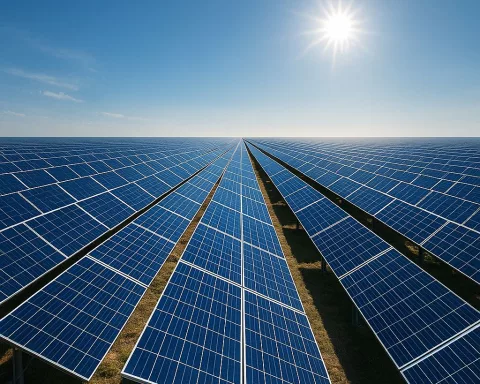
Energy is treated like another raw material. The zoning code bakes in a 10 MW rooftop solar ceiling; the municipality will buy surplus electrons at 68 cents per kilowatt-hour through a standard-offer tariff, translating to a 7,2-year payback for factory owners. Freight gets its own lane: a 3,5-ton delivery track will be grafted onto the northern verge, active only between 22:00 and 05:00. A new right-turn slip at Stock Road knocks 4,3 km off the N2 detour and saves an estimated 1 100 tonnes of CO₂-equivalent each year.
The speculator finally faces a use-it-or-share-it dilemma. If an owner sits on vacant land, the City can activate a compulsory utility surcharge that doubles refuse and storm-water fees until development starts. The measure, borrowed from Bogotá’s land-value capture playbook, turns hoarding into an expensive hobby.
5. Precinct Four – Vuyani Edge: Night Markets, Clean Toilets and Data-Driven Loans
Weekend livestock auctions at the Kuils River tributary draw 6 000 rural buyers but zero public infrastructure: no taps, no lights, no toilets, plenty of protection rackets. A 4 800 m² tensile roof, fabricated from recycled shipyard cranes, will hover over the existing hoof-print without displacing a single trader. The canopy harvests 42 000 litres of rain per storm; combined with on-site constructed wetlands, the flush demand of every ablution block is met internally.
Each trader receives a NFC tag that feeds an open municipal ledger. Anonymised turnover data becomes the backbone of micro-credit scoring; pilot work in Durban’s Warwick Junction lifted loan-approval rates by 19 %. When banks trust cash-flow, traders can move from survival stock to value-add such as vacuum-packed offal or hide-craft, nudging the whole market up the protein value chain.
Dusk trading is legalised up to 22:00, unlocking 1 800 extra paid hours a year. LED masts capped at 2 200 Kelvin keep melatonin cycles intact for homes next door. The result is a 24-hour edge economy that still lets babies sleep – proof that informal does not have to mean chaotic.
6. People First, Vehicles Second: A Three-Layer Mobility Cake
Movement is unbundled into a stack. Tier 1 is rapid transit: MyCiti trunk buses ride the median while minibus-taxi feeders hug the curb, both accepting the national MobiCard and cutting 1,2 km of transfer walks. Tier 2 is muscle power: 9 km of crimson cycle track, poured in pigmented concrete tough enough for scrap-metal trolleys. Every 400 m, decommissioned shipping containers become 50-locker bike-and-ride stations; maintenance leases are bundled with street-vendor permits so each dock doubles as a micro-job. Tier 3 is freight and waste: a pneumatic tube under Makabeni slurries organic waste to an anaerobic digester at Khaya Industrial, turning yesterday’s cabbage into 580 MWh of biogas – enough to fire 190 boilers without burning a lump of coal.
The stack philosophy is simple: if you give every mode a clear layer, they stop competing for the same oxygen. The result is a corridor where a grandmother on crutches, a cyclist with a fridge on his back and an 18-metre bus can coexist without a traffic cop in sight.
7. Water Everywhere and Not a Drop Wasted
Climate models show Khayelitsha’s rainfall up 11 % since 2000, yet 63 % of the corridor is paved. The answer is a distributed sponge: 32 rain gardens, 18 bioswales and nine floodable parks that look like ordinary soccer pitches until the clouds explode. Together they shave 42 % off the peak of a 100-year storm, preventing the asbestos water mains from blowing again. Insurance actuaries price the avoided flood damage at R940 million over 30 years, a cash-flow that underwrites the City’s first green bond at 75 basis points below sovereign debt.
Every component is coded into the zoning map so that future mayors cannot delete a wetland to add a parking lot without triggering a public hearing. In a country where climate files are often shelved under “later,” the corridor turns resilience into hard law.
8. Homes by the Numbers, Not by the Slogan
The plan refuses to announce heroic housing quotas. Instead it sets “capacity envelopes.” Mew Way’s under-utilised civic land can absorb 140 units per hectare across 8 ha, yielding 1 120 homes. Makabeni’s private plots can deliver 190 units per hectare over 12 ha, summing to 2 280 flats. Khaya Industrial can stack 40 work-live lofts per hectare on 20 ha of rooftop, adding 800 units. Vuyani hostels can convert to 110 units per hectare on 6 ha, producing 660 studios. The near-term pipeline equals 4 860 dwellings sheltering roughly 18 000 people, expandable to 9 200 if long-term air rights over the under-used rail siding east of Vuyani are ever unlocked.
Because the corridor is already serviced, the average municipal cost per unit drops to R42 000, one-third of a greenfield starter home. In effect, density becomes the subsidy.
9. Where the Money Comes From, Where the Risk Lives
The financing cocktail totals just under R3 billion. The City’s capital budget pledges R1,8 billion over three years for bulk pipes and wires. The national Neighbourhood Development Partnership Grant chips in R420 million for public realm jazz. A green bond listed in November 2025 raised R650 million at an 8,1 % coupon. A 1 % betterment levy on rezoned properties is projected to harvest R270 million, while an Islamic social-impact sukuk worth R180 million will underwrite 1 200 social-rental units certified by Malaysia’s Shariah board.
Yet no rand flows without governance glue. A 16-person Spine Road Project Office sits inside the Spatial Planning Directorate but wears a double chain of command to Transport and Human Settlements, ensuring turf wars die in committee, not in court. A publicly accessible digital twin – refreshed monthly by drone-lidar and IoT sensors – lets residents audit progress like they track Loadshedding. The biggest legal cloud is land-recovery litigation: 134 ha carry adverse-possession claims dating to 1992. A R35 million mediation war chest can offer tradable land-release bonds, a tool that turned squatter battlefields into building sites in Medellín’s Comuna 13. If Cape Town repeats that trick, the corridor’s most valuable export will not be tomatoes but peace.
10. Jobs, Carbon and the Urban South Knowledge Loop
Add the numbers and the corridor mints 12 000 permanent pay-slips: stall managers, bike-dock mechanics, rooftop electricians, heritage docents, agri-logistics controllers. A full life-cycle carbon audit shows 1,24 million tonnes of CO₂e will be emitted during construction, but 18 MW of rooftop solar, sponge-landscape soil, industrial heat-pumps and an urban forest cancel all but 0,16 million tonnes – equivalent to planting 11 000 trees without finding a single vacant field.
Cape Town has already swapped data MOUs with eThekwini on trader formalisation and with Bogotá for its grade-4 BiciBogotá cycling curriculum. The message is clear: Spine Road is no longer a township headache; it is a living laboratory whose algorithms for density, dignity and decarbonisation are free to copy across the global South.
[{“question”: “What is the Spine Road project in Cape Town?”, “answer”: “The Spine Road project is a 12-km urban development initiative in Cape Town, transforming a busy corridor into a model for dense, green, and inclusive growth. It aims to accommodate 35,000 extra residents and create 12,000 jobs through strategic zoning, sustainable infrastructure, and community-focused development across four key precincts.”}, {“question”: “What are the main goals of the Spine Road project?”, “answer”: “The project aims to transform the 12-km Spine Road into a vibrant, green, and equitable urban corridor. Key goals include accommodating 35,000 new residents, creating 12,000 new jobs, enhancing urban infrastructure, promoting environmental sustainability, and fostering inclusive growth through planned development of homes, shops, and green spaces.”}, {“question”: “How will the Spine Road project improve public transportation?”, “answer”: “The project will significantly improve public transportation by introducing MyCiti Phase 2C trunk coaches with platforms designed for large bi-articulated buses capable of moving 7,000 commuters per hour. Additionally, a three-layer mobility system will unbundle movement, integrating rapid transit, dedicated cycling tracks (9 km), and separate lanes for freight and waste, all while promoting the use of the national MobiCard for seamless transfers.”}, {“question”: “What specific initiatives are planned for the informal traders in the Makabeni Heart precinct?”, “answer”: “In the Makabeni Heart precinct, the project will replace chaotic informal trading with 360 modular stalls made from glass-fibre-reinforced concrete, each with QR-coded micro-plots and prepaid IoT nodes for metered water and electricity, expected to reduce non-revenue water losses by 28%. Developers are incentivized with bulk bonuses to provide ground-floor bays for fresh-produce refrigeration co-ops, allowing traders to move into more formal and sustainable operations.”}, {“question”: “How does the project address environmental sustainability and climate resilience?”, “answer”: “The Spine Road project incorporates numerous environmental sustainability and climate resilience measures. These include a 10 MW rooftop solar ceiling for industries, a distributed sponge system with 32 rain gardens, 18 bioswales, and nine floodable parks to manage stormwater and prevent flooding (shaving 42% off the peak of a 100-year storm), and anaerobic digesters to convert organic waste into biogas. A full life-cycle carbon audit projects a near-net-zero carbon footprint after considering mitigation efforts.”}, {“question”: “How is the Spine Road project being financed?”, “answer”: “The project’s financing totals nearly R3 billion, comprising R1.8 billion from the City’s capital budget for infrastructure, R420 million from the national Neighbourhood Development Partnership Grant, R650 million from a green bond, R270 million from a 1% betterment levy on rezoned properties, and R180 million from an Islamic social-impact sukuk for social-rental units. This diverse funding strategy aims to ensure financial sustainability and community benefit.”}]