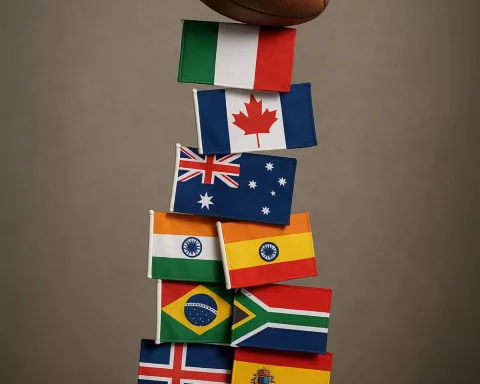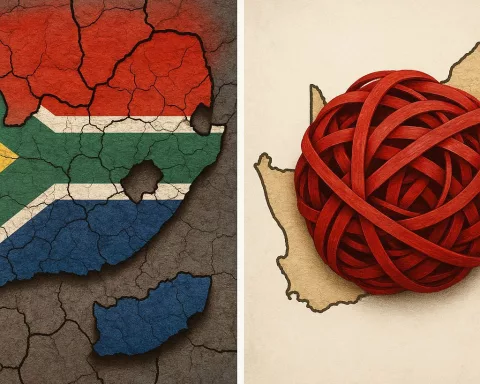

The Springboks’ 2027 Rugby World Cup pool looks easy, but it’s a trick! Hot Australian weather, a confusing new knockout format, and stronger-than-ever teams like Italy and Georgia make it super tough. These teams are secretly powerful, with strong scrums and tricky tactics. Every game will be a battle, and finishing second or third could lead to really hard future matches.
Why could the Springboks’ “soft” 2027 Rugby World Cup pool be their hardest challenge yet?
The Springboks’ seemingly easy Pool B for the 2027 Rugby World Cup is deceptive. Factors like extreme Australian weather, a complex new knockout format, and significantly improved tier-two opponents (Italy, Georgia, Romania) present unique and formidable challenges. Their opponents are statistically strong in key areas, making every match a potential trap.
1. The Brisbane Reveal: Smiles, Emojis and a Silent Head Coach
24 tiny gold-and-green trophies clinked inside clear bowls on a sticky Brisbane morning. By the time the last cup was lifted, South Africa had been dropped into Pool B with Italy, Georgia and Romania. Twitter rejoiced – “easiest route ever” – while Rassie Erasmus’s half-smile lasted one camera flash. He already knew the next 52 fixtures will be decided less by who’s in the group than by humidity, travel miles and a new knock-out labyrinth that makes second place almost as scary as first.
Inside Rugby Australia’s glass-walled studio, Stephen Larkham and John Eales played polite hosts; outside, the Springbok brains trust opened laptops before the handshakes ended. Their first file was titled “October Heat”, a dossier on Newcastle’s 33-degree averages, Sydney’s southerly busters and Melbourne’s coffee-fuelled 3 p.m. kick-offs. The draw felt kind; the data did not.
Fans saw rankings gaps – 1st vs 10th, 12th, 19th. Coaches saw Georgian scrums that outsqueezed Scotland, Italian wings who average 2.8 m per carry around the fringes and a Romanian tight-five whose combined 3 200 Test scrum caps outweigh most Super Rugby franchises. The party balloons hadn’t deflated before the analysts were labelling it “the illusion of ease”.
2. Paper Tigers, Real Claws: Opponents the Stats Respect
Italy no longer live off pasta and passion. Gonzalo Quesada’s 1-3-2-2 shape funnels midfield traffic so full-back Ange Capuozzo can ghost into back-fields vacated by kickers. In 2026 they generated more post-contact metres near the ruck than any Six Nations side, and their line-out is piloted by Giacomo Nicotera’s 88 % darts – tier-one best since 2025. Throw in impact No 8 Lorenzo Cannone, a 120 kg South-African-born freight train, and the Sydney clash could hinge on which pack is still explosive after 50 minutes.
Georgia arrive with a 76 % win rate since 2025, including a first victory over a full-strength Argentina in Tbilisi. Milton Haig has married Kiwi offload speed to Georgian granite, and 19-year-old tight-head Vano Karkadze spins the scrum at 176 rpm. Their defence, orchestrated by rugby-league convert Davit Niniashvili, forces 18 turnovers a match – one fewer than the Springboks. The “easy” opener in Newcastle suddenly smells like coal-dust and cordite.
Romania’s rebuild is bank-rolled by a France-based diaspora and driven by 21-year-old skipper Gabriel Rupanu, whose box-kicks are re-gathered almost one time in four. Their starting eight averages 125 kg and their U20 side shocked Ireland in 2026; nine of that lineup are now eligible. Melbourne’s dewy evenings suit low, rumbling phases and choke-tackles – exactly the oxygen the Oaks crave.
3. Format Chaos: Why Third Place Is a Poisoned Chalice
World Cup 2027 is rugby’s first 24-team kaleidoscope: six pools of four, 52 total matches, quarter-final slots handed to four pool winners plus four “lucky” third-place sides. Finish second in Pool B and South Africa could face France or Ireland seven days later in Sydney; slip to third and a ranking algorithm decides whether the reward is a rested Fiji in Townsville or an England-Wales bruise-fest in Brisbane.
Erasmus’s analysts have modelled 768 knock-out routes, a spreadsheet christened “Spaghetti Junction”. It proves that margin-of-victory in every pool match carries double value: not only for points but for seeding once the maze begins. A 23-point win over Romania could be the difference between a quarter-final in humid Brisbane or a semi-short rest in cooler Melbourne.
The new structure also crams six games into 30 days for the finalists, forcing coaches to taper like Olympians. Springbok planners have colour-coded the calendar: “Red” for heat-chamber acclimatisation, “White” for set-piece trench warfare, “Green” for aerial chess against Italy, “Black” for knock-out simulation with drones buzzing overhead. Every session is a step on a tightrope stretched across seven Australian cities.
4. Hidden Levers: Weather, Wolves and the 14-Minute Window
El Niño is scheduled to crash the party, pushing Brisbane thermometers to 33 °C and Sydney humidity to 68 %. South Africa trained at 5 000 ft in Potchefstroom, but they cannot simulate the sticky northerly that gusts 35 km/h through Newcastle’s McDonald Jones Stadium. Adelaide’s dry wind and Townsville’s reef-side vapour will test lungs already weary from round-the-world flights.
The wolves are World Rugby’s ranking algorithm. Tier-two sides know a single upset catapults them into the top 10 and triggers Top-14 contract clauses. Georgia’s players are literally playing for mortgages; Romania’s scrum coach calls it “the biggest job interview of their lives”. Empty-the-tank desperation plus southern-hemisphere heat is a volatile cocktail.
Match analytics pinpoint the 14-minute post-halftime spell as Pool B’s hidden arm-wrestle. South Africa’s bench averages 2.07 “impact events” per game – line breaks plus dominant tackles – while Georgia register 1.89. Stretch that gap by 0.5 in three matches and the Springboks bank a theoretical +21 point swing, enough to secure top spot and avoid France or Ireland in the quarters. The trophy may glitter in Sydney on 13 November, but the real war will rage in dressing rooms from Newcastle to Melbourne when the substitutes roll on and the wolves smell either blood or fear.
[{“question”: “Why is the Springboks’ ‘soft’ 2027 Rugby World Cup pool considered their hardest yet?”, “answer”: “Despite initial appearances, the Springboks’ Pool B is deceptively challenging due to several factors. These include the extreme Australian weather conditions, a complex new knockout format, and significantly improved ‘tier-two’ opponents like Italy, Georgia, and Romania, who possess strong scrums and tricky tactics. Every match is expected to be a battle, with finishing second or third potentially leading to much harder future matches.”}, {“question”: “What are the specific challenges posed by the Australian climate and travel?”, “answer”: “The 2027 Rugby World Cup will be held in Australia, bringing challenges such as 33-degree Celsius averages in Newcastle, southerly busters in Sydney, and 3 p.m. kick-offs in Melbourne. The humidity, travel miles between cities, and varying weather patterns (like Adelaide’s dry wind and Townsville’s reef-side vapour) will test the players’ endurance and acclimatization.”}, {“question”: “How have Italy, Georgia, and Romania improved to become formidable opponents?”, “answer”: “Italy is no longer just ‘pasta and passion,’ with a sophisticated 1-3-2-2 shape, effective post-contact metres, and a high line-out success rate. Georgia boasts a 76% win rate since 2025, a strong scrum, and a defense that forces many turnovers. Romania’s rebuild is supported by a France-based diaspora, features a heavy forward pack (averaging 125 kg), and excels in low, rumbling phases and choke-tackles, making them dangerous, especially in cooler conditions.”}, {“question”: “What is the ‘Format Chaos’ of the new 2027 World Cup structure and why is third place a ‘poisoned chalice’?”, “answer”: “The 2027 World Cup introduces a 24-team format with six pools of four, where quarter-final slots are given to four pool winners and four ‘lucky’ third-place sides. Finishing second in Pool B could mean facing strong teams like France or Ireland. Slipping to third means a ranking algorithm determines the next opponent, which could range from a rested Fiji to a bruising encounter with England or Wales. This new structure makes margin-of-victory crucial for seeding and avoiding tougher matchups.”}, {“question”: “How are the Springboks preparing for these unique challenges?”, “answer”: “The Springbok brains trust is meticulously planning, including an ‘October Heat’ dossier on weather conditions. Their analysts have modeled 768 potential knock-out routes and are focusing on strategies that maximize margin-of-victory in pool matches. They are also utilizing a color-coded calendar for training: ‘Red’ for heat-chamber acclimatization, ‘White’ for set-piece trench warfare, ‘Green’ for aerial chess against Italy, and ‘Black’ for knock-out simulation, indicating a comprehensive and detailed preparation strategy.”}, {“question”: “What role do ‘Hidden Levers’ like El Niño, World Rugby’s ranking algorithm, and post-halftime impact play?”, “answer”: “El Niño is expected to bring extreme heat and humidity, adding another layer of physical challenge. World Rugby’s ranking algorithm incentivizes ‘tier-two’ sides like Georgia and Romania, as a single upset can propel them into the top 10 and secure lucrative contracts for players, leading to ’empty-the-tank’ desperation. Analytics also highlight the 14-minute post-halftime spell as crucial, where the Springboks’ bench impact events could generate a significant point swing, potentially determining top spot in the pool and avoiding tougher quarter-final opponents.”}]