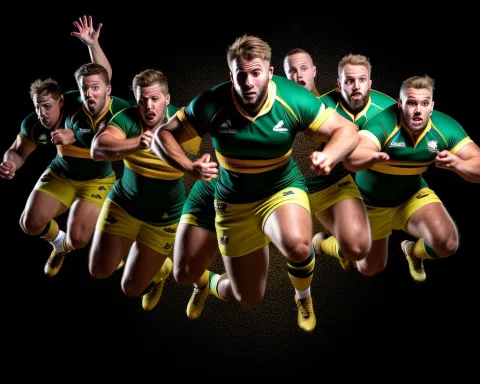

The Springboks beat Italy 42-24 at Loftus Versfeld, lighting up the winter night with strong first-half play and six thrilling tries. But after halftime, their energy dipped, and Italy fought back hard, making the game tense and closer than expected. Coach Rassie Erasmus praised the win but warned the team must stay focused and sharp if they want to stay on top. The match showed both the team’s great skill and the work they still need to do to keep their edge.
What happened in the Springboks’ victory over Italy at Loftus Versfeld?
The Springboks won 42-24 against Italy at Loftus Versfeld but showed a troubling drop in performance after halftime. Despite scoring six tries, they lost momentum, allowing Italy to fight back. Coach Rassie Erasmus emphasized the need for greater focus, intensity, and consistency moving forward.
An Unsettled Win Under Pretoria’s Sky
Pretoria’s winter air felt sharp with anticipation as the Springboks, resplendent in their iconic green and gold, took to the field at Loftus Versfeld. The stadium, hallowed ground for South African rugby, buzzed with excitement—yet, when the final whistle sounded, the atmosphere shifted. The scoreboard announced a confident 42-24 victory over Italy, but satisfaction eluded much of the crowd and coaching staff. Instead of exuberance, a sense of frustration settled over the ground, coloring the post-match conversations.
The Springboks’ performance presented a puzzle: for forty minutes, they dazzled with power and precision, only to lose momentum and composure in the second half. Their first-half dominance promised an emphatic rout, but Italy clawed back into contention, transforming what should have been a resounding statement into a cautionary tale. Head coach Rassie Erasmus, never one to sugarcoat his views, addressed the media with his trademark directness. He acknowledged the six tries and the win, but made no effort to hide his disappointment. “We’re obviously pleased with the win and the tries, but I’m not going to pretend that this performance was good enough,” he said, his words cutting through any attempt to find solace in the scoreline.
Erasmus’s post-match remarks laid bare the team’s struggles after halftime. Despite building a commanding 28-3 advantage by the break, the Boks let their guard down, lost their structure, and allowed Italy a foothold. In the coach’s eyes, these lapses undermined their earlier brilliance and opened the door for an Italian resurgence that, while ultimately contained, exposed vulnerabilities beneath the surface.
The Tale of Two Halves
Rugby fans know well the story of a game with two distinct halves, but rarely has this narrative played out with such stark contrast. Throughout the opening period, South Africa embodied the brand of rugby that has become their hallmark under Erasmus: relentless physicality from the forwards paired with imaginative running from the backs. The team’s offloads and crisp passes punctured the Italian defense, drawing cheers from the stands and admiration from analysts alike. Every phase carried an air of inevitability, as the Springboks piled on tries with confidence and style.
The opening stages of the second half seemed to promise more of the same. South Africa crossed the try line again in the early minutes, but officials chalked off the score for obstruction. That brief pause altered the dynamic of the contest. Italy, emboldened by their reprieve, seized the moment. The Azzurri grew in confidence, stringing together attacking phases and contesting every breakdown with renewed purpose. Their resilience brought to mind the determination of Rome’s ancient defenders: battered but unyielding, relentless in their pursuit of opportunity.
Italy’s three tries after halftime did more than narrow the points differential. They challenged the psychological edge South Africa had cultivated, proving that even the most dominant teams can falter when momentum shifts. Erasmus recognized Italy’s effort but used it as a warning to his own squad. He cited the Boks’ breakdown struggles, their inability to adapt to the stop-start rhythm of the match, and a visible drop in intensity as reasons for concern. The second half, he implied, revealed issues of mindset and focus as much as technical execution.
Lessons in Momentum and Selection
Momentum in rugby, much like in art or music, can turn on a single moment. A game controlled with ease can suddenly feel precarious, and the Springboks experienced that firsthand. The drop in cohesion after halftime suggested not a lack of preparation or skill, but an ebb in collective intent—a reminder that attitude and energy often determine outcomes as much as strategy or talent.
Erasmus, known for balancing disciplined structure with pragmatic adaptation, faced a new challenge after this match. He had planned to rotate the squad for the upcoming second Test in Gqeberha, giving key players a deserved rest while introducing fresh faces to the lineup. This rotation mirrored the calculated experimentation of an artist exploring new forms and techniques, hoping to broaden the palette without compromising standards. South Africa’s victory at Loftus was supposed to secure the breathing room for these changes.
Instead, the Italian fightback forced a rethink. Erasmus admitted that some of the veterans slated for rest might need to feature in the starting lineup again, while a few who failed to impress could move to the bench. The margin for experimentation shrank as the sense of invulnerability faded. Italy’s spirited performance served as a reminder that any sign of complacency invites determined opposition to exploit it.
Despite the frustration, Erasmus highlighted several positives to counterbalance the concerns. Scoring six tries even during a disjointed performance showed the squad’s attacking depth. The Boks managed to find scoring opportunities despite set-piece stumbles and a counterattack that never quite found its rhythm. “We still found ways to score, even though our maul and counterattack weren’t clicking,” Erasmus observed, emphasizing resilience as a crucial ingredient for teams with championship ambitions.
Resilience, Reflection, and Rugby’s Enduring Drama
In the wake of the match, injuries remained minimal—a rare bright spot. Only centre Damian de Allende picked up a minor hamstring strain. Erasmus, displaying his dry wit, remarked, “Luckily, we didn’t pick up any serious injuries, just some bruised egos.” His comment captured the psychological impact of the contest: players nursing wounded pride as much as battered bodies, each setback a lesson in humility.
The ramifications of the game rippled beyond the field. Thanks to a broadcasting alliance between SuperSport, SABC, and the South African Rugby Union, fans across the nation followed every phase and highlight. Rugby in South Africa stands as more than entertainment; it forms a core part of the country’s identity, a shared narrative of struggle and triumph played out in real-time. The historic stands of Loftus Versfeld served once again as the backdrop for a story of tension, talent, and transformation.
Rugby’s power to reinvent itself mirrors trends in art and culture. Just as mid-twentieth century artists shattered conventions to create new forms, the game has evolved from rigid set-piece battles to a celebration of athleticism and improvisation. South Africa, with its unique blend of strength and ingenuity, often leads this ongoing evolution, seeking both tradition and innovation on the field.
Yet, tradition remains a powerful force. Erasmus’s uncompromising post-match analysis resonated with echoes of a bygone era, when coaches demanded not just victory, but consistent excellence. This high standard, this refusal to settle, forms the backbone of rugby’s enduring appeal. Every game becomes not just a contest, but a test—a search for improvement, a drive toward mastery.
Sometimes, even the toughest rugby minds reveal their inner artists, blending discipline with creativity. The clash with Italy, marked by alternating passages of dominance and vulnerability, underscored rugby’s unpredictability. Each match, shaped by pressure, opposition, and psychology, offers opportunities for growth and renewal.
As the Springboks turn their focus to the second Test, they confront more than tactical challenges. The task ahead involves restoring intensity, fine-tuning combinations, and navigating selection uncertainty. The echoes of Loftus Versfeld will influence preparations and serve as a cautionary reminder that each contest writes a new chapter in the Springbok story—a chapter defined by promise, warning, and the never-ending pursuit of excellence. For players and supporters alike, the memory of this match will endure: a reflection of rugby’s capacity to inspire, unsettle, and demand more from those who love it.
FAQ: Springboks’ Victory at Loftus Versfeld
What was the final score of the Springboks vs Italy match at Loftus Versfeld?
The Springboks defeated Italy with a final score of 42-24. South Africa dominated the first half with a strong performance, scoring six tries in total, but Italy mounted a significant comeback in the second half, making the game more competitive than expected.
Why did the Springboks’ performance drop after halftime?
After building a commanding 28-3 lead by halftime, the Springboks experienced a noticeable dip in energy, intensity, and focus. This loss of momentum led to defensive lapses and a breakdown in their usual structure, allowing Italy to regain confidence and score three tries in the second half, narrowing the point difference.
What concerns did coach Rassie Erasmus express about the team’s performance?
Coach Erasmus praised the victory and the number of tries scored but was clear in his dissatisfaction with the team’s second-half performance. He stressed the need for consistent focus, sharper intensity, better breakdown management, and adaptability to maintain their top-level status. Erasmus warned that complacency could be dangerous and emphasized the importance of mental and physical resilience.
How did the match affect the Springboks’ squad selection for upcoming games?
The unexpected second-half struggles prompted Erasmus to reconsider his planned rotation strategy for the second Test in Gqeberha. Some veterans who were expected to rest might need to start again, while players who underperformed could be moved to the bench. The tight contest highlighted the importance of balancing experimentation with maintaining a strong, cohesive team.
Were there any significant injuries during the match?
Injuries were minimal, which was a positive outcome. Only centre Damian de Allende suffered a minor hamstring strain. Coach Erasmus humorously noted that the team escaped serious physical damage but had some “bruised egos,” reflecting the psychological challenge posed by the unexpected second-half dip.
What does this match reveal about the Springboks’ style and rugby’s evolving nature?
The match showcased the Springboks’ trademark blend of physical forward play combined with creative, fast-paced backline movements. It also highlighted rugby’s evolution from rigid set-piece battles to dynamic, improvisational play. Yet, the game remains demanding of consistency and discipline. The Springboks embody this balance of tradition and innovation, striving for mastery while adapting to new challenges, underlining the sport’s enduring drama and unpredictability.