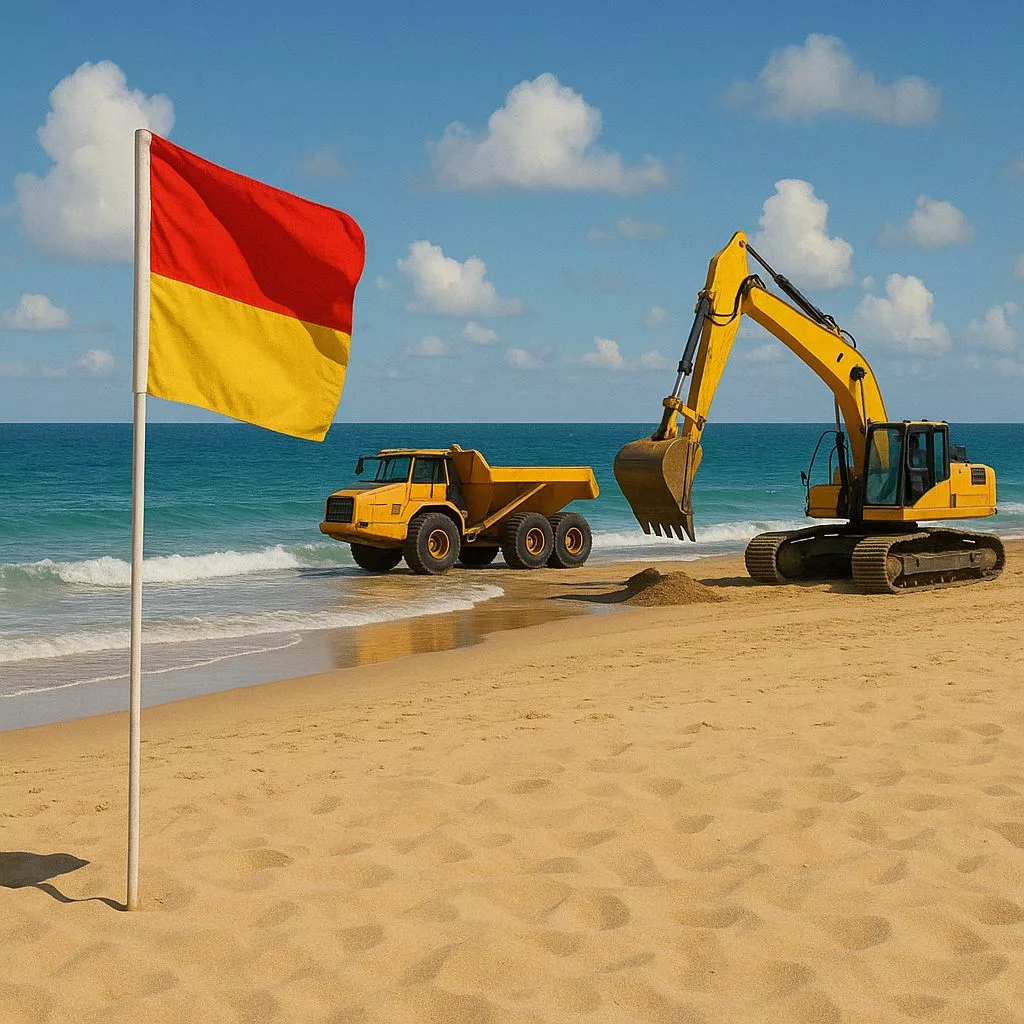
Get ready for a big change at Strand Beach! From December 15, 2025, to January 15, 2026, a part of the beach, between the municipal pool and Norman Road, will be closed. This is because workers will be building a huge wall to protect the coast from strong waves and rising sea levels for the next 30 years. So, while a piece of your favorite beach will be closed for a short time, it’s for a very important reason: to keep the beach safe and beautiful for many years to come!
Why will part of Strand Beach be closed during the 2025-2026 festive season?
Part of Strand Beach, specifically between the municipal pool and Norman Road (Mosterd’s Bay), will be closed from December 15, 2025, to January 15, 2026. This \”shutdown\” is for Phase Two of a R200-million-plus armour wall construction, crucial for protecting the coastline from storm waves and rising seas for the next 30 years, ensuring long-term beach safety and infrastructure preservation.
Why Part of Strand Beach Will Vanish This Festive Season
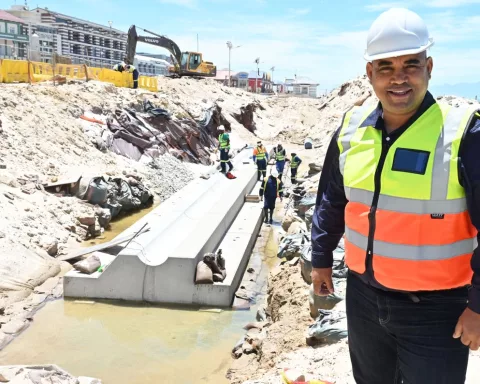
Holiday planners who swear by False Bay’s sun-warmed water need to redraw their beach maps right now. From 15 December 2025 until 15 January 2026, the strip between Strand municipal pool and Norman Road – better known as Mosterd’s Bay – will disappear behind orange mesh and heavy machinery. The City of Cape Town is using the height of summer to finish Phase Two of a R200-million-plus armour wall that will lock out storm waves and rising seas for the next 30 years. In plain terms, 900 m of prime sand will be a no-go zone for the busiest four weeks of the year.
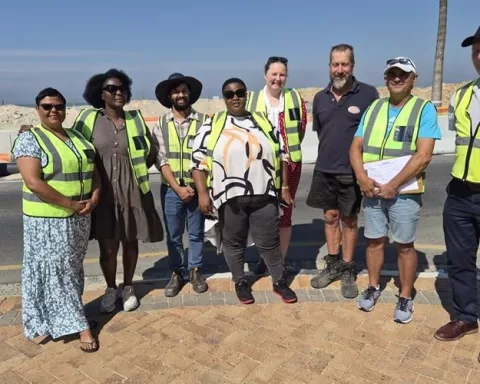
The timing sounds cruel, but engineers insist it is the only window that works. Tides, weather patterns and contractor availability line up between mid-December and mid-January, giving crews the 60 m breathing room they need to swing 8-ton dolosse into place with a 90-ton excavator. “We can’t pause a conveyor belt every time a child runs after a ball,” says senior project engineer Khanya Ngqenge. The cordon will be enforced 24 hours a day by security teams and neighbourhood-watch patrols; fines for ducking under the tape start at R500 and climb fast.
What you lose in sand space you gain in long-term peace of mind. Once the last block is stacked, the new revetment will shrug off a one-in-100-year storm surge and still keep the R44, beach-front homes and buried water mains dry through 2055. Think of it as four weeks of holiday hustle traded for three decades of safer picnics.
Inside the Build: Bigger Wall, Higher Promenade, Hidden Pipe
Phase One, finished early 2024, shoved 18 000 t of interlocking dolosse into the surf and created a 640 m rocky cape that already knocks the edge off winter swell. Phase Two pushes that barrier another 750 m east, lifts the existing promenade a full 1.2 m and sneaks a 1.5 m-diameter storm-water pipe beneath the dune line. The new pipe will stop rainwater from pooling on Beach Road and dump it cleanly beyond the breakers, keeping the sand cleaner and the road unflooded.
Every dolos is cast on site in a miniature factory tucked into the old parking lot opposite the pool. A 90-ton crane swings each 8-ton block into a queue where a conveyor belt feeds them to the excavator that walks them into the surf like giant chess pieces. The operation needs dry sand and low tide, which is why the swimming zone is collateral damage. Crews work six days a week, 07:30–17:30, with Sundays reserved for equipment maintenance and noise-free family time on the adjoining beaches.
When the final piece locks in, the whole structure will sit 2.5 m higher than the old 1970s wall and curve seaward in a gentle fish-tail that scatters wave energy instead of throwing it back at the sand. Engineers promise the post-2026 shoreline will actually be wider, because the new promontory traps sand that used to migrate east toward Gordon’s Bay. In short, you give up one summer and get back a broader, flatter beach for every summer after.
Where to Swim, Park and Shower While the Wall Goes Up
Lifeguards will still plant their red-and-yellow flags every morning, just 400 m east of the chaos. Head for the Strand Surf Lifesaving Club between 09:00 and 18:00 for full-time patrols, rescue skis and first-aid cover. The old tidal pool remains open, but you reach it via the elevated promenade – no shortcut across the building site. Parents with toddlers often prefer the pool anyway, because the new east-side beaches are rockier; pack water shoes if you plan to explore beyond the flags.
Parking pain is real: 120 bays opposite the pool have been swallowed by the contractor’s yard. Maiden’s Cove and Gordon’s Bay lots still work, but they fill by 10:30 on peak days. Your best bet is the MyCiTi bus (Route 110) that drops you 300 m from the lifeguard tower, or a bike ride along the new temporary boardwalk that skirts the work zone. Portable toilets and cold-water showers are hired for the season; the brick change-rooms beside the pool are locked behind the cordon, so bring a dry-robe or a big towel.
Traffic cops will close one east-bound lane of Beach Road whenever the crane needs extra swing space, usually 08:00–10:00 and 15:00–17:00. Allow an extra 15 min for the detour along Main Road if you’re heading to Gordon’s Bay after lunch. Locals swear by the sunset side of the build – walk west past the pool and you’ll find a quiet patch of sand with postcard views of the Helderberg peaks and far less construction noise.
Smart Holiday Hacks: Apps, Dogs, Earplugs and Plan-B Beaches
Download the free “SmartSwim” app before you leave home. It pings your phone the moment lifeguards move the flags, issues rip-current alerts and even estimates how full the parking lots are in real time. Dog owners: Greenways Beach, 1 km east of the cordon, is the only off-leash stretch during peak season; everywhere else your four-legged friend must be on a lead and out of the flagged swim zone.
Construction clatter is unavoidable – pile-drivers, reversing trucks and the metallic clack of dolosse stacking echo off the apartment blocks. Earplugs won’t mute a 90-ton hammer, so if you crave pure seaside silence, pack a day-bag and drive 25 min to Kogel Bay or Rooi-Els. Both coves have zero build noise, free parking and picnic lawns under milkwood trees; the water is colder, but the backdrop is pure wilderness.
Finally, arrive early, stay flexible and treat the closure as part of the adventure. Kids love watching the giant crane “pick up Lego,” and the daily bulldozer parade is better than any sandbox toy. Bring sunscreen, patience and a sense of humour – your January 2026 selfies will still show blue sky, turquoise water and a brand-new wall that guarantees Strand stays gorgeous until today’s toddlers bring their own kids to the sand.
Why is a part of Strand Beach closing during the 2025-2026 festive season?
A section of Strand Beach, specifically between the municipal pool and Norman Road (Mosterd’s Bay), will be closed from December 15, 2025, to January 15, 2026. This closure is for Phase Two of a significant R200-million-plus armour wall construction project. This wall is crucial for protecting the coastline from severe storm waves and rising sea levels for the next 30 years, ensuring the long-term safety and preservation of the beach and its infrastructure.
Why is this construction happening during the peak holiday season?
Engineers explain that this specific timing is the only viable window for the construction. Tides, weather patterns, and contractor availability align perfectly between mid-December and mid-January. This period provides the necessary conditions, including dry sand and low tide, and sufficient space (60m breathing room) for crews to operate heavy machinery like a 90-ton excavator to place 8-ton dolosse. Interrupting the process for beachgoers is not feasible, as stated by senior project engineer Khanya Ngqenge.
What does Phase Two of the construction involve?
Phase Two will extend the armour wall an additional 750 meters east from where Phase One finished. It also includes raising the existing promenade by 1.2 meters and installing a 1.5-meter-diameter storm-water pipe beneath the dune line. This new pipe will prevent rainwater from pooling on Beach Road and will direct it cleanly beyond the breakers, contributing to cleaner sand and preventing road flooding.
Where can beachgoers swim and access facilities during the closure?
Lifeguards will still be on duty about 400 meters east of the construction zone, near the Strand Surf Lifesaving Club, from 09:00 to 18:00. The old tidal pool remains open, accessible via the elevated promenade. Portable toilets and cold-water showers will be provided for the season, as the brick change-rooms beside the pool will be behind the cordon. For those with toddlers, be aware that the new east-side beaches are rockier, so water shoes are recommended.
What are the parking and traffic implications, and how can visitors get to the beach?
Approximately 120 parking bays opposite the pool are unavailable due to the contractor’s yard. Maiden’s Cove and Gordon’s Bay lots are alternative options but tend to fill up early. The best suggestion is to use the MyCiTi bus (Route 110), which stops 300 meters from the lifeguard tower, or to cycle along the new temporary boardwalk. Traffic cops will occasionally close one east-bound lane of Beach Road for crane operations, typically from 08:00–10:00 and 15:00–17:00, so allow extra travel time.
What tips are available for managing the holiday experience during construction?
Visitors are encouraged to download the free “SmartSwim” app for real-time updates on lifeguard flags, rip-current alerts, and parking availability. For dog owners, Greenways Beach (1 km east) is the only off-leash area during peak season. Earplugs are advised for unavoidable construction noise, or for pure silence, consider driving 25 minutes to Kogel Bay or Rooi-Els. Arriving early, staying flexible, and viewing the construction as an interesting part of the holiday are also recommended to make the most of the experience, knowing it contributes to a wider, safer beach for the next three decades.