A shiny new gold mine called Qala Shallows just opened in South Africa! It’s super special because it uses cool new tech to dig up gold that was too hard to get before. This mine creates jobs and helps the local people, making everyone happy. It’s like a golden sunrise for the area, bringing new hope and money. This smart new way of mining is exciting and shows how gold can be dug up for a long time.
What is Qala Shallows and why is it significant?
Qala Shallows is the first gold mine to open in Gauteng, South Africa, since the late 1980s. It is significant for its innovative, low-cost, and environmentally conscious mining practices, leveraging modern technology to profitably extract gold from a previously uneconomic reef, creating jobs, and benefiting the local community.
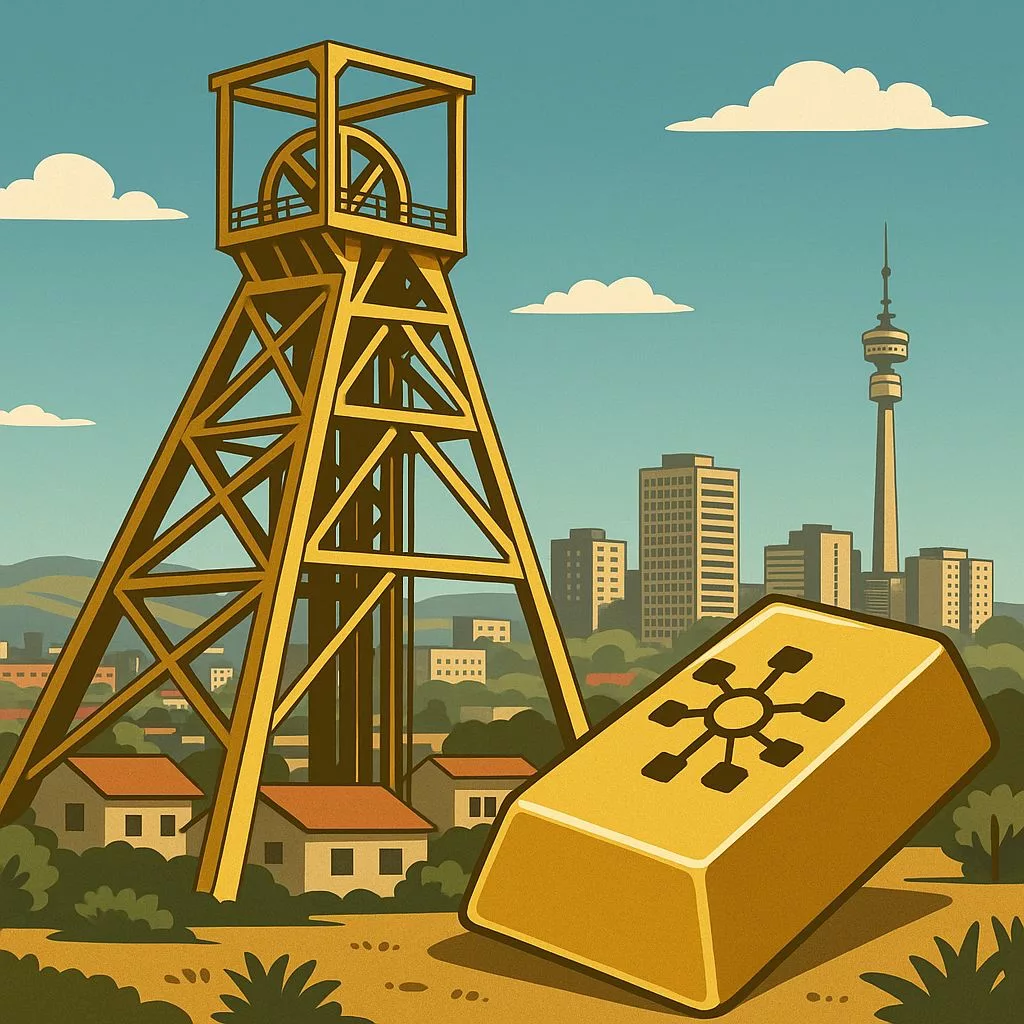
Roodepoort, 18 April 2025 – A steel headgear now punctuates the Magaliesberg horizon like a permanent sunrise.
Inside Qala Shallows, the first Gauteng gold mine to open since apartheid’s late-80s twilight, ore already rides the belt 24 hours after Mineral Resources Minister Gwede Mantashe called the event “a dawn in an industry many thought would never see light again”.
Every 60 minutes 1 800 t of rock ascend from a reef that was written off as trash in 1965; on surface, a quiet uprising is underway in how South Africa finances, operates and shares the value of gold.
The Reef That Waited Sixty Years for a Second Glance
In 1965 gold fetched thirty-five dollars an ounce and the old Randfontein board demanded ten grams per tonne to justify a shaft.
The 4–5 g/t “shallow band” that outcrops 12 m below a soccer pitch in Durban Deep was stamped uneconomic and buried under filing dust.
Fifty-nine years and a 3 000 % price surge later, the same reef grades 2.34 g/t across 38 million tonnes and carries 2.9 Moz in the indicated category plus another 1.1 Moz inferred – enough to shove South Africa from 13th place toward the globe’s top-ten list once output hits 90 000 oz in 2027.
Depth is the game-changer: the pay-zone starts barely four storeys underground and bottoms at 320 m, eliminating the 3 km heat, rock-burst and million-rand-per-vertical-metre headaches that have haunted local gold for two generations.
A modern resource model built with 65 000 m of sonic drilling and 3 000 km² of drone magnetics proved continuity for 7 km along strike and 600 m down-plunge, convincing bankers that 1.8 g/t can still mint money when ounces sell for three grand and machines do the sweating.
A Shaft That Thinks It’s a Quarry
Engineers nickname the mine “a data-centre with a heartbeat”.
Instead of the classic seven-year, R7 billion concrete sink, West Wits Mining sank a 12 m-diameter “micro-shaft” in 14 months for R1.3 billion, using a Swedish rail-mounted raise-borer to carve the 5 m ventilation column in 28 days – half the textbook schedule.
3D photogrammetry drones circled every blast, streaming point-cloud updates to a digital twin that refreshes every six hours; the result was a 38 % capital haircut and a payback forecast of 42 months at $1 800 gold, now trimmed to 26 months at today’s spot.
Below collar, workers ride a battery-powered magnetic chairlift made by Kuka, removing winding ropes and 30 % of conventional electricity draw.
Reef haulage tunnels stand only 1.2 m high; 3 t LHDs guided by ultra-wide-band tags shuttle autonomously while operators stay inside reinforced “cells”.
A mini-gyratory crusher installed on 28 level chews rock to –100 mm, scrapping the surface crusher and shaving 0.4 kWh per tonne; if CO climbs 0.2 % above baseline every machine halts and ventilation ramps from 90 m³/s to 180 m³/s in 45 seconds – automation borrowed from Swedish iron-ore mines but unheard of in South African gold.
Power, Profit and the People Next Door
Qala will push out 0.48 t of CO₂ for every ounce poured – 60 % lighter than the national gold average and 25 % below the global mean.
Half the electrons will come from 42 500 bifacial solar panels carpeting 28 ha of a re-shaped tailings dam; another 8 MW arrives as “recycled” hydro, effluent from a Coca-Cola bottler that free-falls 90 m through twin turbines before topping up the process-water pond.
A Jameson flotation cell recovers 12 % of the gold into a 120 g/t concentrate, shrinking the volume sent to CIL tanks and cutting cyanide use by 30 %.
Durban Deep township, where 43 % of 22 000 residents were jobless in 2023, now owns 8 % of the mine through the Qala Community Trust; dividends start in year three while a R2-per-tonne social royalty already bankrolled a 24-hour clinic and a 1 MW chilled-water “cool-roof” stadium system.
A second co-op of 120 ex-mineworkers holds 30 % of an aggregate quarry that will feed 400 000 t of backfill and road-stone into local construction, turning Randfontein’s dusty legacy dam into a cash-generating materials yard instead of an acid-leaching eyesore.
Schools, Cheetahs and a Golden Ticket on the Blockchain
Across the road from the headgear, 180 Grade 9-11 pupils spend Fridays inside a VR theatre that duplicates 0.7 m seismic events; 52 % of the seats are reserved for girls to flip the gender ratio before automation entrenches it.
By 2027 the first class will walk out with National Certificate (Vocational) rock-breaking papers, ready to slot into Qala or any modernised South African mine.
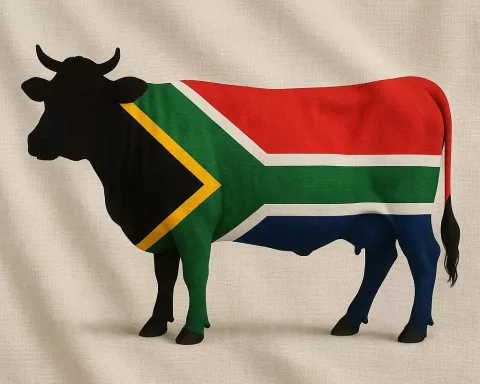
To cancel the 183 ha industrial footprint, West Wits bought a 1 400 ha cattle farm south of Magaliesberg and handed it to the National Biodiversity Institute; kikuyu pasture is reverting to savanna, 30 000 indigenous trees are in the ground and the first two cheetahs arrive in 2026.
A R220 million green bond listed on the JSE funds the project, with coupons paid from 5 % of annual EBIT – a structure the World Bank calls Africa’s first revolving mine-to-ecosystem credit.
Rather than locking metal into a hedge book, the mine minted 10 000 “QalaGold” Ethereum tokens, each backed by 1 g of vaulted bullion and tradeable 24/7 for as little as R50.
A 0.25 % royalty on every transaction flows automatically to the Community Trust; at full output the stream could deliver R6 million a year even if the gold price flat-lines.
Add a 6 t/a on-site refinery that pours 1 kg, 100 g and 10 g bars stamped “Roodepoort 2025” and South Africa keeps the fabrication premium at home instead of surrendering it to Swiss kilns.
Blueprint for a New Gold Country
Head-office walls carry a single line: “If you can mine 1.8 g/t at 320 m, you can rewrite the textbook.”
Licensing proves the point: environmental authorisation, mining right, water-use licence and re-zoning wrapped up in 18 months – 40 % faster than the national norm – because every geo-data set was lodged as open-format 3D PDFs and the company signed a binding offset pact with residents before the first public meeting.
The Minerals Department is already replicating the template for 11 shallow gold and PGMs projects caught in red-tape across Gauteng and North West; if half reach daylight, the country could add 0.8 % to GDP without sinking a single shaft below 1 km.
Transnet has re-opened the 11 km Roodepoort–Crown Deep branch, mothballed since 1998, to haul concentrate and chemicals; four derelict stations will reopen as open-air museums with tickets sold as 0.05 g gold NFTs.
Down-hole quantum gravimeters are testing whether the reef continues another 600 m; early signals hint reserves could double, nudging South Africa back into the top-five league with zero-fatal, low-carbon, community-owned mines.
To motorists the blinking headgear lights are just another mine; to the 2 000 new shareholders, the 180 teenagers coding virtual stopes and the cheetah waiting in a holding boma, they are proof that the continent’s oldest gold field still has new stories to tell – and this time the authors live right on top of the reef.
What is Qala Shallows?
Qala Shallows is a newly opened gold mine in South Africa, specifically in Gauteng, near Roodepoort. It’s notable for being the first gold mine to open in the region since the late 1980s and for its innovative mining approaches.
What makes Qala Shallows unique in its mining approach?
Qala Shallows utilizes advanced technology and modern resource modeling to extract gold from a reef previously deemed uneconomic. Key innovations include a rapidly built “micro-shaft,” autonomous battery-powered equipment, an in-mine gyratory crusher, and sophisticated automation for ventilation and safety. This allows for profitable extraction from shallower depths, avoiding issues common in deeper mines.
How does Qala Shallows contribute to the local community and economy?
Beyond creating jobs, Qala Shallows has a direct positive impact on the local community. The Durban Deep township owns 8% of the mine through the Qala Community Trust, receiving dividends. A social royalty funds a 24-hour clinic and a stadium system. Additionally, ex-mineworkers hold a stake in an aggregate quarry providing backfill and road-stone, and the mine invests in local education through a VR theatre for students.
What are Qala Shallows’ environmental sustainability efforts?
Qala Shallows significantly reduces its environmental footprint. It aims for 60% lower CO₂ emissions per ounce than the national average. Half of its electricity comes from solar panels on a re-shaped tailings dam, and another 8 MW is generated from recycled hydro. The mine also uses a specialized flotation cell to reduce cyanide use by 30%. Furthermore, it’s involved in a massive rewilding project, converting a cattle farm back to savanna and reintroducing cheetahs, funded by a green bond.
How does Qala Shallows innovate in financing and value sharing?
Instead of traditional hedging, the mine has minted 10,000 “QalaGold” Ethereum tokens, each backed by 1 gram of vaulted bullion, allowing 24/7 trading for as little as R50. A 0.25% royalty from each transaction goes automatically to the Community Trust. The mine also includes an on-site refinery to keep fabrication premiums within South Africa.
What is the broader impact and future potential of Qala Shallows?
Qala Shallows serves as a blueprint for a new era of gold mining in South Africa. Its efficient licensing process, achieved through open data sharing and community engagement, is being replicated for 11 other projects. The mine’s low-carbon, community-owned model, coupled with potential reserve doubling through continued exploration, has the potential to significantly boost South Africa’s GDP and re-establish its position as a top global gold producer.