City Power, South Africa’s electricity distributor, has carried out another disconnection operation in an effort to recover outstanding payments from government hospitals and businesses with massive debts. Government hospitals Helen Joseph and Rahima Moosa, who have debts totaling over R30 million, were among those targeted. City Power has urged customers to settle their bills to avoid disconnections.
What is City Power’s recent crackdown operation about?
In a continued effort to recover outstanding payments, City Power has carried out another disconnection operation, targeting government hospitals and businesses with massive debts, including Telkom, with a debt of over R2.9 million. If payments are not made within two weeks, immediate disconnections will follow. City Power will be cracking down on these defaulting entities and urging other customers to settle their bills to avoid disconnections.
Hospitals and Businesses Face Disconnections
In a continued effort to recover outstanding payments, South African electricity distributor City Power has carried out another disconnection operation. This time, government hospitals Helen Joseph and Rahima Moosa found themselves targeted, with a combined debt of over R30 million. Both hospitals received pre-termination warnings, but their management teams were quick to inform City Power representatives that they were already in the process of paying off the debts.
City Power spokesperson, Isaac Mangena, underscored the urgency of the matter, stating that if the payments were not made within the next two weeks, immediate disconnections would follow. The hospitals’ debts are indeed massive, with Helen Joseph Hospital owing over R23 million and Rahima Moosa Mother and Child Hospital having a debt of over R7 million.
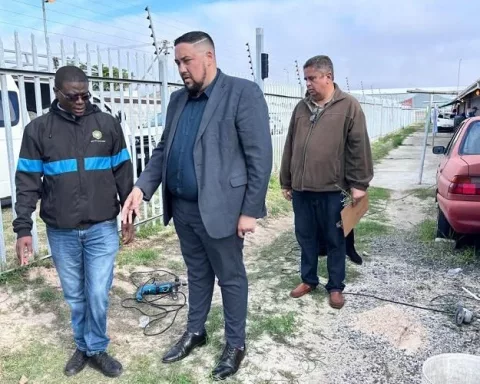
This week, the disconnection operation focused on areas under the Hursthill Service Delivery Centre, where outstanding debts amount to over R1.3 billion. City Power pinpointed ten business and residential customers, who together owed R13 million in unpaid electricity bills.
Telecommunications Company Among Those Disconnected
Telkom, a telecommunications company, was among the businesses disconnected, with a debt of over R2.9 million. Mangena expressed shock that Telkom had not made any payments for their electricity bill since 2021. Another business disconnected was Ancient Oak Trade Invest, a pub in Melville, which has an outstanding debt of over R1 million. The owner had illegally reconnected the power supply multiple times, resulting in significant penalties before reconnection is allowed.
City Power’s concern goes beyond these individual cases, as non-payment from government institutions presents a substantial issue. Mangena indicated that government properties across the city owe over half a billion rand in total. As the revenue collection drive gains momentum, City Power will be cracking down on these defaulting entities. Mangena also took the opportunity to remind other customers to settle their bills to avoid an unwelcome visit from City Power.
The operation in Hursthill serves as a stark reminder of the financial challenges facing South African public institutions and private businesses. In a context where utilities and services are already under strain, the lack of payment only exacerbates the situation. The City Power disconnection operation thus underscores the broader issues of financial responsibility and sustainable service provision.
Reflecting on South Africa’s Electricity Challenges
South Africa has historically faced numerous problems with electricity supply and management. From load shedding to unreliable infrastructure, the country has struggled to maintain a consistent electricity supply for its citizens and businesses. The recent disconnection operation by City Power is a reflection of these ongoing issues, emphasizing the need for improved governance and more efficient revenue collection strategies.
The stories of the government hospitals and businesses caught in the crackdown operation reveal the complexities and challenges faced by South African institutions. While the large outstanding debts are undoubtedly worrisome, it is vital to consider the broader context in which these organizations operate. The financial strain faced by many South Africans, combined with a struggling economy and bureaucratic inefficiencies, creates an environment ripe for non-payment and illegal reconnections.
City Power’s crackdown operation also offers an opportunity to reflect on the importance of collaboration between public institutions, private businesses, and utility companies. While each entity has its responsibilities, ensuring the availability and affordability of essential services such as electricity requires a joint effort from all parties involved.
As South Africa continues to struggle with issues of power supply, financial management, and service delivery, the recent disconnection operation serves as a reminder of the interconnected nature of these challenges. Only through collective action and responsibility can South Africa hope to overcome these obstacles and work towards a more sustainable and equitable future. The actions of City Power, though stringent, may be a necessary step in the right direction to address the problem of unpaid bills and ensure a reliable power supply for all.
1. What is City Power’s recent crackdown operation about?
In a continued effort to recover outstanding payments, City Power has carried out another disconnection operation, targeting government hospitals and businesses with massive debts, including Telkom, with a debt of over R2.9 million. If payments are not made within two weeks, immediate disconnections will follow. City Power will be cracking down on these defaulting entities and urging other customers to settle their bills to avoid disconnections.
2. Which hospitals were targeted in the crackdown operation and how much do they owe?
Government hospitals Helen Joseph and Rahima Moosa were targeted in the crackdown operation, with a combined debt of over R30 million. Helen Joseph Hospital owes over R23 million and Rahima Moosa Mother and Child Hospital has a debt of over R7 million.
3. What happens if payments are not made within two weeks?
Immediate disconnections will follow if payments are not made within two weeks.
4. How much do government properties across the city owe in total?
According to City Power spokesperson, Isaac Mangena, government properties across the city owe over half a billion rand in total.
5. Which telecommunications company was among the businesses disconnected and how much do they owe?
Telkom, a telecommunications company, was among the businesses disconnected, with a debt of over R2.9 million.
6. Which business was disconnected that had an outstanding debt of over R1 million?
Ancient Oak Trade Invest, a pub in Melville, was disconnected as they have an outstanding debt of over R1 million.
7. What is the broader context in which these organizations operate?
The financial strain faced by many South Africans, combined with a struggling economy and bureaucratic inefficiencies, creates an environment ripe for non-payment and illegal reconnections.
8. What does City Power’s crackdown operation remind us of?
City Power’s crackdown operation reminds us of the interconnected nature of challenges faced by South Africa with power supply, financial management, and service delivery.