Cape Town is doing a super-smart land swap in 2025! They’re trading a small piece of land near Parliament for a much bigger, valuable area, including the old Good Hope Centre. This big deal, worth R1.4 billion, is all about making Parliament safer, fixing up the city, and building homes people can afford. No money changes hands; it’s a clever trade of land for land, setting the stage for big changes and building projects in the city for years to come. It’s a bold move that could totally redraw the city’s future, one piece of land at a time.
What is the 2025 Cape Land Flip?
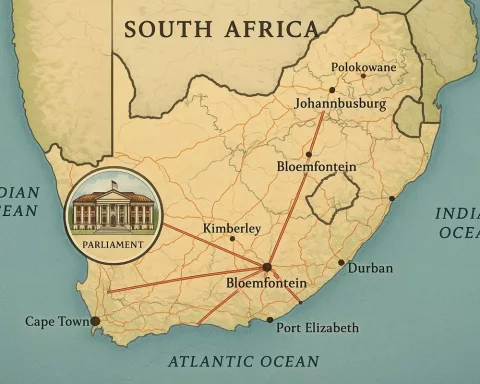
The 2025 Cape Land Flip is a strategic land exchange in Cape Town where the city trades 7,846 m² near Parliament to the Public Works empire for 28,000 m² of the Good Hope Centre and other national properties. This R1.4 billion transaction aims to enhance parliamentary security, facilitate urban regeneration, and create affordable housing, all without direct cash exchange.
1. The Ten-Minute Shockwave That Reset the City Map
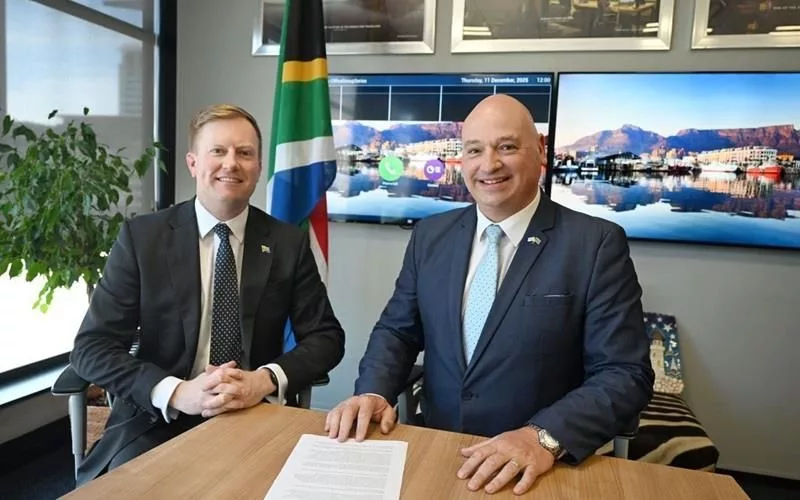
At 10:07 on 11 December 2025, the scratch of a Mont-blanc on thick vellum detonated the biggest inner-city land flip since the Waterfront deal three decades ago. Alderman James Vos, the City’s growth czar, inked a Power of Attorney handing 7 846 m² of municipal earth inside the Parliamentary cordon to Minister Dean Macpherson’s Public Works empire. Macpherson answered with his own flourish, promising the mother city a 28 000 m² slice of the crumbling Good Hope Centre plus three smaller national oddments. No rand notes, no EFTs – value is matched acre for acre, a trick Pretoria last played when the old docks became a navy basin half a century back.
The ceremony lasted ten minutes, yet it yanked R1.4 billion of real estate off the chessboard and set up a construction pipeline worth almost seven billion over the coming decade. Conveyancers who watched the exchange later admitted the room felt colder once the pages lifted – like air rushing into a vacuum nobody knew existed.
Because both governments abhor cash when strategic dirt is in play, the swap sidesteps the three-year slog of budget reprioritisation that a normal sale demands. Instead, the City must merely fetch two independent valuations and an Auditor-General fairness letter – already locked in since October – and the deal glides through the MFMA/PFMA turnstiles.
2. Barter Math: How 0.3 % Became the Magic Gap
Valuers pegged Parliament’s doorstep at R178 000 for every square metre – VIP geography inside the most guarded loop in the republic. The Good Hope slab, by contrast, clocked R48 000/m², heritage scarring and roof leaks included. To bridge the canyon, national bean-counters tossed in a 3 600 m² Green Point parking lot, a 1.9 ha snaking patch beside the Black River canal and a diesel-stained 4 200 m² Maitland depot. The grand total lands within 0.3 % of the City’s offering – slimmer variance than the Deeds Office has ever swallowed in a state-to-state switch.
That razor-thin margin matters: anything wider triggers a fresh council debate and another public-participation circus. Officials privately call the 0.3 % “the bureaucratic sweet spot,” a number small enough to bore auditors yet large enough to prove nobody cooked the books.
Beneath the spreadsheets lurk bigger fiscal shadows. The national fiscus forgoes roughly R12 million a year in rates; Cape Town’s revenue jumps by R38 million even after any rebate giveaways. In municipal arithmetic, that annual surplus could service 250 social-housing units in perpetuity.
3. Parliament’s Prize: A Security Blanket Disguised as a Park
What Pretoria actually receives today is a trapezoid of asphalt – 192 pay-and-display bays and a fenced taxi queue wedged between Plein, Roeland and Long. By 2027 those cars must vanish, replaced by a 30-metre blast buffer that pushes vehicle checkpoints away from the National Assembly’s front steps. Engineers say the stand-off shrinks a potential truck bomb from “chamber collapse” to “replaceable glass,” a grim metric conceived after the 2024 inferno that gutted the old assembly hall.
Blueprints leaked in September show the asphalt eventually giving way to a half-buried visitor centre, a 1 200-seat auditorium and a “democracy walk” shaded by 400-year-old yellowwoods grown in Worcester nurseries for this exact postcode. Tenders for enabling works are pre-qualified; the RFP drops 48 hours after the April 2026 transfer.
Parliament’s protection services, still bunkered in temporary offices, call the land “the last private sliver” in a security jigsaw they have chased since 1995. With it in state hands, the estimated R2.8 billion CSIR master-plan becomes financeable instead of fantastical.
4. The Good Hope Jackpot: From Leaking Colossus to Billion-Rand Empty Canvas
Across town, the 1983 concrete dinosaur that once hosted Pope John Paul II’s mass and the 2010 World-Cup dress rehearsal is already pencilled in for the wrecking ball. Only the folded-plate roof and Giuseppe Uncini’s Italian mosaics earn a reprieve; everything else may go after a heritage-impact sign-off. By March 2026 the City will auction the cleansed, rezoned 28 000 m² canvas to the highest bidder – Claremart has 43 local and offshore regeneration funds salivating at site tours.
Zoning gifts 18 storeys, 220 000 m² of bulk and a 15 % residential sweetener. Market whispers start at R1.1 billion, but numbers climb to R1.4 billion if the City drapes a 25-year rates rebate over the package. Council is split on the rebate; treasury officials call it “a sovereign coupon paid in property.”
The auction rules carry a whip as well as a carrot: 15 of the 100 evaluation points ride on delivering at least 15 % of floor space to households earning below R18 000 a month. Legal advisers insist the carrot structure dodges the litigation magnet of Section-7 housing obligations while still forcing affordability into the mix.
5. The Underrated Side Dishes: Social Houses, Parks and a Toxic Clean-Up
Beyond the headline swap, three lesser parcels sweeten the municipal pot. The Green Point wedge becomes a 450-unit social-housing block, bank-rolled by a R300 million DBSA green bond stacked on the Urban Settlement Development Grant. The Black River ribbon turns into a 1.7 ha sponge park – one more Lego piece in the R4 billion plan to resuscitate the lower Liesbeek – and lifts values inside the adjacent Conradie Hospital redevelopment.
Maitland’s diesel-soaked depot is the ugly duckling. A R60 million Green- Fund cheque will scrub the soil; once clean, the City can flip the site to a last-mile logistics player for an estimated R180 million profit earmarked for inner-city affordable stock. Officials joke the transaction is “arbitrage on contamination.”
Add the numbers and the side dishes alone could seed 1 000 affordable units without touching the rates base. In a city where the queue for title stretches further than the N2 at rush hour, every hectare counts twice – once for shelter, once for political survival.
6. Anatomy of a Deal That Outran Bureaucracy
Inter-government swaps typically drown in the Joint Technical Task Team’s quarterly quarrels. This one sprinted thanks to a cabinet-sanctioned war-room convened in August: two seconded conveyancers, a spatial planner, a heritage lawyer and – stroke of genius – Deeds Office registrar Rudi Singer, who ring-fenced a 48-hour lodgement window for mid-April 2026 before the contracts were even printed.
A risk-shifting memorandum dumps latent environmental defects on whichever arm of state ends up holding the contaminated dirt, calming National Treasury’s terror of open-ended claims. The whole parcel was then parachuted into the City’s current IDP amendment cycle, dodging a fresh round of public meetings that would have shoved timelines into 2027.
Cash is absent but costs are not: conveyancing, geotech borings, Maitland clean-up and a R4 million marketing splash for the Good Hope auction nudge R80 million. The City’s 2025/26 capital budget carries R42 million; DPWI’s Parliamentary Village allocation soaks up the remainder. To shield foreign bidders from rand volatility, the parties will stage sectional transfers so that capital can clear South African Reserve Bank windows in measured tranches – another national first.
7. What Could Go Sideways: Courts, Cabbies and Class-A Office Glut
Heritage hardliners have already filed papers to freeze the Good Hope demolition with a Grade-II listing; the auction therefore carries a 90-day “heritage escape” clause letting the winning bidder walk away whole if a court interdicts the wreckers. Property economists warn that dumping 220 000 m² of new-age offices into a CBD already hollowed by hybrid work could shave another 8 % off Class-A rentals, punishing owners who survived the pandemic only to meet a municipal wrecking ball.
Taxi bosses scent betrayal. The Plein Street holding yard shelters 400 minibus taxis nightly; the Cape Amalgamated Taxi Association wants a 2 000-bay replacement under the N2 flyover before the asphalt disappears. Negotiations are covert but proceeding, funded – ironically – from the same security purse meant to keep MPs alive.
Opposition councillors cry foul, insisting the public deserved a separate shot at the Parliamentary parking land. The City retorts the tract was ring-fenced “strategic” in the 2018 Inner-City Property Strategy and therefore never on the market. The fight will likely spill into the February oversight hearings, but by then the deeds could already be inked.
8. Countdown Calendar: Your 2026 Flip-Watch
- January* – Auditors bless the final valuation tweak.
- February* – Claremart releases auction conditions; Deeds Office pre-lodgement opens.
- March* – Gavel falls on Good Hope; 10 % deposit secures the site.
- April* – Four simultaneous deeds register; City grabs Green Point, Black River and Maitland.
- May* – DPWI breaks ground on Parliament’s blast buffer.
- June* – Claremart hints at round two: the old Culemborg interchange and a Sea Point bowling green may follow the same barter recipe.
By June the metronomic release of further municipal parcels could make land swaps the new normal for Cape Town regeneration. If the template survives courtrooms and taxi blockades, 2026 may be remembered as the year the city learned to trade instead of sell – one hectare at a time.
What is the 2025 Cape Land Flip?
The 2025 Cape Land Flip is a strategic land exchange in Cape Town where the city trades 7,846 m² near Parliament to the Public Works empire for 28,000 m² of the Good Hope Centre and other national properties. This R1.4 billion transaction aims to enhance parliamentary security, facilitate urban regeneration, and create affordable housing, all without direct cash exchange.
Why is no money changing hands in this deal?
No money is changing hands because the 2025 Cape Land Flip is structured as a direct land-for-land swap between the City of Cape Town and the Public Works empire. This approach avoids the lengthy three-year process of budget reprioritisation that a normal sale would require, allowing the deal to proceed more quickly. The value of the exchanged land parcels is matched, with the City receiving a larger, more valuable area in exchange for a smaller, strategically important piece near Parliament.
What is Parliament gaining from this land swap?
Parliament is gaining a 7,846 m² trapezoid of land, currently an asphalt parking lot, located between Plein, Roeland, and Long streets. This land will be transformed into a critical 30-meter blast buffer and security zone, pushing vehicle checkpoints further from the National Assembly. Future plans for this area include a half-buried visitor centre, a 1,200-seat auditorium, and a “democracy walk.” This acquisition is crucial for enhancing the security of Parliament, especially after the 2024 inferno, and makes the R2.8 billion CSIR master plan financially viable.
What will happen to the Good Hope Centre site?
After the land swap, the 1983 Good Hope Centre, which is part of the 28,000 m² acquired by the City, is slated for demolition, with only its folded-plate roof and Giuseppe Uncini’s Italian mosaics potentially preserved. The cleared and rezoned site will then be auctioned off to the highest bidder by March 2026. The zoning allows for 18 storeys and 220,000 m² of bulk, with a 15% residential component. The auction rules also include a requirement for at least 15% of the floor space to be allocated to households earning below R18,000 a month, promoting affordable housing.
What are the “side dishes” included in the deal?
Beyond the main parliamentary and Good Hope Centre sites, the City is also acquiring three additional parcels: a Green Point parking lot, a stretch beside the Black River canal, and a Maitland depot. The Green Point wedge will become a 450-unit social housing block. The Black River ribbon will be transformed into a 1.7 ha sponge park, contributing to the Liesbeek river resuscitation plan. The diesel-contaminated Maitland depot will undergo a R60 million clean-up and then be sold for an estimated R180 million profit, earmarked for inner-city affordable housing stock. These additional parcels are expected to significantly contribute to the city’s housing and urban development goals.
What are the potential challenges or risks to this land swap?
Several risks and challenges could impact the deal. Heritage hardliners have already filed papers to freeze the Good Hope Centre demolition, potentially leading to court intervention and triggering an “heritage escape” clause for the winning bidder. Property economists also warn that introducing 220,000 m² of new office space could further depress CBD office rentals. Furthermore, taxi associations are demanding a replacement for the 400-bay Plein Street holding yard before it disappears. Politically, opposition councillors have raised concerns about the lack of public input on the Parliamentary parking land. Despite these challenges, officials have taken steps to mitigate risks, such as a cabinet-sanctioned war-room and specific clauses to address environmental defects and public consultation.