
The Cape Town Cycle Tour is an exciting annual event in March, bringing together around 30,000 cyclists for a thrilling 109 km ride through the stunning landscapes of Cape Town. This race is not just about competition; it also raises money for local charities, emphasizing the spirit of community and safety in cycling. As the city transforms into a bustling hub of joy and energy, participants and spectators alike celebrate endurance and the breathtaking beauty of the region. With new routes introduced and road closures in place to ensure safety, the Tour promises an unforgettable experience for everyone involved.
What is the Cape Town Cycle Tour?
The Cape Town Cycle Tour, held annually in March, is Africa’s largest cycling event featuring a scenic 109 km route. It attracts around 30,000 cyclists, raising funds for local charities while promoting cycling safety and community spirit. It’s a celebration of endurance and Cape Town’s natural beauty.
A City Transformed by Cyclists
Each March, Cape Town morphs into a bustling hub of cycling enthusiasts as the Cape Town Cycle Tour kicks off. Celebrated for its 47-year history, this renowned event captivates roughly 30,000 cyclists annually, proving its lasting charm. Beyond the thrill of the ride, the Tour serves as a crucial fundraiser for two vital organizations: the Pedal Power Association and the Rotary Club of Claremont. The proceeds support various initiatives aimed at social upliftment and promoting cycling safety.
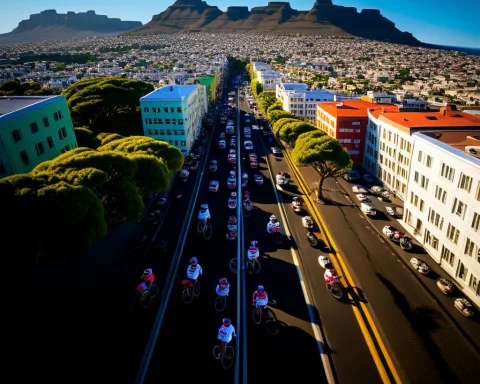
The race’s iconic 109km route is globally acclaimed for its stunning vistas. It starts at the base of the majestic Table Mountain, meanders through Cape Town’s scenic landscapes, and finishes along the Atlantic Seaboard in Green Point. This year, the organizers introduced a new 42km route to attract even more participants, making Africa’s largest cycling event accessible to a wider audience.
Cape Town comes alive with an electrifying atmosphere that resonates with both cyclists and onlookers. As the weekend draws near, the city gears up to welcome an influx of participants, and residents should prepare for numerous road closures designed to ensure the event’s smooth progression and the safety of all involved.
Road Closures and Safety Measures
Beginning on Thursday, March 6, and continuing through Sunday, March 9, Green Point will experience several road closures. Fritz Sonnenberg Road, between Beach Road and Granger Bay Boulevard, will be off-limits from Thursday at 6 AM until Sunday at 8 PM. Likewise, Vlei Road, between Helen Suzman Boulevard and Fritz Sonnenberg Road, will follow the same closure schedule. These measures are essential for setting up the event’s infrastructure and ensuring the safety of cyclists.
As the weekend progresses, additional closures will impact other key areas around Cape Town. On Saturday, March 8, starting at noon, the central business district (CBD) will begin to see road restrictions. Castle Street, between Darling Street and Strand Street, will be closed from noon on Saturday until 4 PM Sunday. In the same area, Darling Street between Lower Plein and Buitenkant Street, as well as Parade Street, Corporation Street, and parts of Strand Street, will also be closed starting at 3 PM Saturday. These measures are critical for maintaining a smooth flow of cyclists through the heart of the city.
The expansive impact of the Cycle Tour extends beyond the city’s core. Suburban areas like Woodstock, University Estate, and parts of the Southern Suburbs will also experience road closures. For instance, Phillip Kgosana Drive will divert traffic from Roodebloem Road to Main Road between 5:30 AM and 12:30 PM on Sunday. Nelson Mandela Boulevard will restrict outbound traffic from 5:30 AM to 12:30 PM, ensuring a clear path for the cyclists.
Scenic Routes and Suburban Impacts
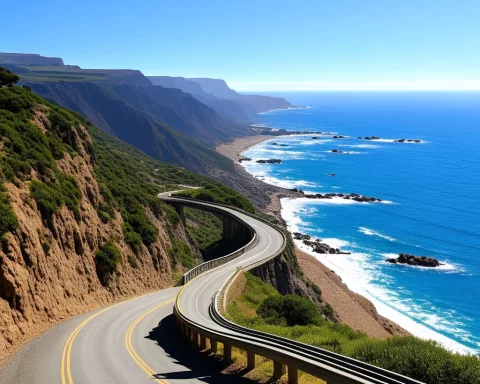
The scenic routes of Noordhoek, Hout Bay, and Chapman’s Peak, known for their breathtaking beauty, will face various closures over the weekend. Chapman’s Peak Drive, a notable highlight of the Tour, will be closed from Saturday at 6 PM to Sunday at 6 PM, allowing cyclists to navigate one of the most challenging and rewarding sections safely.
In the southern peninsula, the picturesque roads around Cape Point, Scarborough, and Kommetjie will also see closures. Main Road from Simon’s Town to the Cape Point Nature Reserve will be closed from 6 AM to 2 PM, offering cyclists an uninterrupted journey through these stunning coastal routes.
Even the newly introduced 42km route will necessitate several road closures, particularly affecting the M3 Freeway and surrounding areas. From Wynberg, Constantia, and Tokai, to the inbound routes towards the CBD, closures will be in place from 10 AM to 3 PM. These steps ensure that both long-distance and short-distance cyclists have safe and clear routes to follow.
For residents in Sea Point, Green Point, and Mouille Point, expect closures on Beach Road from 5 AM to 6:30 PM on Sunday. This stretch is crucial as it forms part of the final leg of the race, leading cyclists toward the finish line in Green Point.
Parking Restrictions and Shuttle Services
Parking restrictions are also a key part of the logistics, especially in high-traffic areas like Camps Bay, Clifton, Bantry Bay, and Sea Point. Victoria Road from Camps Bay to Seacliff Road will restrict parking from midnight Saturday to 6 PM Sunday. Similarly, Beach Road from Queens Road to Beach Road in Mouille Point will face restrictions during the same period. The Cape Town Cycle Tour Trust, the event organizers, urge residents in Muizenberg, St. James, Kalk Bay, Clifton, Bantry Bay, and Sea Point to avoid parking along Main Road, opting for alternative side roads or designated parking areas to facilitate smooth traffic flow and ensure safety.
In addition to road closures, the City of Cape Town is offering free MyCiTi shuttle services to assist both participants and spectators. These shuttles will run from the Cape Town International Convention Centre (CTICC) to the stadium for race pack collection. Operating hours for the shuttles are from 8:30 AM to 7:30 PM on Thursday and Friday, and from 8:30 AM to 4:30 PM on Saturday. On race day, shuttles will transport participants between the Stadium, Thibault, and Civic stations starting at 5 AM, with the last bus departing at 6 PM.
A Celebration of Community and Endurance
The Cape Town Cycle Tour is far more than just a competitive race; it embodies community spirit, endurance, and the natural splendor of Cape Town. Drawing cyclists of all levels, from seasoned pros to eager amateurs, the event unites participants in a shared goal of completing this iconic journey. The Tour’s commitment to the Pedal Power Association and the Rotary Club of Claremont highlights its dedication to social causes, reinforcing its status as a beacon of community collaboration and goodwill in the Mother City.
Every year, the Tour not only showcases the breathtaking beauty of Cape Town but also underscores the city’s commitment to social responsibility and cycling safety. As participants pedal through some of the most picturesque routes in the world, they contribute to meaningful causes that benefit the local community. This blend of athletic challenge, scenic beauty, and social impact makes the Cape Town Cycle Tour a truly unique and valuable event, enriching the lives of both cyclists and residents alike.
“`markdown
Frequently Asked Questions (FAQ)
What is the Cape Town Cycle Tour?
The Cape Town Cycle Tour is Africa’s largest cycling event, held annually in March. It features a scenic 109 km route that attracts around 30,000 cyclists. Beyond the thrill of competition, the event raises funds for local charities, promoting cycling safety and a sense of community.
How does the Cape Town Cycle Tour support local charities?
The Tour serves as a significant fundraiser for the Pedal Power Association and the Rotary Club of Claremont. The proceeds from the event support initiatives focused on social upliftment and the promotion of cycling safety throughout the local community.
What are the road closures associated with the Tour?
From Thursday, March 6, to Sunday, March 9, various road closures will be in effect to ensure the safety of participants. Key areas affected include Green Point, the central business district, and suburban locations like Woodstock and the Southern Suburbs. Specific closures will begin on different days, so it’s important to check the schedule for detailed information.
Are there any parking restrictions during the event?
Yes, there will be parking restrictions in high-traffic areas such as Camps Bay, Clifton, and Sea Point. Parking will be restricted from midnight Saturday until 6 PM Sunday in these areas. Residents are encouraged to use alternative routes or designated parking areas to facilitate smooth traffic flow.
Will there be any shuttle services available during the Tour?
Yes, the City of Cape Town will provide free MyCiTi shuttle services for participants and spectators. Shuttles will run from the Cape Town International Convention Centre (CTICC) to the stadium for race pack collection and will operate on race day, transporting participants between key stations starting at 5 AM.
How does the Cape Town Cycle Tour celebrate community and endurance?
The Cape Town Cycle Tour is not just a race; it embodies community spirit and endurance. Cyclists from all levels unite to complete this iconic journey, while the event’s commitment to charitable causes reinforces its role as a symbol of community collaboration and goodwill in Cape Town.
“`