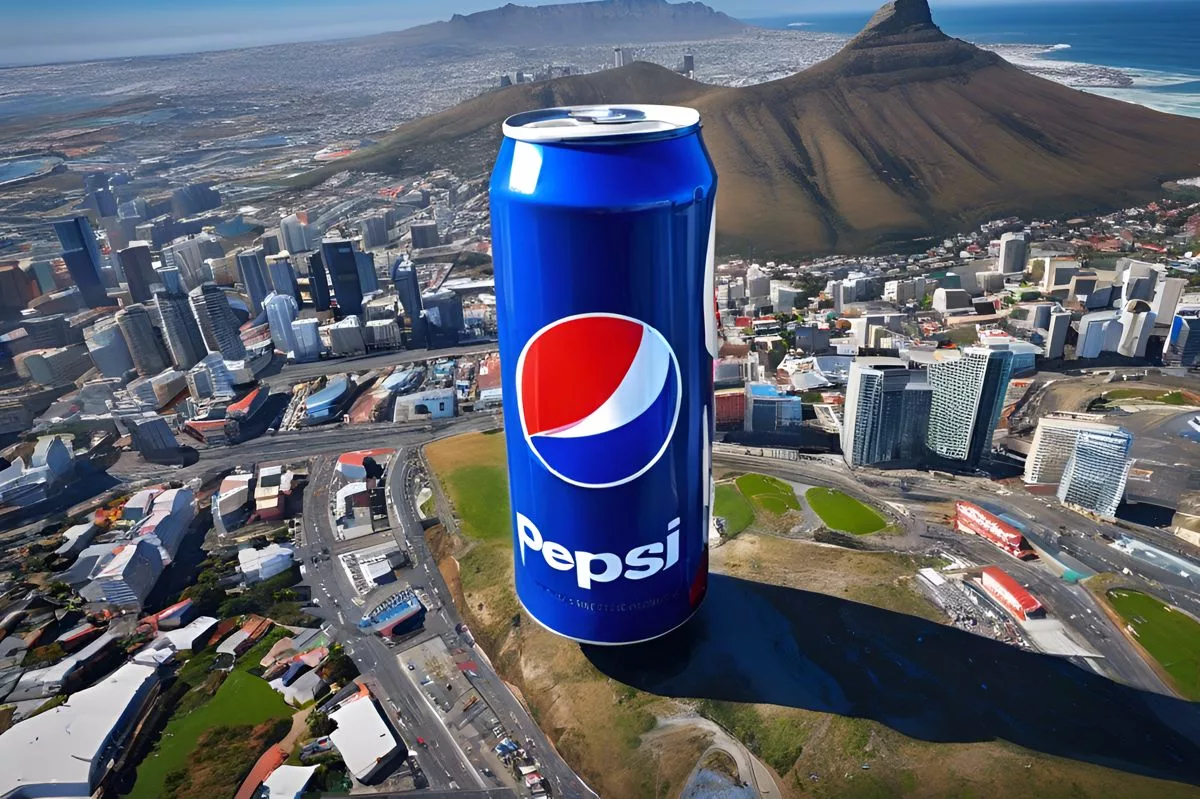
PepsiCo has launched a bold new marketing campaign in South Africa, including a revamped logo and visual identity. The updated branding features a new colour palette of blue and black, a tailored typeface, and a reimagined Pepsi can silhouette. PepsiCo also introduced a grand procession of events and enlisted the star power of noted rappers to oversee activities in Cape Town and Johannesburg, as well as CGI billboards and drones. The brand makeover heralds a new epoch for Pepsi, embodying the spirit of being unapologetically Pepsi.
What is PepsiCo’s new brand identity in South Africa?
PepsiCo has launched a bold new marketing campaign in South Africa, including a revamped logo and visual identity. The updated branding features a new colour palette of blue and black, a tailored typeface and a reimagined Pepsi can silhouette. The company also introduced a grand procession of events and enlisted the star power of noted rappers to oversee activities in Cape Town and Johannesburg, as well as CGI billboards and drones. According to PepsiCo’s Marketing Director, the brand makeover heralds a new epoch for Pepsi.
In the dynamic and always surprising environment of South Africa, where power outages can last for 20 days straight and hippos amble through neighbourhoods after dark, one might think they’ve seen it all. But PepsiCo’s bold new marketing campaign may give even the most seasoned observer pause. Towering Pepsi cans have been erected at beloved locations in Cape Town and Johannesburg, signalling PepsiCo’s audacious debut of their updated logo and visual identity.
Enthralling Event Series and Tech-infused Billboards
PepsiCo’s rebranding efforts included a grand procession of events, and the company certainly brought their A-game. They enlisted the star power of noted rappers Youngsta CPT and Priddy Ugly as brand representatives, each overseeing the activities in Cape Town and Johannesburg respectively. PepsiCo also innovatively used Computer-generated imagery (CGI) billboards to display their new brand identity at the highly revered DHL Stadium and the famous Ponte Tower.
At the DHL Stadium, the surreal scene resembled a Pepsi-Cola downpour from the heavens. A mammoth Pepsi Max can seemed to pour the beverage directly onto the field, creating a visual spectacle that was as captivating as it was fantastical. In Johannesburg, the Ponte Tower was transformed. A squad of drones gave the tower the appearance of a gigantic 300ml Pepsi Max can.
The New Era of PepsiCo Brand Identity
To officially debut their fresh identity, PepsiCo collaborated with 947, Anele and The Club for a live broadcast event at the respected Teatro Montecasino. As per Marius Vorster, Marketing Director at PepsiCo West, East and Central Africa, this brand makeover is not merely a logo alteration. He clarifies that ‘it heralds a new epoch for Pepsi’.
PepsiCo’s new logo and comprehensive aesthetic pay homage to the firm’s previous branding while incorporating modern elements. The Pepsi emblem and wordmark blend flawlessly, providing a flexible appearance that preserves the Pepsi branding. The revised colour palette introduces striking blue and black, a selection that is both audacious and contemporary, reflecting the brand’s commitment to Pepsi Zero Sugar. The addition of black illustrates a focus on the brand’s dedication to Pepsi Zero Sugar in the future.
Reimagined Can Design and Refreshed Brand Promise
The reimagined Pepsi can silhouette is visually distinctive, ensuring the iconic Pepsi can is identifiable to everyone. A modern, tailored typeface conveys the brand’s self-assured and unapologetic demeanour. The trademark Pepsi pulse, evocative of the ‘ripple, pop and fizz’ associated with Pepsi-Cola, encapsulates the rhythm and energy of music, a crucial aspect of Pepsi’s heritage.
In marking a new era, PepsiCo has presented not only a revitalised aesthetic, but also a commitment. A commitment to create more engaging and compelling experiences, offering their patrons not just the finest cola, but a journey that is as extraordinary as it is unforgettable. A journey that embodies the spirit of being unapologetically Pepsi.
What are the new colours in PepsiCo’s brand identity in South Africa?
The updated branding features a new colour palette of blue and black, a selection that is both audacious and contemporary, reflecting the brand’s commitment to Pepsi Zero Sugar. The addition of black illustrates a focus on the brand’s dedication to Pepsi Zero Sugar in the future.
What is the reimagined Pepsi can silhouette?
The reimagined Pepsi can silhouette is visually distinctive, ensuring the iconic Pepsi can is identifiable to everyone.
What is the tailored typeface in PepsiCo’s new brand identity?
A modern, tailored typeface conveys the brand’s self-assured and unapologetic demeanour.
Who oversaw the activities in Cape Town and Johannesburg as a part of PepsiCo’s brand revamp?
Noted rappers Youngsta CPT and Priddy Ugly oversaw the activities in Cape Town and Johannesburg respectively as brand representatives.
What is the Pepsi pulse in PepsiCo’s brand identity?
The trademark Pepsi pulse, evocative of the ‘ripple, pop and fizz’ associated with Pepsi-Cola, encapsulates the rhythm and energy of music, a crucial aspect of Pepsi’s heritage.
What is PepsiCo’s commitment with their brand revamp?
PepsiCo has presented a commitment to create more engaging and compelling experiences, offering their patrons not just the finest cola, but a journey that is as extraordinary as it is unforgettable. A journey that embodies the spirit of being unapologetically Pepsi.