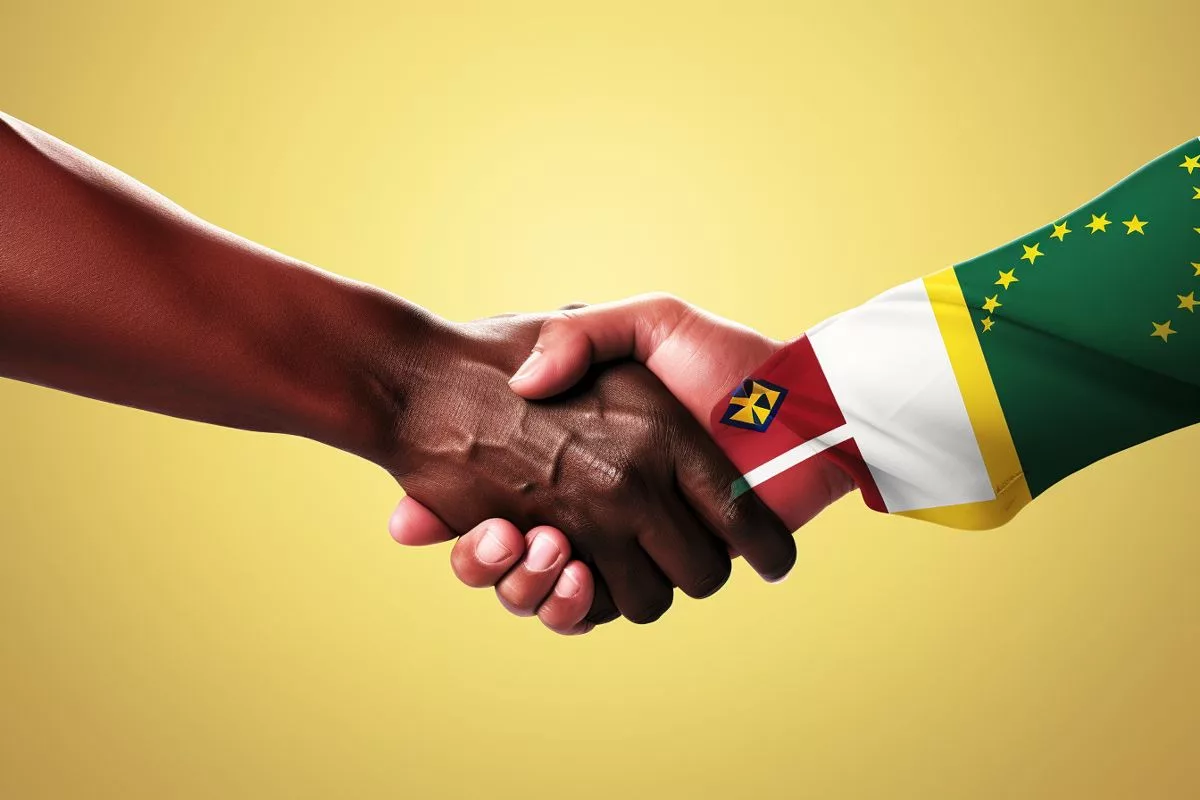
A business roundtable between South Africa and Qatar aimed to strengthen bilateral ties and explore potential pathways for trade, investment, and economic growth. President Ramaphosa highlighted five crucial aspects of the South African economy that lay the groundwork for a partnership to flourish, including the country’s status as Africa’s most industrialized nation, growing global trade reach, abundant reserves of crucial minerals, comprehensive economic reforms, and a stable legal framework with robust property rights protection. The meeting highlighted the potential of the South Africa-Qatar alliance to contribute towards global economic growth and stability.
What was the purpose of the business roundtable between South Africa and Qatar?
The purpose of the business roundtable was to strengthen bilateral ties and explore potential pathways for trade, investment, and economic growth between South Africa and Qatar. President Ramaphosa highlighted five crucial aspects of the South African economy that lay the groundwork for a partnership to flourish.
A Pivotal Gathering
In the vibrant city of Doha, where the crystal blue waters of the Persian Gulf meet the vast, captivating expanse of the Arabian Desert, an important encounter recently unfolded. This gathering was a business roundtable, comprised of leaders from South Africa and Qatar. The convener of this meeting was none other than South Africa’s President, Cyril Ramaphosa. His objective? To fortify the bilateral ties between the two countries and probe into potential pathways for trade, investment, and economic growth.
This significant day was filled with productive dialogues, not just on reinforcing bilateral relations but also exchanging viewpoints on recent global developments. The President voiced his apprehension about the escalating strife in Palestine, reaffirming South Africa’s backing for an immediate cessation of hostilities and a political resolution respecting the valid aspirations of the Palestinian people.
Nevertheless, the central theme of the day was the economic potential that exists within the collaboration of these two nations. President Ramaphosa pinpointed five crucial aspects of the South African economy that lay the groundwork for this partnership to flourish.
The Economic Appeal of South Africa
Firstly, South Africa’s status as Africa’s most industrialised nation is a key factor. The country is home to enterprises that have already established their presence in the Middle East and Qatar. Companies like Sasol in the petrochemical industry, with its innovative technologies, and consumer brands such as Nandos and Ocean Basket, have left their imprint and continue to prosper.
Secondly, South Africa is growing its global trade reach. Trade agreements with the European Union and the United Kingdom are in effect, and the nation is poised to roll out the African Continental Free Trade Area, which will merge 54 economies into a massive tariff-free market encompassing 1.3 billion consumers.
President Ramaphosa’s third point of emphasis was Africa’s abundant reserves of crucial minerals that could propel the world’s shift towards environmentally-friendly growth. The rising demand for these minerals offers an opportunity to further industrialise not just the South African, but also the broader African economies.
Fourthly, South Africa is embarking on comprehensive economic reforms which include revamping the energy market and addressing the issues plaguing the public electricity utility, Eskom. A wave of private energy production initiatives, especially in the renewables sector, is expected in light of these regulatory modifications.
Lastly, South Africa prides itself on a stable legal framework, robust property rights protection, a deep capital market, and an expanding talent pool. It lures investors from all over the world, and many of the planet’s largest corporations have a significant presence in the South African market.
Looking Towards Qatari Businesses
President Ramaphosa then shifted his focus towards Qatari businesses, expressing his intent to access their capital markets through joint ventures in commercially viable projects. Observing that Qatar’s presence in the South African market was significantly less compared to other Gulf Cooperation Council countries, he advocated for an expansion that would expose Qatari businesses to an accelerating region of the world.
President Ramaphosa also stressed the importance of enhancing people-to-people interactions, tourism, trade, and investment. He invited Qatar to join in developing a portfolio of South African investments that could incorporate their sovereign wealth fund and private sector.
In addition, President Ramaphosa underscored potential sectors ripe for collaboration, spanning agro-processing, automotive, aquaculture, manufacturing, hydrocarbons, infrastructure, hospitality, and tourism.
The roundtable served as a testament to the growing vigor of South Africa’s international relations and its capacity to cultivate partnerships with mutual benefits. The meeting highlighted the potential of the South Africa-Qatar alliance to not only stimulate their own economies but also contribute towards global economic growth and stability.
This encounter indeed signaled a promising stride towards a future in which South Africa and Qatar, in unison, navigate the intricacies of the global economy and chart a course towards sustainable and inclusive growth.
What were the potential pathways for trade, investment, and economic growth explored in the business roundtable between South Africa and Qatar?
The business roundtable aimed to explore potential pathways for trade, investment, and economic growth between South Africa and Qatar. President Ramaphosa highlighted potential sectors for collaboration, including agro-processing, automotive, aquaculture, manufacturing, hydrocarbons, infrastructure, hospitality, and tourism.
What did President Ramaphosa highlight as crucial aspects of the South African economy?
President Ramaphosa highlighted five crucial aspects of the South African economy that lay the groundwork for a partnership to flourish, including the country’s status as Africa’s most industrialized nation, growing global trade reach, abundant reserves of crucial minerals, comprehensive economic reforms, and a stable legal framework with robust property rights protection.
What is the African Continental Free Trade Area?
The African Continental Free Trade Area is a massive tariff-free market encompassing 54 economies and 1.3 billion consumers that South Africa is poised to roll out, which will enable the country to grow its global trade reach.
What were some potential sectors for collaboration between South Africa and Qatar?
Potential sectors for collaboration between South Africa and Qatar included agro-processing, automotive, aquaculture, manufacturing, hydrocarbons, infrastructure, hospitality, and tourism.
What was the main theme of the business roundtable between South Africa and Qatar?
The main theme of the business roundtable was the economic potential that exists within the collaboration of South Africa and Qatar, with President Ramaphosa highlighting five crucial aspects of the South African economy that lay the groundwork for a partnership to flourish.
What was the potential of the South Africa-Qatar alliance highlighted in the meeting?
The meeting highlighted the potential of the South Africa-Qatar alliance to not only stimulate their own economies but also contribute towards global economic growth and stability.