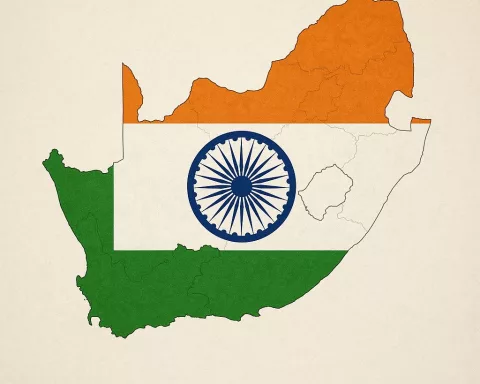
The emergence of South African pears in India’s markets is a success story driven by superior quality, steady availability, and increased health awareness. Despite concerns of internal competition, South African pear exports to India have increased significantly in recent years, highlighting the power of diversified trade. This triumph is a testament to the growers’ dedicated efforts and the strength of South Africa’s export strategy, which has shifted towards more diverse frontiers.
The Emergence of South African Pears in India’s Markets: A Flavorful and Economic Phenomenon
South African pears have gained a foothold in the Indian market due to their superior quality and steady availability. The increasing health awareness and thriving economy in India have also played a role in their success. Despite concerns of internal competition, South African pear exports to India have increased significantly in recent years, highlighting the power of diversified trade.
The Beginnings of a Delicious Success Story
In the heartland of South Africa, where fertile earth meets welcoming sunlight, pear trees sway gently bearing their delicious offerings. It’s an image that echoes throughout the Indian subcontinent, a place far away, yet resonating with a newfound affinity for these delectable delights from South Africa. The South African pear has carved a niche for itself in the Indian market, gaining an edge over its international competitors with an inspiring tale of success.
This isn’t a story about arbitrary preference; it’s a tale anchored in the superior quality and the steady availability of these pears, as stated by Shubha Rawal, the sourcing head at IG International. At the IFPA Southern Africa conference, Rawal remarked, “South African pears have outshone all the pears imported to India from around the globe…Particularly, the Forelles and Vermonts; their popularity has soared.”
A Taste of Resilience Amid Economic Challenges
The triumph of South African pears is not just a tribute to their flavor, but also to their outstanding endurance. Despite inflation affecting other regions, South African pears have flourished amidst India’s thriving economy. Rawal noted that the increased health awareness brought on by the pandemic has shifted India’s consumption trends. Fresh, nutritious produce like citrus fruits, avocados, and notably, pears, have gained significance.
Rawal’s comments highlight South Africa’s triumph in ensuring a continuous, year-round supply of pears to India. Such an accomplishment deserves applause and Rawal did not hesitate to commend the growers’ contributions to this success. Their dedicated efforts have allowed South African pears to surpass their American and European competitors in this lively market.
Notwithstanding this victory, there’s a concern. The South African pear exports to India have performed so well that they’ve triggered anxieties of internal competition. The concern is that various cultivars of South African pears may begin to compete against each other in the Indian market.
The Power of Diversified Trade
Over the past ten years, Hortgro, an organization, has been guiding South Africa’s export markets away from traditional Northern Hemisphere destinations like Europe and the UK, towards more diverse frontiers. The organization’s efforts have been fruitful. In 2006, South Africa exported 108,452 tonnes of pears, with a significant majority of 83% going to the UK, EU, and Russia. Fast forward to 2023, South African pear exports ballooned to 231,231 tonnes, distributed equally between traditional and emerging markets. A noteworthy 46% of these exports are now aimed at growing markets like India.
This shift in South Africa’s export strategy underlines the dynamic nature of worldwide trade and the strength of diversification. The change in focus reemphasizes that a successful trade isn’t just about producing a high-quality product; it’s equally about identifying suitable markets and optimal timing.
A Sweet Journey of Quality and Strategy
The South African pear’s voyage to India is a story of top-notch quality, reliable supply, clever export strategy, and a surge in health consciousness among consumers. It’s a tale of conquering economic challenges, exploiting opportunities, and above all, satisfying the palates of consumers across the globe. As this journey unfolds, it will be crucial to maintain a balance between promoting variety and ensuring that competition doesn’t edge into cannibalization. The future will reveal how this delightful saga evolves.
1. What has contributed to the success of South African pears in India’s markets?
The success of South African pears in India’s markets is due to their superior quality, steady availability, and increased health awareness among Indian consumers.
2. What concerns have arisen in regards to South African pear exports to India?
There are concerns that various cultivars of South African pears may begin to compete against each other in the Indian market, leading to internal competition.
3. How has South Africa’s export strategy shifted in recent years?
South Africa’s export strategy has shifted towards more diverse frontiers, moving away from traditional Northern Hemisphere destinations like Europe and the UK, towards emerging markets like India.
4. What organization has been guiding South Africa’s export markets in this shift?
Hortgro, an organization, has been guiding South Africa’s export markets in this shift towards more diverse frontiers.
5. How has India’s consumption trend shifted in recent years?
The increased health awareness brought on by the pandemic has shifted India’s consumption trend towards fresh, nutritious produce like citrus fruits, avocados, and pears.
6. What has contributed to the continuous, year-round supply of South African pears to India?
The dedicated efforts of South African pear growers have contributed to the continuous, year-round supply of pears to India.