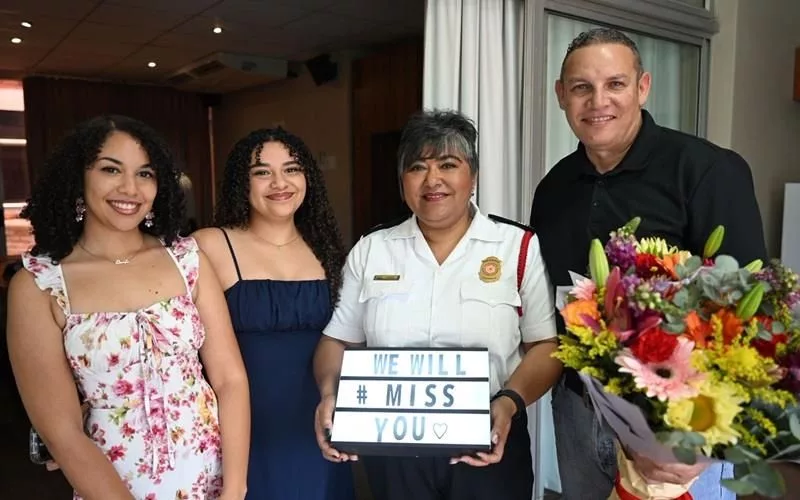
Arlene Wehr is a brave firefighter from Cape Town, South Africa, who worked for thirty years. She changed the fire service by making it fair for women, creating important training, and making smart plans for emergencies. She showed everyone that fire doesn’t care if you’re a man or a woman, only if you’re ready to face it. Her work made the city much safer and inspired many people to follow in her footsteps.
Who is Arlene Wehr and what is her legacy?
Arlene Wehr is a trailblazing firefighter from Cape Town, South Africa, who served for three decades. Her legacy includes pioneering gender equality in the fire service, developing critical training protocols, and implementing innovative disaster management strategies, significantly improving safety and operational efficiency.
1. The Day the City Learned a New Silhouette
Cape Town’s mountains still carry charcoal scars, its shanties still rattle in the gales, and its glass towers still throw back the sunrise like cold mirrors. None of these landscapes ever asked whether the human scrambling up a ladder or hacking a fire-line was a man or a woman. Fire, smoke and gravity issue the same injuries to every body. Yet for twenty-nine seasons, crews scanning a burning hillside for reassurance learned to look for a particular outline: helmet sitting fractionally higher, shoulders a shade narrower, braid on the epaulette doubling every few years. When that outline stayed planted on the Bravo flank, the radio chatter relaxed: “She’s still there, the line will hold.”
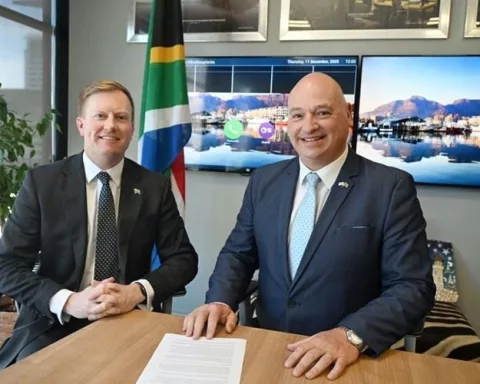
On 11 December 2025 that outline will step out of the red glow for good, closing a loop that began one winter morning in 1996 when Arlene Wehr reported to Epping drill yard wearing gumboots she had borrowed from a neighbour because the stores counter stocked nothing smaller than a men’s eight. The clownish flop did not stop her finishing the five-kilometre squad run in the front third of Recruit Class Bravo. A quartermaster’s shrug became a metaphor: she would spend the next generation filling the gaps herself.
From that first morning, improvisation was branded into her brand of leadership. A size-five foot became a measuring stick for everything the service had not yet imagined – protective gloves that shrivelled on smaller hands, jackets that ballooned like spinnakers, policies that still classified women as “auxiliary”. She began to log each shortfall in a notebook tucked inside her helmet liner, turning inconvenience into inventory. The city would eventually rewrite its manuals, redraw its garments and rewire its culture because one recruit refused to wait for kit that fit.
2. Apprentice, Inventor, Trailblazer (1996-2013)
Her first seven years were a self-directed degree in disaster. While classmates chased weekends, Wehr chased firsts: first interior attack through a tea-room inferno in Langa, first hydraulic spreaders opened on a twisted Nissan on the N2, first 90-metre cliff lower beneath the old cable station. She dated each milestone in the helmet notebook, then crossed it out only when she had taught someone else to do it faster. By 1999 the Technical Rescue Unit – modelled on London’s elite squad – claimed her as its unofficial registrar, the person who translated Utah avalanche protocols into Afrikaans and isiXhosa so that township volunteers could haul strangers out of flooded streams.
Promotions arrived like bushfires – every couple of seasons another leap. Driver-Operator in 2000, Leading Fire-Fighter in 2001, Station Officer candidate in 2003. Each badge landed her on the “Green Mile”, the ribbon of coastline that can serve up three veld fires, two car wrecks and a shark incident before the breakfast pots are clean. She learned to scrawl incident-action plans on Land-Cruiser bonnets while the southeaster tried to sandblast the ink off the page. Veteran crews still imitate the way her voice sliced through rotor-wash when a helicopter bucket dipped too low: concise, calm, immovable.
The real revolution, however, started indoors. In 2004 she pinned on the single crown of Station Officer at Roeland Street, the CBD’s busiest engine house. Twenty-two subordinates had once instructed her; now she signed their overtime slips. Instead of flexing rank, she invited every sceptic to walk two shifts in the manager’s boots. Her “Officer Shadow” programme cut grievances by almost a third and was copied city-wide. Next, she took aim at the national training syllabus, still illustrated exclusively with male hands coupling hose. The 2009 rewrite carried gender-neutral sketches and a twelve-hour block on female physiology and PPE sizing. It is still the standard handed to every South African recruit.
3. Scaling Command, Measuring Seconds (2014-2025)
The drought of 2015-2018 forced every city department to justify each litre. Wehr cancelled fleet washing and replaced it with “broom parades”, cutting station water use by more than half. The Green Service Award, usually reserved for tree-planters, landed in fire headquarters for the first time. Her reward was a bigger map: in June 2019 she took command of District West, 1.3 million residents from Bloubergstrand to Cape Point, fourteen stations, two rescue boats, a drone unit, 412 staff and – when the Cape Doctor wind howled – up to four hundred extra wild-land contractors. The district also hosts two nuclear reactors and seventeen chemical tank farms, assets that can shut down an economy if they ignite.
The exam came in April 2021: the 45 000-hectare Slangkop fire jumped the R27 and jogged toward Koeberg nuclear plant. Wehr established a unified command in twenty-two minutes, stitched Eskom’s private brigade, the Air Force and sea-rescue skippers into one organism, and fed infrared drone data to climatologists at Stellenbosch. The fire stopped three kilometres from the plant; the International Atomic Energy Agency still uses the operation as a case study. During COVID-19 she borrowed an Australian “blue–green” bubble roster, sealed crews in a decommissioned holiday camp and recorded zero operational deaths – an unmatched statistic among South African metros.
4. Legacy in Stitches, Seconds and Spreadsheet Rows
Ask why she never lodged a discrimination suit and she answers, “I kept score with stopwatches.” Her private spreadsheet, started in 2004, now tracks ninety-three promoted protégés, forty-one of them women. Rows turn amber when someone stalls for five years; an e-mail invitation for coffee follows. In 2022, for the first time, every South African recruit class enrolled more women than the 1996 national average of four per cent. Cape Town’s academy hit thirty-four per cent; posters of Wehr’s silhouette against a backdraft halo hang in township libraries six hundred kilometres inland.
At home, the operational brain never clocks off. Husband Brandon flies Bambi buckets while Arlene commands ground sectors; flight plans are sketched between dinner plates. Daughters Dante and Keisha completed their first two-kilometre hose-lay before they could legally drive; one now redesigns quick-connect couplings, the other is finishing a medical degree focused on pre-hospital trauma. Inside every station she mandated that promotion parties be cooked by the promoted member; recipes are painted on kitchen walls. Her 2004 lamb-and-tamarind potjie at Roeland Street is still signed in enamel.
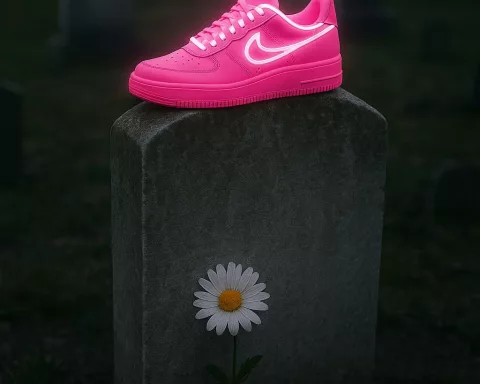
Even gear carries her stitch marks. The pink glove she once dyed so rookies could spot their instructor became a graduation totem. In 2018 she partnered with a local start-up to cut the first female-profile structural coat, trimming four hundred grams and closing the eighty-watt heat-loss gap at the hips. A maternity version enters trials in 2026, a year after she retires – deliberate timing, she says, so no one can claim she did it for herself.
On her last shift she will place the radio on the desk after signing off, but the frequency will remain alive with voices she trained, policies she rewrote, turnout times she shaved. Somewhere a recruit will buckle a helmet two sizes smaller than the 1996 stock and step onto an engine whose station was mapped from Wehr’s data. The city’s fire-scarred mountains will not notice the change, but they will continue to teach what they taught her: fire has no gender, only consequences – and the people who choose to face it.
Who is Arlene Wehr and what is her legacy?
Arlene Wehr is a trailblazing firefighter from Cape Town, South Africa, who served for three decades. Her legacy includes pioneering gender equality in the fire service, developing critical training protocols, and implementing innovative disaster management strategies, significantly improving safety and operational efficiency within the city and beyond.
What challenges did Arlene Wehr face as a woman in the fire service?
From her first day, Arlene faced challenges like ill-fitting gear (gumboots too large, gloves that shrivelled, jackets that ballooned) and policies that classified women as “auxiliary.” She meticulously logged these shortfalls, which eventually led to the rewriting of manuals, redesigning of garments, and rewiring of the fire service’s culture to be more inclusive.
How did Arlene Wehr contribute to training and operational improvements?
Arlene developed critical training protocols, translating complex procedures like Utah avalanche protocols into local languages (Afrikaans and isiXhosa) for township volunteers. She also spearheaded a rewrite of the national training syllabus in 2009 to include gender-neutral sketches and a twelve-hour block on female physiology and PPE sizing, which remains the standard for South African recruits. Operationally, she created the “Officer Shadow” program to cut grievances and implemented water-saving initiatives like “broom parades” during droughts.
What significant incidents or commands did Arlene Wehr handle?
Arlene handled numerous critical incidents, including an interior attack through a tea-room inferno in Langa, hydraulic spreaders on a twisted Nissan, and a 90-meter cliff lower. As District West Commander, she managed a vast area with 1.3 million residents and significant hazards. Notably, she established unified command within 22 minutes during the 45,000-hectare Slangkop fire in 2021, stopping it three kilometers from the Koeberg nuclear plant, an operation still used as an international case study. During COVID-19, she implemented a “blue-green” bubble roster for crews, achieving zero operational deaths.
How did Arlene Wehr promote gender equality and mentorship within the fire service?
Arlene actively championed gender equality by challenging existing norms and showing that “fire doesn’t care if you’re a man or a woman, only if you’re ready to face it.” She mentored 93 protégés, 41 of whom were women, tracking their progress and offering support. Her efforts led to a significant increase in female recruits, with Cape Town’s academy reaching 34% female enrollment, far exceeding the national average.
What is Arlene Wehr’s lasting impact on fire service equipment and culture?
Arlene’s impact on equipment includes partnering to cut the first female-profile structural coat, which trimmed weight and closed heat-loss gaps. A maternity version is also in trials. Culturally, she mandated that promotion parties be cooked by the promoted member, leading to recipes painted on kitchen walls as a testament to shared achievement. Her personal touches, like a pink glove dyed for rookies, became graduation totems, symbolizing her dedication to every aspect of the fire service.