Cape Town City Hall is significant for being the site of important democratic events and discussions, including the upcoming joint assembly of the National Assembly and the National Council of Provinces to analyze the President’s State of the Nation Address. The essence of parliamentary debates is to shape the nation’s path through open dialogue and shared responsibility. Media plays a crucial role in parliamentary proceedings, with virtual attendance possible for journalists and live broadcasts available to the public. The upcoming joint session symbolizes South Africa’s dedication to democracy, accountability, and advancement.
What is the significance of Cape Town City Hall?
Cape Town City Hall holds historic significance as the venue where pivotal democratic events and discussions have taken place. It will host a joint assembly of the National Assembly and the National Council of Provinces where the President’s State of the Nation Address will be analyzed. The essence of parliamentary debates emphasizes the shared responsibility of all attendees in shaping the nation’s path. The upcoming joint session symbolizes South Africa’s dedication to open dialogue, accountability, and advancement.
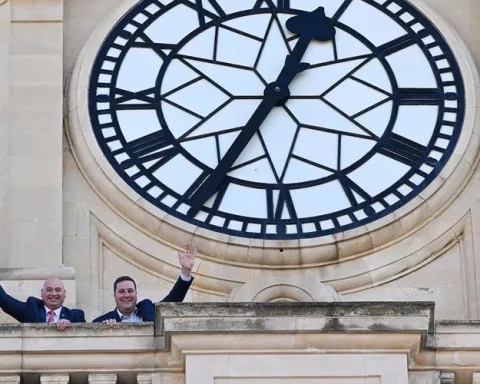
Entering the grand confines of Cape Town City Hall, you are instantly struck by its historical richness. The edifice resonates with the echoes of significant democratic events and pivotal discussions that have occurred within its storied walls. A monumental event is once again slated to occur here on the 13th of February, 2024. The City Hall will host a joint assembly of the National Assembly (NA) and the National Council of Provinces (NCOP). This is the venue where the President’s State of the Nation Address (SONA) will endure a detailed analysis.
The meeting, a fundamental aspect of South African democracy, promises a fervent discourse. It will kick off at 10:00 on the prescribed day, with subsequent discussions planned for 14:00 on the ensuing Wednesday. The President will then respond to the discussion on his SONA at 14:00 on Thursday, an act that manifests democratic dialogue and the highest office’s accountability.
The Role of Media in Parliamentary Proceedings
The role of media during this event is of paramount importance. Press members are encouraged to use the same identification tags issued for SONA 2024 to gain entry to the City Hall. Questions regarding access to the venue can be communicated to Ms Masego Dlula at mdlula@parliament.gov.za or through her contact number, 081 715 9398.
In our modern world, where technology is the driving force, virtual attendance has been made possible. Journalists who wish to virtually witness the Parliament sessions can send their contact information to Mr Mlindi Mpindi at mmpindi@parliament.gov.za. Additionally, the public can stay updated with the proceedings through live broadcasts on Parliament TV (DSTV Channel 408) and live streams on Parliament’s YouTube channel, Facebook, and Twitter pages.
The Essence of Parliamentary Debates
The term “Parliament” stems from the French word “parler,” which translates to “to speak.” This term aptly captures the essence of these meetings. They provide a platform for dialogue, discussion, and expression of varied perspectives, all aimed at directing the nation towards a shared goal.
A respected participant in these debates is Mr Robert Alfred Lees. As a Democratic Alliance member on the provincial list for KwaZulu-Natal province, Lees holds a significant position in the Standing Committee on Public Accounts and the Standing Committee on Finance. His significant contributions emphasise the shared responsibility of all attendees in these parliamentary sessions.
South Africa’s Democratic Journey Continues
In essence, the upcoming joint session of the NA and NCOP to deliberate on the President’s SONA not only showcases South Africa’s blossoming democracy but also symbolises the nation’s dedication to open dialogue, accountability, and advancement. As the 13th of February, 2024, draws nearer, the historical Cape Town City Hall readies to welcome yet another chapter in South Africa’s ever-evolving democratic saga.
Each of these discussions moulds the nation’s path. They also serve as reminders of dialogue’s power, the significance of accountability, and the vital role each citizen – be it media, public, or parliamentary members – plays in shaping South Africa’s democratic terrain. The hallowed halls of Cape Town City Hall anticipate the vibration of another impactful debate, another stride in the continuous journey of nation-building.
What is the role of media in parliamentary proceedings?
The role of media is crucial in parliamentary proceedings, especially during significant events such as the joint assembly of the National Assembly and the National Council of Provinces. To gain entry to the venue, press members are encouraged to use the identification tags issued for SONA 2024. Virtual attendance is also possible, and journalists can send their contact information to Mr Mlindi Mpindi to witness the Parliament sessions through live broadcasts on Parliament TV and live streams on Parliament’s social media pages.
What is the essence of parliamentary debates?
The essence of parliamentary debates is to provide a platform for dialogue, discussion, and expression of diverse perspectives, all aimed at shaping the nation’s path. The shared responsibility of all attendees in parliamentary sessions emphasizes the importance of open dialogue, accountability and advancement.
Who is Mr Robert Alfred Lees?
Mr Robert Alfred Lees is a Democratic Alliance member on the provincial list for KwaZulu-Natal province who holds significant positions in the Standing Committee on Public Accounts and the Standing Committee on Finance. His contributions highlight the shared responsibility of all attendees in these parliamentary sessions.
What is South Africa’s democratic journey?
South Africa’s democratic journey is a continuous journey towards nation-building, open dialogue, accountability, and advancement. The upcoming joint session of the NA and NCOP to deliberate on the President’s SONA is a symbol of the nation’s dedication to these values.
When will the joint assembly of the National Assembly and the National Council of Provinces take place?
The joint assembly of the National Assembly and the National Council of Provinces to analyze the President’s State of the Nation Address will take place on the 13th of February, 2024, and will continue with subsequent discussions planned for the following days.
Where will the joint assembly of the National Assembly and the National Council of Provinces take place?
The joint assembly of the National Assembly and the National Council of Provinces will take place at Cape Town City Hall, a venue that holds historic significance for being the site of important democratic events and discussions. It resonates with the echoes of significant democratic events and pivotal discussions that have occurred within its storied walls.