The Importance of the Mamre Local Spatial Development Framework

1 min read
mamre local spatial development framework Cape Town

The City of Cape Town has taken a significant step forward in Mamre’s development and investment prospects by adopting the Mamre Local Spatial Development Framework (LSDF). This framework was developed in consultation with the Mamre community and provided a comprehensive spatial vision for the town.

Certainty for Planning Purposes

One of the significant benefits of the LSDF is that it provides certainty for planning purposes. This certainty is helpful for both existing residents and potential investors. The LSDF guides the City’s decision-making process when assessing development and land use applications. It helps to ensure that proposed actions align with the City’s spatial policies and are appropriate for the local context.

Newsletter

Stay Informed • Cape Town

Get breaking news, events, and local stories delivered to your inbox daily. All the news that matters in under 5 minutes.

Join 10,000+ readers
No spam, unsubscribe anytime

Holistic Approach to Future Development

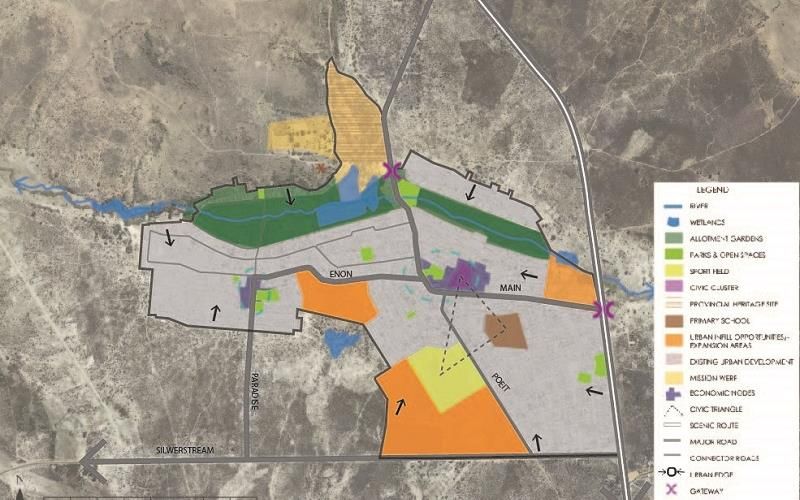
The LSDF takes a holistic approach to the future development of Mamre. It focuses on promoting sustainability, resilience, and efficiency. The LSDF identifies six precinct areas and guides the most appropriate land uses and development principles.

Diverse Range of Options

The LSDF offers diverse options for the town’s future growth and development. The approach encompasses a range of different precincts, each with its unique character and opportunities for development. The LSDF provides options for heritage conservation, urban agriculture, mixed-market residential developments, and wind energy farming.

Fresh Hope and Confidence in the Future

Overall, adopting the Mamre LSDF is an essential milestone for the town. It offers fresh hope and confidence in its prospects. With the guidance provided by the LSDF, Mamre is in an excellent position to attract new investment and development opportunities while preserving and enhancing its unique character and heritage.

Kagiso Petersen is a Cape Town journalist who reports on the city’s evolving food culture—tracking everything from township braai innovators to Sea Point bistros signed up to the Ocean Wise pledge. Raised in Bo-Kaap and now cycling daily along the Atlantic Seaboard, he brings a palpable love for the city’s layered flavours and even more layered stories to every assignment.

Leave a Reply

Your email address will not be published.

Previous Story

The evacuation of South African citizens from Sudan

Next Story

Access to Education for Prisoners in South Africa: A Case for Personal Computers

Latest from Blog

South Africa’s 2025 Beef Surge: When Biology, Red Tape and a Thirsty Planet Collide

South African beef prices shot up in 2025, not because of local good news, but because the world ran short of red meat. Fewer cattle everywhere and China’s pork problems made other countries hungry for South African beef. Even with local sickness and people here buying less, farmers made more money. They sold to new places like the Middle East, using special tricks to get around problems. But the future is tricky, with animal sickness, changing weather, and how much money is worth all playing a part in what happens next for South African beef.

A Province That Won’t Stop Knocking on the Constitutional Door

The Western Cape really wants to break away from South Africa, but it’s super hard because of the law. The country’s main rule says South Africa must stay as one, and changing that is almost impossible. Even though many people in the Western Cape feel left behind and want to control their own future, the government keeps saying ‘no’. So, for now, the Western Cape has to find other ways to get more power without leaving the country.

The Invisible Poison Lurking Beneath Sapphire Waves

{“summary”: “Imagine tiny, invisible sea bugs that create a deadly poison. Mussels eat these bugs and become full of this poison, called saxitoxin. If people eat these poisoned mussels, their nerves stop working, and they can’t breathe. This hidden danger is causing big problems for people who gather mussels and for the sea itself, killing lots of sea creatures and making the ocean sick. Scientists are working hard to find ways to spot this silent killer and keep everyone safe.”}

Canal+ Turns the Tables: Inside the Last-Minute Rescue of 12 Warner Bros. Discovery Channels Across Africa

Canal+ swooped in at the last minute to save 12 Warner Bros. Discovery channels from disappearing across Africa! People were really worried because these popular channels, like Cartoon Network and TNT, were about to vanish. Canal+ boss, Maxime Saada, flew to New York and made a clever deal. He promised to include millions more homes and a new superapp, making Warner Bros. Discovery accept a much lower price increase. This amazing move kept favorite shows on screen for countless African viewers, just in time!