Camps Bay beach in Cape Town has exceptional water quality and holds Blue Flag status, and false information regarding its coastal water quality has been debunked. The recent water sampling’s high rating further validates that Camps Bay continues to uphold these high standards, effectively debunking baseless accusations made on certain social media platforms. The City’s commitment remains steadfast in ensuring that residents and visitors can enjoy their favorite beaches, and officials have been laboring tirelessly to maintain excellent water quality.
Is the water quality at Camps Bay beach in Cape Town up to standard?
Yes, the water quality at Camps Bay beach is exceptional and regularly tested to meet stringent standards. The beach holds the esteemed Blue Flag status, and independent lab results confirm its consistent excellence. False information circulating on social media regarding the beach’s coastal water quality has been debunked, and the City’s proactive approach promises transparency and dedication to preserving the water quality along its coastline.
The Shared Necessity of Water: Quality and Pride
The vitality of water, essential to life itself, is a universal element that binds us all. However, when the discussion turns to waters intended for recreational use, the quality takes center stage. This rings especially true for the picturesque beach of Camps Bay, an opulent destination in Cape Town. Here, maintaining the highest water quality is more than a health prerequisite; it’s a matter of local pride. Unfortunately, in recent times, a surge of false information threatens to tarnish the reputation of this much-loved beach.
Unveiling the Truth: Camps Bay’s Water Quality
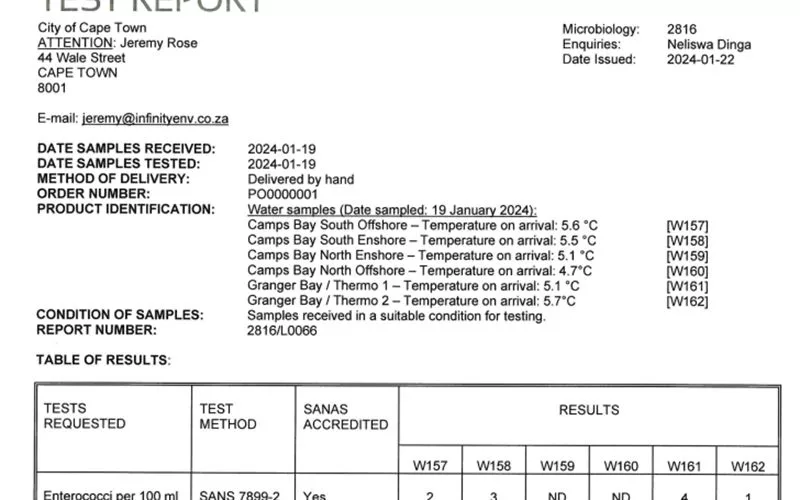
On Monday, 22 January 2024, Camps Bay’s water quality assessment results were disclosed to the public. The independent SABS Laboratory conducted the analysis, concluding that the water quality was exceptional. The findings were based on samples collected on 19 January, serving a dual purpose: to reassure the public and to vehemently dispute the false information circulating on social media regarding the beach’s coastal water quality.
Camps Bay isn’t just any beach. It has carved out a reputation as one of Cape Town’s most desired destinations, attracting both locals and tourists. The beach proudly holds the esteemed Blue Flag status, granted only after meeting stringent water quality standards. The recent water sampling’s laudable rating further validates that Camps Bay continues to uphold these high standards, effectively debunking the baseless accusations made on certain social media platforms.
As part of the Blue Flag programme, water quality testing is conducted weekly. These tests consistently demonstrate the excellent condition of the water at Camps Bay. If there had been any truth to the allegations of untreated sewage washing ashore, such a consistent high rating would have been unachievable.
Through the Lens of Transparency: The City’s Proactive Approach
To provide a clearer understanding of the situation, let’s examine the recent events. In recent weeks, one social media user has been spreading the false notion that lighter patches visible along Camps Bay and Green Point’s shoreline are sewage indicators. Responding swiftly, the City performed a thorough water quality sampling test on 19 January. The tests were conducted in the lighter colored areas of Camps Bay and off Granger Bay, precisely where the social media user claimed to have seen kelp mucus, erroneously labeling it as sewage.
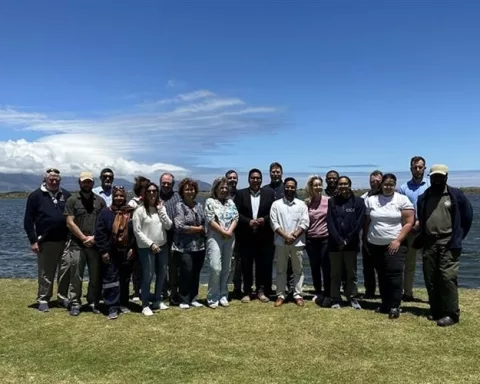
The City’s proactive measures expanded beyond mere tests. They invited a representative from the Camps Bay community, an independent civil engineer, and an independent marine scientist to witness the sampling. The community representative played an instrumental role, even assisting in delivering the six water samples to the independent SABS Laboratory for analysis.
Coastal Water Quality: The Verdict
The findings from the SABS Laboratory were keenly awaited. On Monday, 22 January, the results were unveiled, and as expected, the samples’ results were globally excellent by coastal water quality standards.
Coastal water quality sampling in Cape Town occurs more often than in any other South African coastal city. The results, along with the supporting data, are publicly accessible on the city’s website. This approach not only promises transparency but also reasserts the city’s dedication to preserving the water quality along its coastline.
Cape Town’s coastal waters exhibit specific characteristics that need to be understood in the context of the recent confusion. The waters are abundant in organic matter due to their excellent health. Kelp, algae, and phytoplankton naturally decompose in these waters, often resulting in a disagreeable smell and discoloration. The occasional foam appearing on the water’s surface or on the beach results from this organic matter breaking down, not from sewage.
The City’s Deputy Mayor and Mayoral Committee Member for Spatial Planning and Environment, Alderman Eddie Andrews, asserts that the white discoloration at Camps Bay does not originate from human pollution. Instead, he proposes it is most likely calcium carbonate leaching from the beach and nearshore environment.
Decomposing kelp, algae, and phytoplankton – all natural occurrences – have been wrongly portrayed as sewage. The Deputy Mayor advises the public to question such false information maliciously spread by certain social media accounts, which lack scientific evidence to support their claims.
The City’s commitment remains steadfast. Immediate action will be taken if there is any foundation for these accusations. Officials have been laboring tirelessly, even during the holiday season, to ensure residents and visitors can enjoy their favorite beaches.
The latest coastal water quality sampling results affirm excellent water quality not only for Camps Bay but also for other key recreational beaches and nodes. The data paints a comforting picture: in some instances, nothing was detected in the samples, and in other cases, the count was as low as 1. This analysis was based on the number of enterococci per 100ml, the World Health Organization’s Gold Standard for water quality analysis.
In conclusion, the city’s vigilant monitoring and protective measures ensure that Camps Bay’s waters remain pure, providing a safe and delightful environment for beach lovers. As the waves continue to wash ashore, they not only bring with them the soothing rhythm of the sea but also the assurance of cleanliness and safety.
1. Is the water quality at Camps Bay beach in Cape Town up to standard?
Yes, the water quality at Camps Bay beach is exceptional and regularly tested to meet stringent standards. The beach holds the esteemed Blue Flag status, and independent lab results confirm its consistent excellence.
2. What is the Blue Flag status?
The Blue Flag status is granted only after meeting stringent water quality standards, and is a symbol of high environmental, safety and tourism standards.
3. What is the recent social media misinformation about Camps Bay’s water quality?
Recently, false information circulating on social media regarding the beach’s coastal water quality has been debunked. One social media user spread the false notion that lighter patches visible along Camps Bay and Green Point’s shoreline are sewage indicators.
4. What did the City do to address the false information?
The City performed thorough water quality sampling tests on 19 January, responding swiftly to the false information. They also invited a representative from the Camps Bay community, an independent civil engineer, and an independent marine scientist to witness the sampling.
5. What is the cause of the occasional foam appearing on the water’s surface or on the beach?
The occasional foam appearing on the water’s surface or on the beach results from organic matter breaking down, not from sewage. The waters are abundant in organic matter due to their excellent health.
6. How often does coastal water quality sampling occur in Cape Town?
Coastal water quality sampling in Cape Town occurs more often than in any other South African coastal city, and the results, along with the supporting data, are publicly accessible on the city’s website. This approach promises transparency and dedication to preserving the water quality along its coastline.