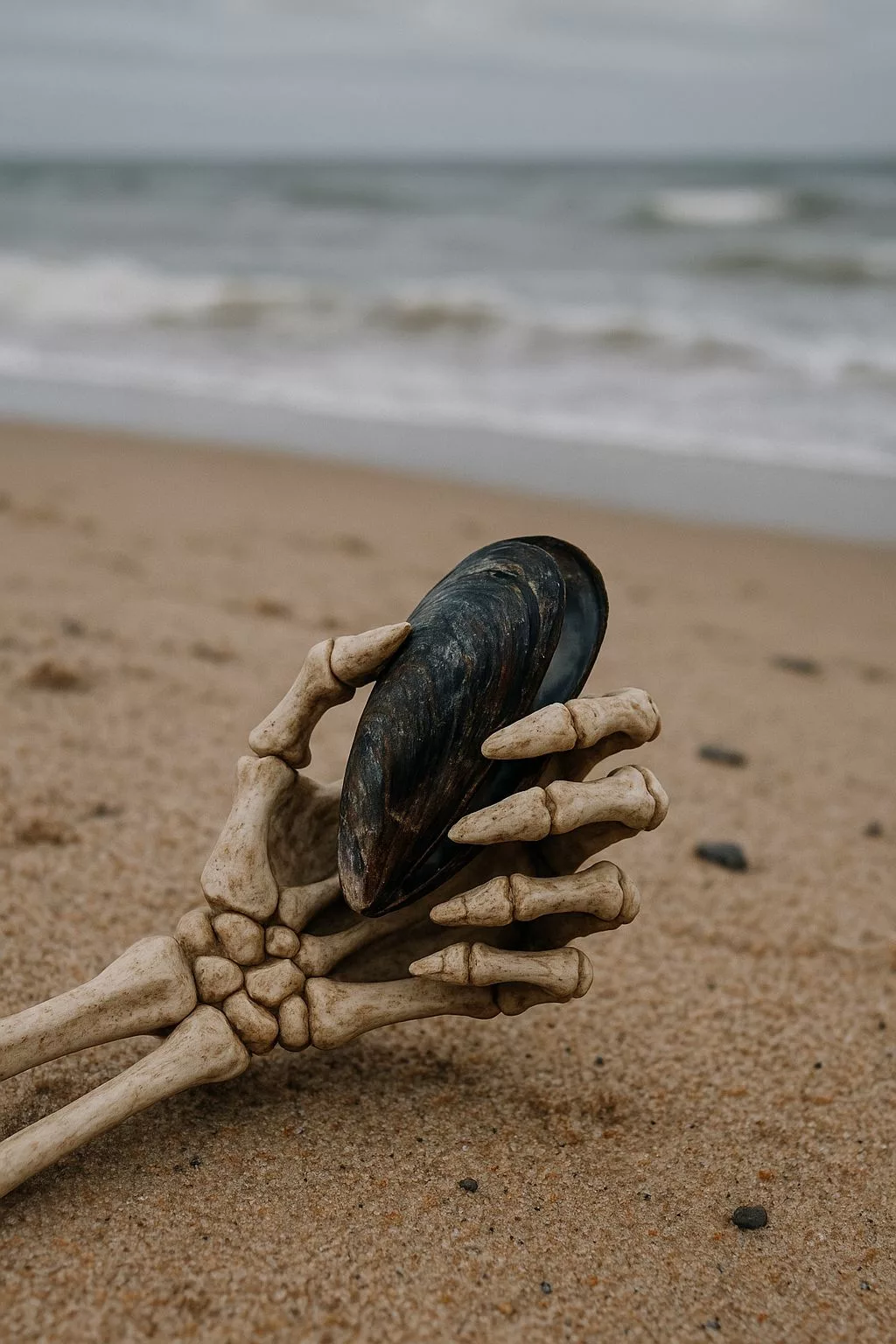
{“summary”: “Imagine tiny, invisible sea bugs that create a deadly poison. Mussels eat these bugs and become full of this poison, called saxitoxin. If people eat these poisoned mussels, their nerves stop working, and they can’t breathe. This hidden danger is causing big problems for people who gather mussels and for the sea itself, killing lots of sea creatures and making the ocean sick. Scientists are working hard to find ways to spot this silent killer and keep everyone safe.”}
What is Alexandrium catenella and how does it cause paralytic shellfish poisoning?
Alexandrium catenella is a microscopic marine alga that blooms invisibly, forming a lethal lens in the water. Mussels filter these toxic algae, accumulating saxitoxin, which causes paralytic shellfish poisoning (PSP) in humans and animals by blocking nerve signals, leading to respiratory failure.
Dawn of the Silent Tide
St Helena Bay, 05:47 a.m.
Jan April cinches his worn gumboots and shuffles onto the beach he first trod as a barefoot child sixty-three years ago. After three steps the sand answers with a brittle chorus – thousands of hollow clicks, as though he walks on a carpet of porcelain eggs. Every footprint pulverises pale mussel shells that ought to be dark, shut and half-buried. Their pearly valves gape like tiny broken jaws, violet mantles already drying beside carnivorous whelks whose black siphons still quiver with the last electric twitches of paralytic shellfish poisoning.
April’s harvest bucket slips from his fingers. “The sea is returning her dead,” he murmurs – an old Khoi warning he never expected to witness himself.
Within two days the carnage has stretched thirty kilometres, from St Helena Bay to Elandsbaai. Sandbanks glitter with a drift of mussels (Mytilus galloprovincialis), predatory whelks (Burnupena spp.) and Venus clams (Dosinia hepatica) that seem to have levitated from the seabed, floated briefly, then been hurled ashore. The government’s marine scientists point to a single assassin: a bloom of Alexandrium catenella so dense it could kill, yet so clear that holidaymakers swimming nearby see only inviting turquoise water. Satellite pictures reveal a four-hundred-square-kilometre smear of chlorophyll hugging the coast, but to the human eye there is no biblical crimson, no obvious crimson flag – just an invisible, lethal lens floating between five and fifteen metres deep.
Anatomy of a Perfect Assassin
Southern Benguela red tides have pedigree: 1930s archives tell of cattle collapsing after drinking surf at Hondeklipbaai; nineteenth-century captains wrote of “burning waves” that blistered skin. What has changed is tempo. Colourless Alexandrium outbreaks have tripled since 2000, jumping from once a decade to three in the past five years.
Dr Grant Pitcher, who tracks harmful algae for the state, sketches the choreography. Springtime south-easters wrench cold, nitrate-rich water from the South Atlantic Central Water onto the shelf. If a lid of warm surface air settles at the same moment, Alexandrium cells divide daily, rising at dawn to photosynthesise, sinking at dusk to sip deeper nutrients. A single enzyme, DAOP synthase, lets them pirate nitrogen from bacteria, outswimming diatoms that cannot move.
Within thirty-six hours a subsurface lens can hold 45 000 cells per litre. A medium-sized mussel siphons four to six litres every hour, accumulating 15 000 micrograms of saxitoxin – three hundred times the legal safety threshold – before a full day-and-night cycle ends. The victim never sees the killer’s colour.
The Molecule That Switches Off Breath
Saxitoxin and its fifty-seven chemical cousins slot into voltage-gated sodium channels like keys in a lock, freezing nerve signals. Humans taste metal on the tongue after ingesting only 120 µg; respiratory muscles quit at one milligram. There is no antidote – only a ventilator and borrowed time while the liver struggles to clear the poison over two to seven days. Laboratory mice collapse in four minutes from one microgram; the toxin survives six-hour stews, laughing at pressure cookers and motherly caution. Gulls that scavenge stranded mussels fall from the sky; Hartlaub’s gull livers have registered 4 200 µg kg⁻¹, enough to paralyse a toddler.
When the Filterers Vanish
Mussels are more than seafood – they are living water-treatment plants. A single square metre of fifty million mussels can clarify St Helena Bay’s entire water column every twenty-four hours, trapping phytoplankton so sunlight can reach eelgrass seedlings on the bottom. Mass death snaps that service: turbidity doubles, plankton rebound, bacterial rot guzzles dissolved oxygen and hydrogen sulphide bubbles up, smothering worms and sandprawns within a stone’s throw of beach towels.
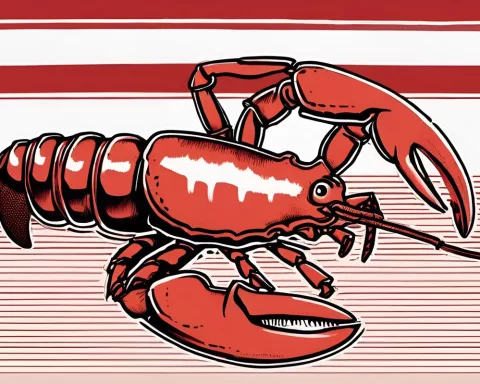
Rock lobsters feel the knock-on next. Normally they gorge on windfall mussels, but this week DFFE officers watch armies of Jasus lalandii march into the surf, claws raised like refugees rejecting poisoned rations. The same exodus killed four hundred tonnes of lobster near Elandsbaai in 2017; locals still speak of crunching seashells under bakkie tyres for months afterward.
Livelihoods in Limbo
St Helena Bay’s 32 000 residents face 42 % unemployment; intertidal mussels keep an estimated 1 200 people alive. Each adult may legally haul 25 kg per day; at R25 a kilo a spring tide can earn R500 – school-fee money, rent money, tomorrow’s bread.
The bay is now closed, day seven. Street hawkers who once stacked steamers at traffic lights near Vredenburg have switched to naartjies, income slashed by eighty percent. The clinic has admitted eleven probable PSP cases – eight children who picnicked on grilled mussels, three recreational anglers who swore “only the orange-shelled ones are dangerous.” Four required ambulance ventilation; all will live, but word travels faster than medicine.
Eyes in the Sky, Probes in the Sea
At 03:00 on Tuesday a University of Cape Town drone lifted off with a red-edge camera. By breakfast scientists had stitched a one-centimetre-resolution mosaic of the shoreline; ground counts proved the pixel brightness mirrors mussel density with 91 % accuracy, yielding a conservative estimate of 1.8 million empty shells – fifty-two tonnes of lost protein.
Fifteen kilometres offshore the fisheries research ship FRS Algoa towed an Imaging FlowCytobot. Every twenty minutes the lunch-box robot sips five millilitres, snaps plankton portraits at twenty-fold magnification, and feeds the frames to a convolutional neural network trained on 1.2 million local cell images. When Alexandrium exceeds 5 000 cells per litre, an Iridium ping triggers bilingual voice notes to 1 800 registered harvesters’ phones. The dashboard is already live in a WhatsApp group shared by national parks, municipalities and beach rangers.
Forensics of Frequency
Why the surge? The 2022-23 El Niño throttled trade winds, deepening the thermocline and steepening stratification. January 2024 sea-surface temperatures off the Cape west coast are 1.8 °C above the thirty-year mean – the warmest since the 1997 super-El Niño. Alexandrium prefers 16-20 °C; warmer nights extend its growth window.
On land, winter rainfall was 40 % above average, flushing the Berg River’s 1.2 million-hectare catchment of wheat, citrus and dairy farms. December nitrate readings hit 3.8 mg L⁻¹, double 2005 levels. Back-of-the-envelope maths says the fertiliser bonus could feed an extra 60 tonnes of phytoplankton carbon – roughly the mass now drifting offshore.
Echoes from the Mud
Palaeoceanographer Dr Anusuya Chimandas plunged a three-metre core into the Velddrif salt marsh last year. Forty-two centimetres down she struck a five-millimetre cyst blanket dated to 1782, a vintage that matches missionary diaries lamenting “a shellfish sickness” that emptied the Khoi village of //Hui !Gaeb. The more things change, the more they re-peat.
Blueprints Borrowed from Elsewhere
- Northern Norway, 2020: eight dogs died after eating sand-eels laced with Alexandrium toxins that rode blue mussels into the food web.
- Chile, 2016: the same dinoflagellate forced US$800 million in salmon losses, the largest red-tide insurance claim on record.
- Gulf of Maine: nine-month shellfish closures are now routine; lobster crews receive SMS alerts similar to the West Coast pilot.
Gadgets Coming Down the Pipeline
a) Aptamer test strips developed by South Africa’s Council for Scientific and Industrial Research deliver a quantitative yes/no for saxitoxin above 40 µg kg⁻¹ in fifteen minutes, costing only R18 – cheap enough for every roadside vendor to self-police. Field trials start next month.
b) CRISPR-Cas12 hand-held fluorometers dreamt up at MIT can spot single copies of the sxtA toxin gene in ten millilitres of seawater in seven minutes. Import price is still US$2 400, but a Gates Foundation grant may plant the devices in ten African harbours by 2026.
c) “SmartMolluscs” – mussels fitted with 12 mg Hall-effect valves that gossip about their own shell gape every thirty seconds. A tiny algorithm flags abnormal clenching or gaping, giving a six-to-twelve-hour early warning before mass mortality. Pilot buoys off Mossel Bay already prove the concept in test tanks.
Community Antibodies
Fisheries officers have brushed 2 m orange bands onto popular harvesting rocks; stepping inside risks a R5 000 fine. Congregations host mussel-free Friday soup kitchens, substituting tinned pilchards and sugar beans. Schoolchildren spit “Red-Tide Rap” rhymes over Bluetooth speakers at taxi ranks; the winning track will be blasted nationwide for free.
Entrepreneurs from Saldanha have gutted old abalone trucks, fitted reefers and now tour villages buying farmed oysters and seaweed to stock pop-up “safe-seafood” stalls, keeping traders’ cash registers alive while wild mussels are persona non grata.
Dashboard for the Week Ahead
- Alexandrium density: 18 000 cells L⁻¹ at 10 m depth – still above the alert line.
- Saxitoxin in mussel tissue: 4 800 µg kg⁻¹, down from Monday’s 8 100 µg kg⁻¹ – first statistical wobble toward safety.
- Upwelling forecast: +65 m³ s⁻¹ per 100 m coastline; a stiff south-easter predicted Friday should shred the surface lens.
- Harvest compliance: drone tallies show a 92 % drop in intertidal gathering; three tickets written for night-time poaching.
2050 Through a Crystal Ball
Under a high-carbon trajectory, colourless Alexandrium surges could strike the Southern Benguela twice every ten years, twice the historical average. Adaptation menus already circulate: expand land-based grow-out of kob and seaweed, launch a sovereign insurance pool for artisanal gatherers modelled on Caribbean hurricane policies, and fold red-tide bulletins into the national severe-weather system that pings 38 million phones.
Tonight Jan April returns at dusk, camera phone in hand. Instead of filling a bucket he photographs each tide line of brittle shells, uploading GPS tags to the university’s citizen-science portal – one human pixel inside a growing lattice of eyes watching a killer that leaves no red, only white silence.
What is Alexandrium catenella and how does it cause paralytic shellfish poisoning?
Alexandrium catenella is a microscopic marine alga that blooms invisibly in the water. Mussels filter these toxic algae, accumulating saxitoxin, which causes paralytic shellfish poisoning (PSP) in humans and animals by blocking nerve signals, leading to respiratory failure. These blooms have become more frequent, tripling since 2000.
What are the symptoms of Paralytic Shellfish Poisoning (PSP)?
PSP is caused by saxitoxin, which affects the nervous system. Humans might first taste metal on their tongue after ingesting as little as 120 µg of saxitoxin. As the dose increases, it can lead to respiratory muscle failure, as the toxin effectively switches off the ability to breathe. There is no antidote, and recovery relies on medical support like ventilation while the liver processes the toxin over several days.
How does Alexandrium catenella thrive and become so potent?
Alexandrium catenella thrives in specific conditions. Springtime south-easters bring cold, nitrate-rich water to the surface, and if a warm air lid is present, the algae cells divide rapidly. They can rise at dawn to photosynthesize and sink at dusk to absorb nutrients. A unique enzyme allows them to outcompete other plankton by pirating nitrogen. This rapid growth can lead to dense, invisible subsurface lenses of toxic algae, which are then filtered by mussels.
What is the broader ecological impact of Alexandrium catenella blooms?
Mussels are vital for marine ecosystems, acting as natural water filters. Mass mussel deaths due to saxitoxin lead to increased water turbidity, plankton overgrowth, and bacterial decomposition that depletes dissolved oxygen, creating ‘dead zones’ where other marine life like worms and sandprawns suffocate. This also impacts predators like rock lobsters, who avoid the poisoned mussels, disrupting the food chain and leading to massive die-offs of other species.
How is technology being used to combat this invisible threat and protect communities?
Scientists are employing advanced technologies to detect and monitor Alexandrium catenella blooms. This includes drones with red-edge cameras for mapping mussel mortality, Imaging FlowCytobots for real-time plankton identification and cell counting, and convolutional neural networks for rapid analysis. Early warning systems, like Iridium pings and WhatsApp alerts, notify harvesters of dangerous conditions. Future innovations include rapid aptamer test strips for saxitoxin, CRISPR-Cas12 handheld devices for detecting toxin genes in seawater, and ‘SmartMolluscs’ – mussels fitted with sensors to detect abnormal behavior indicating toxicity.
What are the socio-economic consequences for communities affected by these toxic blooms?
Communities heavily reliant on mussel harvesting, like St Helena Bay where unemployment is high, face severe economic hardship. Closures of harvesting areas mean a significant loss of income for thousands of people, impacting their ability to afford basic necessities like food and education. Beyond direct income loss, there are public health crises with multiple cases of PSP requiring hospitalization, underscoring the vital need for effective monitoring and community education.