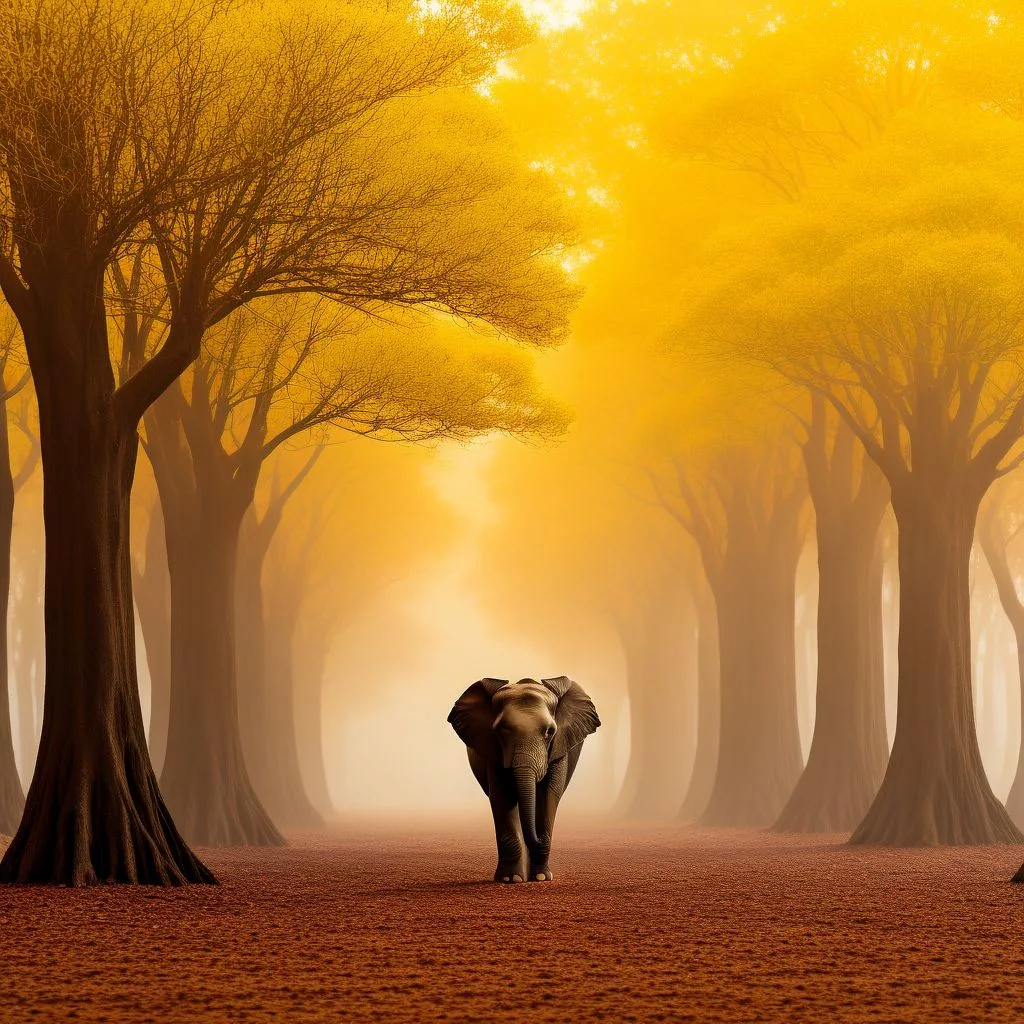
Deep in South Africa’s mysterious Knysna Forest roams the last Knysna elephant, a strong and lonely female who carries the memory of a vanished herd. She moves quietly beneath towering trees, a living symbol of survival and loss, reminding us how nature can shrink but still hold hope. Thanks to hidden cameras, people have glimpsed her rare steps, inspiring efforts to protect her and the forest she calls home. Her story teaches us to respect wild places and cherish the fragile life that still lingers within them.
Who is the last Knysna elephant and why is she important?
The last Knysna elephant is a solitary female roaming South Africa’s Knysna Forest, symbolizing the survival of a once-thriving herd. Her presence highlights conservation challenges, ecological loss, and ongoing efforts by SANParks to protect this iconic, elusive elephant and preserve the region’s natural heritage.
The Living Legend of the Knysna Forest
Deep within the lush contours of South Africa’s iconic Garden Route, the Knysna Forest unfurls like a living tapestry—a place where time seems to slow, and stories from long ago linger on the wind. Ancient yellowwoods tower above the mist, and shafts of golden sunlight dance across the forest floor, illuminating a world alive with history and mystery. In this enchanting wilderness, a singular figure still roams: the last known Knysna elephant, whose presence dissolves the barrier between legend and reality.
Recent confirmation of this elephant’s existence electrified conservationists and local communities alike. Hidden motion-triggered cameras, positioned throughout the forest, captured rare glimpses of her as she moved with silent confidence among the dense undergrowth. These images felt like the return of a long-absent ancestor, stirring hope and awe in equal measure.
The Knysna elephant—a robust, elusive female—survives as the sole remnant of a once-thriving herd. The region’s chronicles brim with references to elephants traveling in large numbers, from the accounts of indigenous Khoisan inhabitants to records left by early explorers and botanists. Over the centuries, however, relentless hunting, encroaching settlements, and shrinking habitats decimated their ranks. By the time conservation efforts gained real traction, the great herds had faded, leaving behind only rare signs and shadows in the green gloom.
Legends, Science, and the Art of Tracking Survival
The Knysna elephant’s story hovers between fact and folk tale, fueling a unique blend of local legend and scientific intrigue. For generations, locals have whispered about “ghost herds”—unseen elephants gliding silently between towering trees, leaving only broken branches or distant rumbles as evidence. In the 1970s, determined researchers like Dr. Margaret Shaw took on the painstaking task of tracing these creatures. They scoured the forest for tracks, examined damaged foliage, and spoke with seasoned woodcutters whose lives were intertwined with the land. Even with these efforts, the actual number of surviving elephants remained an open, tantalizing question.
Modern conservationists have embraced technology to unravel the mystery. South African National Parks (SANParks) has established a network of camera traps hidden throughout the forest. These unobtrusive devices react to movement and body heat, producing candid snapshots of animals that rarely show themselves to humans. The solitary Knysna elephant, with her powerful build and distinctive tusks, has become a recurring subject in these images—a rare and valuable sight.
Beyond verifying her existence, the photographs have become vital tools for understanding and safeguarding her. Researchers analyzed her behavior in response to human presence and found marked changes: the elephant would accelerate her pace, veer off her usual paths, and leave behind dung containing high stress markers. Conversely, when left undisturbed, she appeared calm, feeding, dust-bathing, and finding rest beneath the ancient trees. The footage provides essential clues about her well-being and the challenges of navigating an environment shaped by both natural and human influences.
The Weight of Solitude and the Burden of Symbolism
The Knysna elephant’s solitary journey through the forest serves as a vivid symbol of ecological upheaval. Elephants, renowned for their strong social bonds and intricate family structures, usually traverse landscapes in tight-knit matriarchal groups. Across Africa’s savannahs, herds move together—learning, grieving, and navigating droughts under the guidance of experienced leaders. But in Knysna, the last elephant wanders alone, embodying both endurance and loss. Some biologists compare her fate to that of Martha, the last passenger pigeon, carrying the memory of an entire vanished population.
Her life resonates far beyond the boundaries of the forest. In the Victorian era, European naturalists documented African wildlife with a collector’s zeal, often prioritizing trophies over preservation. Over time, attitudes shifted: the Romantic movement and the rise of conservation ethics transformed such animals into emblems of what stands to be lost—and what might yet be saved. For the Knysna elephant, the forest has become both a fortress and a cage, its history marked by cycles of exploitation and renewal.
Public fascination with the Knysna elephant runs deep, sometimes verging on reverence. Yet this adoration carries its own dangers. Conservationists consistently warn against the urge to seek her out, lest well-meaning visitors inadvertently drive her into perilous situations. Human intrusion threatens to push her toward hazardous roads, expose her to poachers, or force her into fragmented habitats unable to meet her needs. The tale of the world’s last survivors—from Lonesome George the Galápagos tortoise to Martha the passenger pigeon—reminds us that curiosity and affection, if unchecked, can become agents of extinction.
Charting a Future: Science, Community, and the Test of Patience
Recognizing the delicate balance between protection and intervention, SANParks has launched a sophisticated effort to secure the Knysna elephant’s future. Their strategy combines modern science with respect for local tradition. Experts analyze hormone levels in dung samples to monitor stress, track her movements via digital mapping, and consult with global specialists in elephant biology. Parallel to these scientific efforts, SANParks fosters partnerships with local communities, whose cultural roots and economic livelihoods remain deeply tied to the fate of the forest.
Art and literature, too, have found inspiration in her story. Sculptors immortalize her strength and grace in metal and wood, while poets draw on her endurance as a metaphor for resilience. Schoolchildren in Knysna grow up with her story, learning about stewardship, interconnectedness, and the patience required to coexist with the wild.
Lessons in Restraint and the Enduring Mystery
The Knysna elephant’s continued existence is both a warning and a blessing in an era marked by biodiversity loss. Her tracks, faint and transient in the damp earth, hint at the enduring enigma of the forest—a place where secrets still thrive and the unknown persists. As humans, we feel the ancient urge to know, see, and possess, but true reverence for wildness demands restraint.
To honor the Knysna elephant, SANParks encourages supporters to redirect their enthusiasm toward meaningful conservation work, rather than personal encounters. Donations help sustain anti-poaching patrols, scientific research, and educational programs that foster a culture of coexistence. The elephant’s tale becomes a living lesson for future generations, instilling values of humility and stewardship.
As one walks the shaded trails of the Knysna Forest, it is possible to imagine a time when herds of elephants once echoed through the trees—trunks aloft, voices rumbling through the twilight. Though the forest now lies quieter, signs of her presence remain: a stripped tree, a single footprint, an almost palpable silence when she is near. The story of the Knysna elephant continues, dense and alive, reminding us that renewal remains possible even in the shadow of loss.
Her journey, unfolding through memory and myth, stands as a testament to endurance and to the enduring possibility of hope. In the green labyrinth of Knysna, she endures—an emblem not only of South Africa’s wilderness, but of the cultural and ecological legacy we are all called to defend.
Who is the last Knysna elephant and why is she important?
The last Knysna elephant is a solitary female roaming deep within South Africa’s Knysna Forest. She is the sole survivor of a once-thriving herd that historically inhabited the region. Her importance lies in symbolizing both survival and loss, highlighting the critical need for conservation efforts in preserving the forest’s fragile ecosystem and South Africa’s natural heritage. She embodies the legacy of a disappearing wilderness and reminds us of the ongoing challenges to protect endangered wildlife.
How was the existence of the last Knysna elephant confirmed?
The elephant’s existence was confirmed through a network of hidden, motion-triggered camera traps installed by South African National Parks (SANParks). These cameras captured rare, candid images of her moving silently through the dense forest undergrowth. Alongside photographic evidence, researchers have tracked footprints, examined damaged foliage, and collected dung samples, combining modern technology with traditional fieldwork to verify and study this elusive animal.
Why does the last Knysna elephant live alone, unlike typical elephant herds?
Elephants typically live in close-knit matriarchal family groups, but the last Knysna elephant is solitary due to the decimation of her herd caused by centuries of hunting, habitat loss, and human encroachment. Her solitary existence highlights the ecological upheaval and fragmentation of the forest habitat. Unlike her wide-ranging savannah counterparts, she navigates the dense forest alone, which raises concerns about her social well-being and long-term survival.
What threats does the last Knysna elephant face in her forest home?
Despite the forest’s relative remoteness, the elephant faces several threats including habitat fragmentation, human disturbance, poaching risks, and stress from environmental pressures. Human curiosity and intrusion can disrupt her natural behavior, making her vulnerable to dangers such as road accidents and exposure to poachers. Conservationists caution against seeking her out to avoid causing stress that could jeopardize her health and safety.
What conservation efforts are in place to protect the last Knysna elephant?
SANParks leads ongoing efforts combining scientific research, community engagement, and advanced monitoring techniques. They analyze hormone levels in dung to assess stress, track her movements digitally, and collaborate with elephant experts worldwide. Education programs raise awareness among local communities and schoolchildren, fostering a culture of respect and coexistence. Anti-poaching patrols and habitat preservation are also critical components of the strategy aimed at securing her future.
How can the public support the conservation of the Knysna elephant and her forest?
The public is encouraged to support conservation by donating to organizations like SANParks, which fund anti-poaching efforts, scientific research, and environmental education. Rather than attempting to find or approach the elephant, people can promote awareness, respect for wild places, and sustainable tourism that does not disturb wildlife. Sharing her story helps inspire a global commitment to protecting endangered species and fragile ecosystems.