
Abdeslam Ouaddou totally transformed Orlando Pirates! He brought in super tough training and smart new tactics, making them a winning machine. In just 100 days, they snagged two big trophies and jumped to the top of the league. Ouaddou didn’t just coach, he changed everything, turning the Pirates into a powerful force in South African football with his Moroccan magic.
How did Abdeslam Ouaddou transform Orlando Pirates into a dominant force?
Abdeslam Ouaddou transformed Orlando Pirates by implementing rigorous training methods, innovative tactical formations like the 3-4-2-1, and fostering a winning mentality. His approach led to an eight-point swing, pushing Sundowns off the top of the league, and securing two trophies within 100 days, making them a dominant force in South African football.
- The November Statement*
When the Premier Soccer League’s voting forms landed in November, every captain, journalist and analyst pencilled in the same choice: Abdeslam Ouaddou. The league confirmed it on the first Monday of December – the 47-year-old from Salé had become the first North African ever to claim the combined November/December Coach of the Month prize. The numbers that convinced voters were mercilessly efficient: four fixtures, three victories, one draw, no losses, ten goals for, two against, and an eight-point swing that shoved Mamelodi Sundowns off the summit. Pirates reached the holiday break on 28 points, two clear of the Brazilians, and the title conversation switched from coronation to contest.
Inside the Randburg analysis hub, Ouaddou’s sessions had already acquired folklore status. GPS vests scream when a player’s core temperature nears 37 °C, forcing staff to haul him off the pitch. “Ghost days” see the squad rehearse shape for 45 minutes without a single ball, only neon cones and barking instructions. Practice ends with 28-metre sudden-death free-kicks: miss and you bear-crawl 200 m while team-mates serenade your signature tune in falsetto. Mandla Ncikazi, his deputy, grins: “The lads would rather score than hear their own voice murdered in front of everyone.”
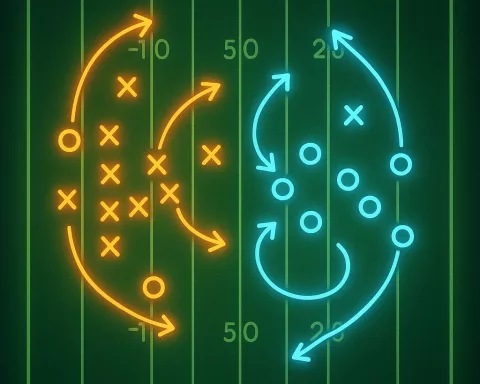
The first public demonstration arrived on 1 November at Loftus Versfeld. Sundowns had not dropped points since August, yet Pirates arrived with a 19-year-old left-back who had been playing varsity football six months earlier. Ouaddou junked the 4-3-3 that won the MTN8 and unveiled a lopsided 3-4-2-1 that smothered the champions’ single-pivot. For the first time in 14 months Sundowns failed to put a shot on target before half-time; the 0-0 score-line was immediately christened “the Casablanca Cage” by data analysts who noted the 72 % forced lateral passes.
- The Choreographed Chaos*
Ouaddou’s reaction to the stalemate was typical. At 23:14 he dropped a four-word grenade on the team WhatsApp – “Demain, on recommence” – and by 07:00 the squad was on the training field while he dissected 11 clips where centre-back Tapelo Xoki could have stepped two metres higher. Each sequence was captioned in French, Arabic and English, the three languages ricocheting down the changeroom corridor. Within days the flaw had a nickname: “le cancer de la ligne”, and Golden Arrows were next in line for surgery.
November 11 produced the 3-1 dismantling of Arrows. The opening goal was a throw-in routine rehearsed since pre-season: right-back Thabiso Monyane delays, fires into Evidence Makgopa’s half-space lay-off, Mbule cushions like the Zidane montage he has watched 17 times, and Saleng slides home. The move lasts 8.4 seconds and involves every outfield player. Afterward Ouaddou presses a brass key into Mbule’s palm: “You opened the door; don’t lose the key inside the room.”
Between league duties the Carling Knockout threatened to derail momentum. Richards Bay, fresh from eliminating Kaizer Chiefs, visited Moses Mabhida on 18 November. Ouaddou rotated six starters but kept the skeleton: aggressive mid-block, inverted wing-backs, and an eight-second forward-pass mandate. The Natal Rich Boys coughed up possession repeatedly, finished with 34 % possession and zero second-half shots. A 2-0 win booked a December 16 final against Sundowns and gave Pirates the chance to lift silverware 24 hours before the league restart.
- The December Double*
Ouaddou treated the cup final like a military operation. Analysts logged every minute of Sundowns’ Carling campaign, discovered the champions had played 120 minutes more because of extra time, and scheduled Christmas Eve recovery work in a Durban gym owned by a former Moroccan rugby conditioner. On the eve of the final he invited club legend Helman Mkhalele to dinner; the pair spoke only about the 1996 Africa Cup of Nations until 23:00, when Ouaddou slipped handwritten notes under every bedroom door: “History is a mirror – look once, then focus forward.”
The final delivered theatre and analytics in equal measure. A rehearsed indirect free-kick saw Mbule dummy, Monyane pull back, and Timm side-foot through a gap created by Saleng’s decoy sprint. Sundowns equalised, but the 78th-minute winner was pure Ouaddou ideology: substitute Zakhele Lepasa pressed goalkeeper Ronwen Williams, forced a skewed clearance and lobbed 38 metres into an empty net. Pirates lifted the Carling Knockout; the Moroccan became the first coach in club history to secure two trophies inside 100 days.
The league machine, however, grants no sabbaticals. Chippa United arrived on 20 December still chasing a first win under interim boss Daine Klate. Ouaddou re-unleashed the 3-4-2-1 but with an inside twist: Deon Hotto inverted into midfield, manufacturing a 3-3-4 that over-loaded Chippa’s 4-4-2. The data sheet after the 3-0 rout showed 12 final-third regains, a season high. Ouaddou strode in, wrote “38 %” on the whiteboard – the share of Chippa passes that travelled backwards – then wiped it clean. “Respect is earned when opponents are too scared to look forward,” he muttered.
Three days later Durban City, coached by former Pirates icon Steve Komphela, provided the Christmas exam. Kick-off at 15:30 offered the winner the right to top the table at the festive table. Ouaddou abandoned his beloved back-three for the first time since October, selecting 22-year-old Katlego Mohamme in a straight back-four to mirror City’s twin strikers and deny diagonal triggers. Expected goals after 70 minutes read 0.31 for the hosts, the lowest Pirates have allowed all campaign. A 25-yard rocket from Nkota and a late Makgopa header sealed a 2-0 triumph, sending the black-and-white half of Soweto into festive delirium.
- The Cultural Earthquake*
While players donned Santa beards for holding 50 boxes of imported medjool dates for barefoot kids at the Orlando Children’s Home, South African football was quietly recalibrating. SuperSport United’s Gavin Hunt admits he has watched the Sundowns stalemate “maybe 30 times,” trying to reverse-engineer the Casablanca Cage. Cape Town City’s Eric Tinkler trialled a three-man defence in pre-season friendlies, citing “the Moroccan wave spreading along the coast.” Bookmakers cut Pirates’ title odds from 9-1 in August to 13-8 by Christmas, forcing even the most ardent “Money Team” loyalists to hedge.
Inside the Randburg offices, analysts have produced a 34-page document titled “Verticality as Identity,” detailing how Pirates’ average pass length has dropped from 18.4 m to 12.7 m under Ouaddou, while their direct speed toward goal increased 1.2 metres per second. Academy coaches now speak of “the 28-metre rule,” a reference to Ouaddou’s sudden-death free-kick shoot-outs that decide each training session. European clubs have begun dispatching talent spotters not just to see young players, but to observe training methodology – something unheard of for a South African club outside the Sundowns orbit.
The players, meanwhile, talk of “GPS freedom”: each athlete receives a weekly heat-map that grades decision-making speed rather than distance covered. Captain Innocent Maela explains: “It’s no longer about who runs the furthest; it’s about who thinks the fastest.” Even the physio room has been reorganised – Arabic coffee at 07:00, French pastries at 16:00, and halftime orange slices now dusted with Himalayan salt after urine-specific gravity tests. “We’re a football team disguised as a cultural exchange,” laughs performance analyst Hafid Benzarti, who followed Ouaddou from FUS Rabat.
As the calendar flips toward a congested January, the message inside the changeroom remains unchanged. A single line from Moroccan poet Tahar Ben Jelloun is scrawled in Ouaddou’s handwriting opposite the tactical mirror: “Pour vaincre, il faut croire que l’on est déjà vainqueur.” To conquer, you must believe you have already conquered. The ink is still wet, the page still turning, and the next opponent already queued – because in the Moroccan’s world, the only gift that matters is the next three points.
How did Abdeslam Ouaddou transform Orlando Pirates into a dominant force?
Abdeslam Ouaddou transformed Orlando Pirates by implementing rigorous training methods, innovative tactical formations like the 3-4-2-1, and fostering a winning mentality. His approach led to an eight-point swing, pushing Sundowns off the top of the league, and securing two trophies within 100 days, making them a dominant force in South African football.
What specific tactical innovations did Ouaddou introduce?
Ouaddou introduced several tactical innovations, including a flexible 3-4-2-1 formation that stifled opponents like Mamelodi Sundowns, leading to the coining of “the Casablanca Cage.” He also experimented with a lopsided 3-4-2-1 and a 3-3-4 formation to overload specific areas, demonstrating his adaptive and strategic approach to gameplay.
What unique training methods did Abdeslam Ouaddou implement at Orlando Pirates?
Abdeslam Ouaddou implemented unique and intense training methods such as using GPS vests to monitor core temperatures, “ghost days” for shape rehearsal without a ball, and sudden-death 28-meter free-kick competitions where missing players bear-crawled while teammates sang. These methods aimed to build physical endurance, tactical understanding, and mental resilience.
What impressive achievements did Ouaddou accomplish in his first 100 days?
In his first 100 days, Abdeslam Ouaddou secured two major trophies for Orlando Pirates, becoming the first coach in the club’s history to do so within such a short period. He also led the team to the top of the league, creating an eight-point swing and shifting the title conversation from a coronation to a genuine contest.
How did Ouaddou’s presence impact South African football beyond Orlando Pirates?
Ouaddou’s impact extended beyond Orlando Pirates, causing a “cultural earthquake” in South African football. Other coaches, like Gavin Hunt and Eric Tinkler, started studying his tactics and even trialling his defensive formations. His success also led to European clubs dispatching talent spotters to observe training methodology, a rare occurrence for South African clubs outside Sundowns’ orbit, highlighting a shift in perception and standards.
What is Ouaddou’s philosophy on player development and team identity?
Ouaddou’s philosophy emphasizes speed of thought over mere physical exertion, exemplified by his “GPS freedom” concept which grades decision-making speed. He also instilled a strong winning mentality, encapsulated by the Moroccan poet Tahar Ben Jelloun’s quote: “To conquer, you must believe you have already conquered.” His approach created a team identity focused on verticality, efficiency, and a blend of cultural influences within the club.