
The No-Cost Property Home-Ownership Transfer Program

1 min read
no-cost property home-ownership transfer program

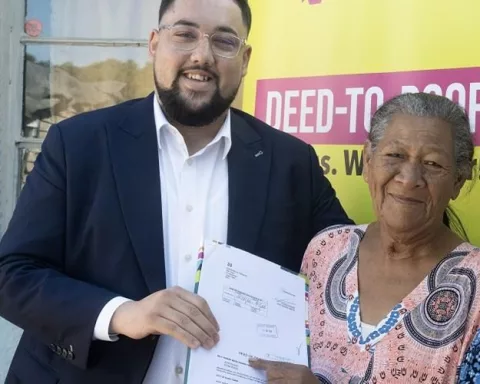
The City of Cape Town has launched a new initiative called the No-Cost Property Home-Ownership Transfer Program. It aims to provide eligible beneficiaries with a unique opportunity to become homeowners without incurring any transfer costs. The program is part of the Mayor’s Priority Program, which is expected to achieve around 22,000 no-cost transfers over the next three years, with an allocation of R38 million.

Eligibility and Benefits

The program is designed to benefit legal tenants of City-owned rental units, purchasers of delayed transfer units, and historical service sites. Alderman James Vos, the City’s Acting Mayoral Committee Member for Human Settlements, emphasizes that owning the title to one’s property is critical. It can unlock opportunities and become an asset for generations to come.

Newsletter

Stay Informed • Cape Town

Get breaking news, events, and local stories delivered to your inbox daily. All the news that matters in under 5 minutes.

Join 10,000+ readers
No spam, unsubscribe anytime

The No-Cost Transfer Program will pay the beneficiary’s attorney transfer fees, established at a fixed amount of R2 500 per property, regardless of the purchase price. The City will additionally cover the insurance cost for commercial rental units from the date of sale until the property is registered.

Eligible Properties

Approximately 7,500 City-owned rental units, 13,000 delayed transfer units, and 1,400 historical serviced sites are eligible for this free title deed initiative. The program is focused on empowering individuals and communities. It aims to position human settlement programs as catalysts for meaningful economic growth.

How to Apply

The City of Cape Town encourages residents to take advantage of this program by visiting the local housing office in their community, and contacting the Human Settlements Call Centre or the City’s WhatsApp line. By becoming property owners, residents can transform their lives and unlock new opportunities for themselves and their families.
Hannah Kriel is a Cape Town-born journalist who chronicles the city’s evolving food scene—from Bo-Kaap spice routes to Constantia vineyards—for local and international outlets. When she’s not interviewing chefs or tracking the harvest on her grandparents’ Stellenbosch farm, you’ll find her surfing the Atlantic breaks she first rode as a schoolgirl.

Leave a Reply

Your email address will not be published.

Previous Story

The Waterside: La Colombe’s Smart-Casual Seaside Eatery

Next Story

Survey Reveals Growing Sense of Hopelessness and Unhappiness with Democracy in South Africa

Latest from Blog

From Randburg to the Record Books: How Tyla Rewrote Pop History in 2:45

Tyla, a young artist from Randburg, South Africa, exploded onto the music scene with her song “Chanel.” This catchy tune, made simply on headphones, became a massive hit without biglabel help. Thanks to TikTok and Spotify’s smart playlists, her music found millions of listeners globally. Tyla’s success shows that a great song, shared widely online, can now rewrite music history and reach the top charts, even from far away. She owns her music, giving her power that earlier artists never had.

Cape Town’s “Red Wedge”: How a 900-Metre Airport On-Ramp Became South Africa’s Most Watched Kill-Zone

{“summary”: “The \”Red Wedge\” in Cape Town is a dangerous 900meter stretch of airport road. It’s famous for terrible crimes like carjackings and smashandgrabs, making it South Africa’s most watched ‘killzone.’ This area was poorly designed in the 1970s, which now helps criminals ambush cars. Even with many cameras, police struggle to stop the quick attacks. Now, a big wall is being built, and new tech like drones and special apps are helping to fight back against the robbers.”}

South Africa’s 2025 Beef Surge: When Biology, Red Tape and a Thirsty Planet Collide

South African beef prices shot up in 2025, not because of local good news, but because the world ran short of red meat. Fewer cattle everywhere and China’s pork problems made other countries hungry for South African beef. Even with local sickness and people here buying less, farmers made more money. They sold to new places like the Middle East, using special tricks to get around problems. But the future is tricky, with animal sickness, changing weather, and how much money is worth all playing a part in what happens next for South African beef.

A Province That Won’t Stop Knocking on the Constitutional Door

The Western Cape really wants to break away from South Africa, but it’s super hard because of the law. The country’s main rule says South Africa must stay as one, and changing that is almost impossible. Even though many people in the Western Cape feel left behind and want to control their own future, the government keeps saying ‘no’. So, for now, the Western Cape has to find other ways to get more power without leaving the country.