The e-Toll system in Gauteng, South Africa, has caused ongoing controversy and financial strain for residents. Despite broken promises to shut down the toll gantries, the Democratic Alliance (DA) remains committed to abolishing the system, proposing alternatives such as controlling truck usage and enforcing speed limits. However, the DA accuses Premier Panyaza Lesufi of using the crisis for political gain ahead of upcoming elections. The e-Toll issue remains unresolved, leaving citizens to bear the burden of political decisions and economic strain.
What is the E-Toll issue in Gauteng?
Gauteng residents have been struggling with the controversial e-Toll system, which has resulted in broken political promises and mounting debt. The Democratic Alliance (DA) accuses Premier Panyaza Lesufi of exploiting the crisis for political gain ahead of upcoming elections. The DA proposes controlling truck usage and enforcing speed limits to improve traffic flow instead of toll gantries. Despite ongoing challenges, the DA remains committed to fighting against any system that worsens financial hardship for residents.
The E-Toll Issue: A Recurring Headache for Gauteng Residents
Gauteng, the bustling heart of South Africa, has been embroiled in an enduring controversy: the issue of e-Tolls. The Democratic Alliance (DA), a prominent political opposition, has once again reminded the citizens of Gauteng that the despised e-Tolls would be a part of their lives for an indefinite period. This comes in spite of the previous assurances given by Gauteng Premier Panyaza Lesufi to the contrary.
The e-Toll predicament is a typical narrative of unkept political promises and the residents’ battle against escalating living expenses. Premier Lesufi’s failed commitment to shut down the e-Toll gantries by the year’s end symbolizes the political divide and the load the civilians are required to carry.
Broken Promises and Mounting Debt
Fred Nel MPL, the DA Gauteng MEC for Roads and Logistics, has been a key player in bringing the ongoing e-Toll issue to the forefront. As per Nel, the e-Toll debt, currently a whopping R12.9 billion, will be transferred to the national government only on 15 December. Contrary to expectations, this move will not alleviate the problem; it will only intensify it.
Nel highlights a disturbing fact: by the time an agreeable proposal or solution is found on how Gauteng will pay its share of the e-Toll, the repayment amount will have soared. This uncovers a troubling financial scenario for Gauteng residents, already grappling with high living costs.
Political Manipulation Allegations and Proposed Solutions
Amid this high-tension political situation, Nel accuses Premier Lesufi of exploiting the e-Toll crisis for his political advantage. He charges the Premier with using e-Tolls as a ruse to secure votes for his struggling administration ahead of the upcoming elections. Nel asserts that this isn’t the first instance of Premier Lesufi cunningly using assurances to paint e-Tolls as a relic of the past.
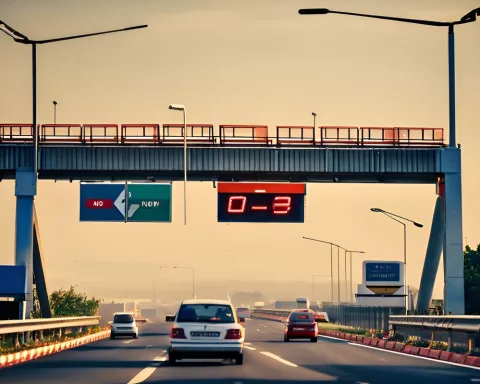
Despite the ongoing challenges, the DA remains steadfast in its ambition to abolish the e-Toll system. The party insists that the toll gantries can serve better purposes, such as enforcing speed limits and improving traffic flow on Gauteng’s roads. An innovative proposal from the DA advocates for controlling truck usage during specified times, a measure that could be implemented using the current e-Toll infrastructure.
Gauteng Citizens: Victims of Economic Strain and Political Tussle
As the power struggle rages on between the government and the DA, the average citizen finds themselves entrapped in the battle, shouldering an economic burden they didn’t invite. However, the DA has pledged its commitment to fighting against any system that worsens the financial hardship of the residents.
The e-Toll issue in Gauteng is a complex blend of political gamesmanship, financial stress, and public dissatisfaction. Yet, one thing is clear: the e-Toll problem in Gauteng is not close to resolution. As the residents persist in carrying the burden of political decisions, they find comfort in the DA’s commitment to uphold their rights and terminate the e-Toll system. Regardless of the polished rhetoric and assurances, the people of Gauteng forge ahead in their fight against the escalated cost of living and the ominous presence of e-Tolls.
What is the e-Toll system in Gauteng, South Africa?
The e-Toll system in Gauteng, South Africa, is a controversial toll collection system implemented on major highways in the province. The system has been met with public dissatisfaction and financial strain for residents.
What has been the response of the Democratic Alliance (DA) to the e-Toll system?
The Democratic Alliance (DA) has been a prominent opposition to the e-Toll system in Gauteng. They have proposed alternative solutions such as controlling truck usage and enforcing speed limits to improve traffic flow instead of toll gantries. The DA remains committed to fighting against any system that worsens financial hardship for residents.
How much debt has the e-Toll system caused in Gauteng?
The e-Toll system in Gauteng has resulted in mounting debt, currently a whopping R12.9 billion. There are concerns that the repayment amount will continue to soar, intensifying the financial strain on residents.
What political accusations have been made regarding the e-Toll system?
The Democratic Alliance (DA) has accused Gauteng Premier Panyaza Lesufi of exploiting the e-Toll crisis for his political advantage ahead of upcoming elections. The DA asserts that this isn’t the first instance of Premier Lesufi cunningly using assurances to paint e-Tolls as a relic of the past.
What proposed solutions have been made to address the e-Toll system?
The Democratic Alliance (DA) has proposed controlling truck usage during specified times, a measure that could be implemented using the current e-Toll infrastructure, as an alternative to toll gantries. The party remains committed to abolishing the e-Toll system.
What is the current status of the e-Toll system in Gauteng?
The e-Toll system in Gauteng remains unresolved, leaving citizens to bear the burden of political decisions and economic strain. Despite broken promises to shut down toll gantries, the Democratic Alliance (DA) remains committed to abolishing the system and proposing alternative solutions to improve traffic flow.