Constable Mamotiki Portia Dishobane is a caring South African police officer who works closely with her community to stop crime before it starts. She helps young people by listening to them, mentoring them, and using sports to teach teamwork and hope. Instead of just enforcing rules, she builds trust and understanding, showing that police can be friends and leaders in their neighborhoods. Her gentle strength and dedication inspire many to believe in a safer, brighter future.
Who is Constable Mamotiki Portia Dishobane and what role does she play in community policing?
Constable Dishobane is a dedicated South African police officer known for her compassionate approach to community policing. She empowers youth through mentorship, builds trust via outreach programs, and promotes crime prevention by addressing social issues, embodying modern, proactive law enforcement in the Free State.
Seeds of Purpose in South Africa’s Free State
Amidst the rolling hills and expansive plains of South Africa’s Free State, a subtle but profound transformation takes shape each day. This change isn’t sparked by sweeping reforms or dramatic headlines, but rather by the consistent, meaningful actions of individuals committed to uplifting those around them. At the forefront stands Constable Mamotiki Portia Dishobane, a shining example of a modern public servant – steadfast, compassionate, and deeply invested in the welfare of her community. Her journey, especially prominent during South Africa’s Youth Month, embodies the spirit of service, the transformative power of mentorship, and the invaluable strength found in community bonds.
Born and raised in the town of Phuthaditjhaba, Dishobane’s early life unfolded in a place marked by both vibrant heritage and persistent challenges. She witnessed how crime and social unrest could unsettle families and neighborhoods, leaving many young people adrift and uncertain about their futures. Rather than let these realities foster cynicism, Dishobane drew inspiration from them, fueling her resolve to pursue a path in policing. Her story mirrors those of countless young visionaries in South Africa’s history who chose action over resignation, stepping forward to shape their country’s trajectory.
Unlike many peers who found themselves at loose ends after leaving school, Dishobane felt a clear calling. Driven by a desire to contribute meaningfully, she set her sights on law enforcement, seeing it as an avenue not just for personal advancement but for collective upliftment. Her decision to enter policing, even in the face of uncertainty, echoed the same courage that has guided generations of South Africans striving for a better tomorrow.
From Reservist to Community Leader
Dishobane’s first foray into policing began at the Setsing Police Station, where she volunteered as a reservist. Far from a mere stepping stone, this role became a crucible that sharpened her skills and tested her commitment. Reservists hold a critical place in South Africa’s policing ecosystem, often bridging resource gaps and presenting a more approachable image of law enforcement within communities. During this formative period, Dishobane learned to balance the authority of her position with a genuine human touch – a style reminiscent of servant leadership philosophies that have driven social change movements across the world.
Her transition to a permanent role within the South African Police Service came in December 2018 when she joined the team at Phuthaditjhaba Police Station. Here, she immersed herself in Crime Prevention, operating in an environment where the pressures and complexities of the job demanded both mental toughness and empathy. The experience equipped her with a nuanced understanding of the roots of crime, as well as the importance of engaging with community members on their terms.
In 2023, Dishobane embraced a new challenge by moving into Social Crime Prevention – a role that signaled a broader shift toward proactive, community-centered policing. This approach, which has gained momentum worldwide since the late twentieth century, emphasizes building relationships, identifying root causes, and working collaboratively to reduce crime. Dishobane’s career progression reflects this evolving philosophy, as she increasingly prioritizes engagement and education over reactive enforcement.
Empowering the Next Generation
Dishobane’s influence extends well beyond her official duties. Colleagues and locals alike praise her relentless work ethic and unwavering reliability – qualities she brings to every context, whether she’s working at the Community Service Centre or patrolling local neighborhoods. She starts her days early, carefully reviewing cases, planning outreach initiatives, and coordinating with community leaders. Her method goes beyond addressing crime symptoms; she focuses on the underlying social, economic, and emotional factors that create conditions for crime to thrive.
Phuthaditjhaba, like many South African towns, contends with high unemployment and limited opportunities for young people. As the Sector 4 Community Policing Officer, Dishobane plays a pivotal role in tackling these issues head-on. She collaborates with Community Policing Forums, unique to South Africa’s democratic journey, which serve as bridges between law enforcement and the public. Through these partnerships, she helps create a sense of shared responsibility and trust, laying the foundation for safer neighborhoods.
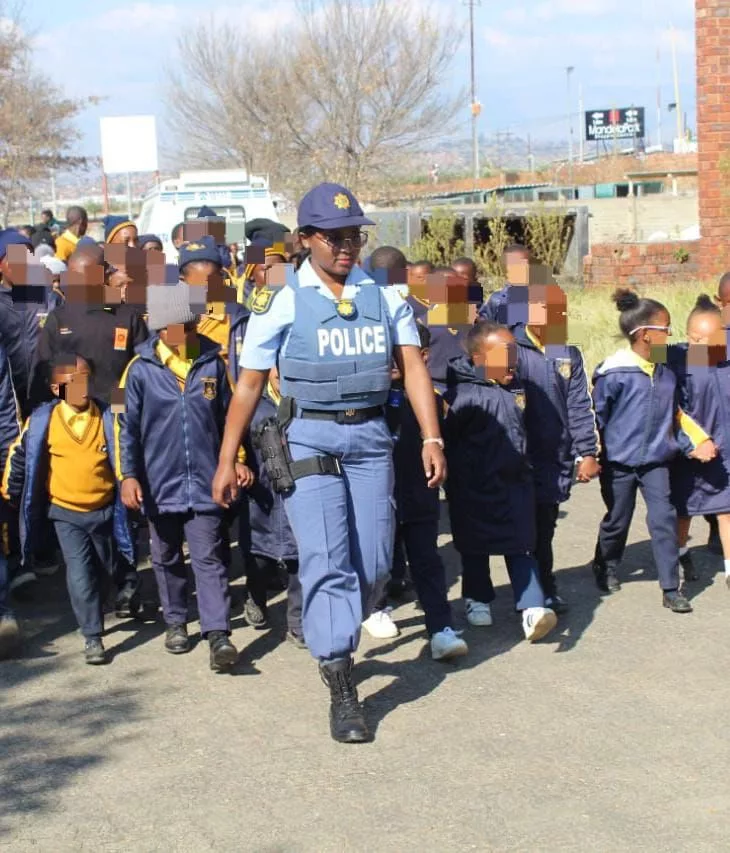
Her outreach isn’t confined to traditional spaces. Dishobane organizes awareness campaigns in schools, churches, and even taverns – meeting people where they are. One memorable example saw her visiting a local secondary school, where she encountered students wrestling with bullying and substance abuse. Rather than offering generic warnings, she chose to sit down with the teens, listen to their stories, and share her own experiences. Her willingness to connect on a personal level left a deep impression, prompting several students to seek her guidance afterward. Through actions like these, Dishobane demonstrates that real policing must be grounded in empathy and authentic human connection.
Building Resilience Through Mentorship and Sport
Dishobane’s commitment to the youth of her community takes many forms. She actively mentors young people, educating them about the dangers of crime while also highlighting paths to positive change. Her approach draws on educational philosophies that value dialogue and mutual respect, encouraging young people to build self-confidence and resilience. By listening to their lived experiences and offering practical support, she gives them tools to navigate difficult circumstances – a strategy reminiscent of progressive pedagogical traditions worldwide.
Beyond mentorship, Dishobane invests her time in sports, recognizing their potential as powerful vehicles for growth and unity. As a member of local ladies’ soccer and netball teams, she not only plays but also leads, using the sports field as a classroom for teamwork, discipline, and hope. This mirrors historic sporting initiatives in South Africa, where games have helped break down social barriers and build solidarity. Dishobane sees each match as an opportunity to foster respect, cooperation, and optimism among young participants.
The environment in which Dishobane works remains demanding. South Africa’s deep-rooted inequalities and the scars of history place significant strain on communities and law enforcement alike. Yet, Dishobane meets these challenges with unwavering dedication. Her colleagues routinely describe her as one of the most hardworking officers in her district – a standard for newcomers and a source of pride for her team.
Inspiring Hope and Charting a New Path
Dishobane’s message to young South Africans is as straightforward as it is powerful: with determination and self-belief, anything is possible. She urges young people to remain unstoppable in their pursuit of growth and change, echoing the spirit of South African leaders who have long insisted that transformation begins with individuals willing to imagine new realities.
Her journey offers broader lessons about the changing role of police in society. Officers like Dishobane operate at the crossroads of tradition and innovation, drawing on lessons from the past while pioneering new approaches. Their work embodies the ideals of restorative justice and community healing – principles that have gained traction as societies look for ways to foster safety and social cohesion. Dishobane’s commitment to both the letter and the spirit of the law places her within the tradition of South African artists and writers who have celebrated the dignity and complexity of ordinary people.
Through her daily actions – whether comforting a troubled teenager, building bridges between police and the public, or rallying her netball team – Dishobane provides a living blueprint for positive change. As South Africa marks Youth Month, her story stands as a vibrant testament to the quiet leadership and everyday heroism that sustain communities nationwide. Her legacy reminds us that real progress begins not with grand gestures, but with countless small acts of courage, compassion, and connection.
FAQ: Constable Mamotiki Portia Dishobane and Community Policing
Who is Constable Mamotiki Portia Dishobane and what is her role in community policing?
Constable Mamotiki Portia Dishobane is a compassionate South African police officer based in the Free State province. She specializes in community policing by building trust with residents, mentoring youth, and proactively working to prevent crime through engagement rather than punishment. Her approach emphasizes understanding social issues and collaborating with the community to foster safer neighborhoods.
How did Constable Dishobane start her policing career?
Dishobane began her career as a police reservist at the Setsing Police Station, a role that allowed her to gain experience and develop a balance between authority and empathy. In December 2018, she became a permanent member of the South African Police Service at Phuthaditjhaba Police Station. Over time, she moved into Social Crime Prevention, focusing on proactive, community-centered policing strategies.
What makes Constable Dishobane’s approach to policing unique?
Rather than focusing solely on law enforcement, Dishobane emphasizes relationship-building, mentorship, and addressing the root social and economic causes of crime. She actively listens to community members, especially youth, and uses sports and education as tools to promote teamwork, self-confidence, and hope. Her style reflects principles of servant leadership and restorative justice.
How does Constable Dishobane support youth in her community?
Dishobane mentors young people by engaging them in dialogue, providing guidance, and organizing outreach initiatives in schools, churches, and taverns. She pays close attention to issues like bullying and substance abuse, offering personal support and encouragement. Additionally, she participates in and leads local ladies’ soccer and netball teams, using sport as a platform to teach discipline, cooperation, and resilience.
What challenges does Constable Dishobane face in her work?
Working in Phuthaditjhaba and other parts of South Africa’s Free State, Dishobane confronts issues like high unemployment, social inequality, and the lingering effects of historical injustices. These factors create complex environments where crime can flourish. Despite this, her unwavering dedication, work ethic, and community partnerships enable her to make meaningful progress in crime prevention and social cohesion.
What broader lessons can be learned from Constable Dishobane’s work?
Dishobane’s career illustrates the evolving role of police officers as community partners rather than just enforcers of the law. Her emphasis on empathy, mentorship, and proactive engagement serves as a model for restorative justice and community healing. Her story also highlights how small, consistent acts of kindness and connection can inspire hope and drive lasting change in society.
If you want to learn more about community policing or youth mentorship programs in South Africa, feel free to ask!