
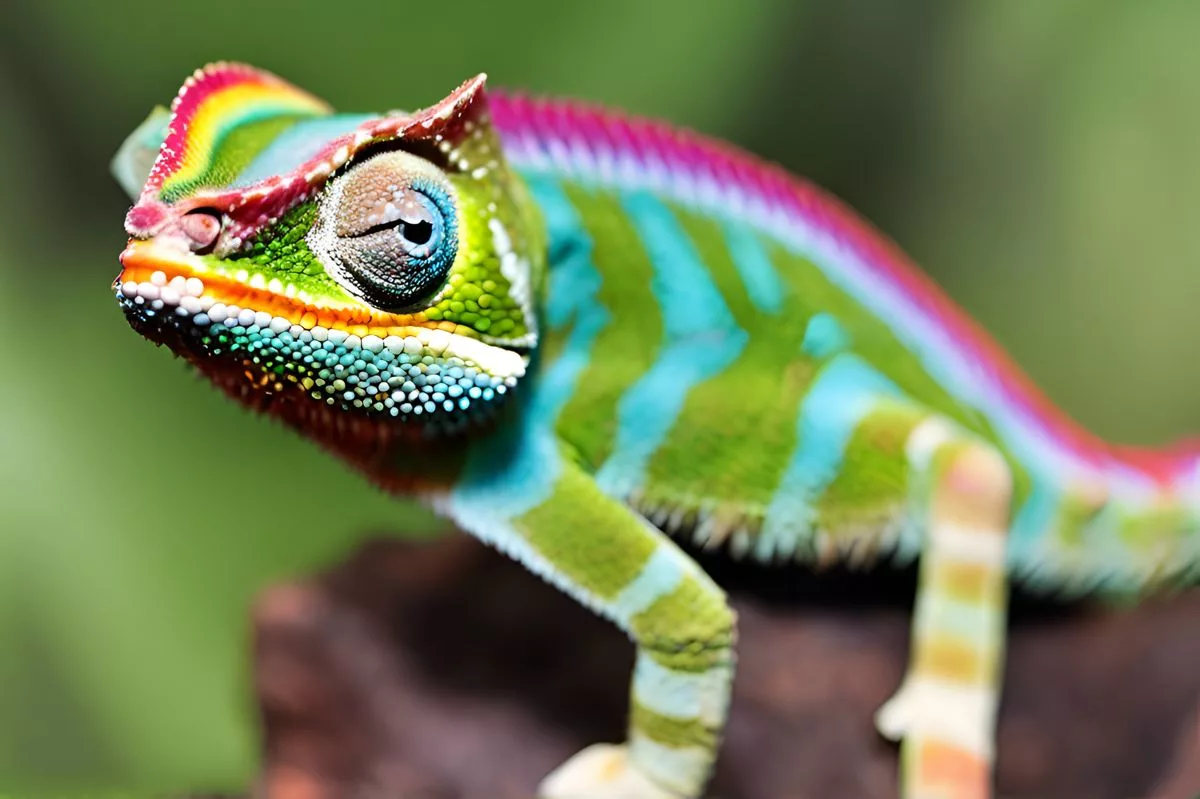
A Cape Dwarf Chameleon in South Africa faced a struggle for survival after being discovered with severe injuries. With the help of an expert veterinary team, the chameleon underwent meticulous surgery and intensive care, leading to a full recovery. This remarkable creature possesses unique survival skills, including the ability to alter its color in response to its thermal needs and a hunting strategy that involves using its tongue to capture prey. The chameleon’s journey highlights the importance of conservation efforts and the incredible resilience of nature.
The Cape dwarf chameleon’s survival journey in South Africa is a testament to exceptional proficiency and enduring perseverance. Despite facing a grim prognosis, the chameleon was meticulously operated on and closely monitored, resulting in its recovery. This diminutive creature also possesses incredible survival skills, such as its ability to alter its color in response to its thermal requirements and its hunting strategy of using its tongue to catch insects.
Section 1: Of Resilience and Recovery
Deep within the landscapes of South Africa, unfolds an extraordinary narrative of endurance, tenacity, and the profound perseverance of life in the most unforeseen conditions. A diminutive creature, a member of the endangered Cape dwarf chameleons, was discovered severely wounded with a considerable laceration in its body and a pierced lung. The prognosis was grim, the scenario appeared dire, but the veterinarian team at the Animal Welfare Society (AWS) remained resolute.
The meticulous operation and the intensive care that followed are nothing short of a testament to exceptional proficiency and endurance. The operation, conducted by Chief Theatre Nurse Jaque Le Roux, was comparable to an intricate ballet, a precarious situation of life and death hanging by the merest thread. Le Roux invested his soul into the endeavor, his commitment to saving this small life was embodied in the chameleon’s survival.
The minuscule chameleon spent its night under the vigilant surveillance of Le Roux. It was rehydrated, monitored with precision, a minute evidence of the marvels of veterinary science and the commitment of those who resist letting extinction seize another species. In the subsequent days, AWS veterinarians collaborated with CapeNature colleagues, devising plans for reintroducing the chameleon to its natural home.
Section 2: The Wonder of Nature’s Creation
The Cape dwarf chameleon (Bradypodion pumilum) is indeed a natural wonder. As mature individuals, they flaunt a spectrum of brilliant hues that vary based on their environment, a natural survival strategy. However, the juveniles are less flamboyant, their coloration muted, distinguishing them starkly from the adults.
This extraordinary creature has the distinct capability to alter its color in response to its thermal requirements. In cooler surroundings, the chameleon adopts a darker shade to absorb heat effectively. Conversely, when the environment turns overly warm, it transitions to a lighter color, refracting light and preserving its internal temperature balance.
Section 3: Uniquely Adapted for Survival
Their grasping tail serves as a stabilizer, providing balance as they traverse their world vertically. They always ensure at least one foot is planted, moving slowly as they negotiate a complex network of foliage and gaps at a measured pace.
Contrary to their slow movements, these chameleons are far from vulnerable. Their hunting strategy, for example, is a spectacle of grace and effectiveness. They have perfected the skill of using their tongue as a tool, projecting it at unprepared insects in a quick, crucial action.
Moreover, their eyes, which can move independently, provide a sweeping view of their environment, granting them an unmatched advantage in their natural habitat.
Section 4: An Incredible Story of Preservation
Despite these incredible attributes, Cape dwarf chameleons are active only during the day. They serve as a testament to the earth’s astounding biodiversity and a powerful reminder of our duty to conserve this diversity.
In a world prone to overlooking the minute, this narrative is a touching reminder of the miracles that dedication, passion for nature, and professional knowledge can bring to life. As we progress, it’s essential to acknowledge that each life, regardless of its size, carries inherent value and warrants our maximum efforts to conserve and protect.
1. What happened to the Cape Dwarf Chameleon in South Africa?
The Cape Dwarf Chameleon was discovered with severe injuries, including a considerable laceration in its body and a pierced lung.
2. How did the chameleon recover from its injuries?
The chameleon underwent intricate surgery and intensive care conducted by an expert veterinary team at the Animal Welfare Society (AWS), resulting in a full recovery.
3. What are the unique survival skills of the Cape Dwarf Chameleon?
The chameleon has the ability to alter its color in response to its thermal needs and uses its tongue to capture prey. It also has a grasping tail for balance and independently moving eyes for a sweeping view of its environment.
4. What is the importance of conservation efforts for the Cape Dwarf Chameleon?
The chameleon is a member of an endangered species, highlighting the importance of conservation efforts to preserve biodiversity and protect species from extinction.
5. What does the Cape Dwarf Chameleon’s survival journey teach us?
The chameleon’s survival journey highlights the incredible resilience of nature, the importance of conservation efforts, and the value of each life, regardless of its size.
6. How does the Cape Dwarf Chameleon alter its color?
The chameleon adopts a darker shade to absorb heat effectively in cooler surroundings and transitions to a lighter color in warmer environments to refract light and preserve its internal temperature balance.