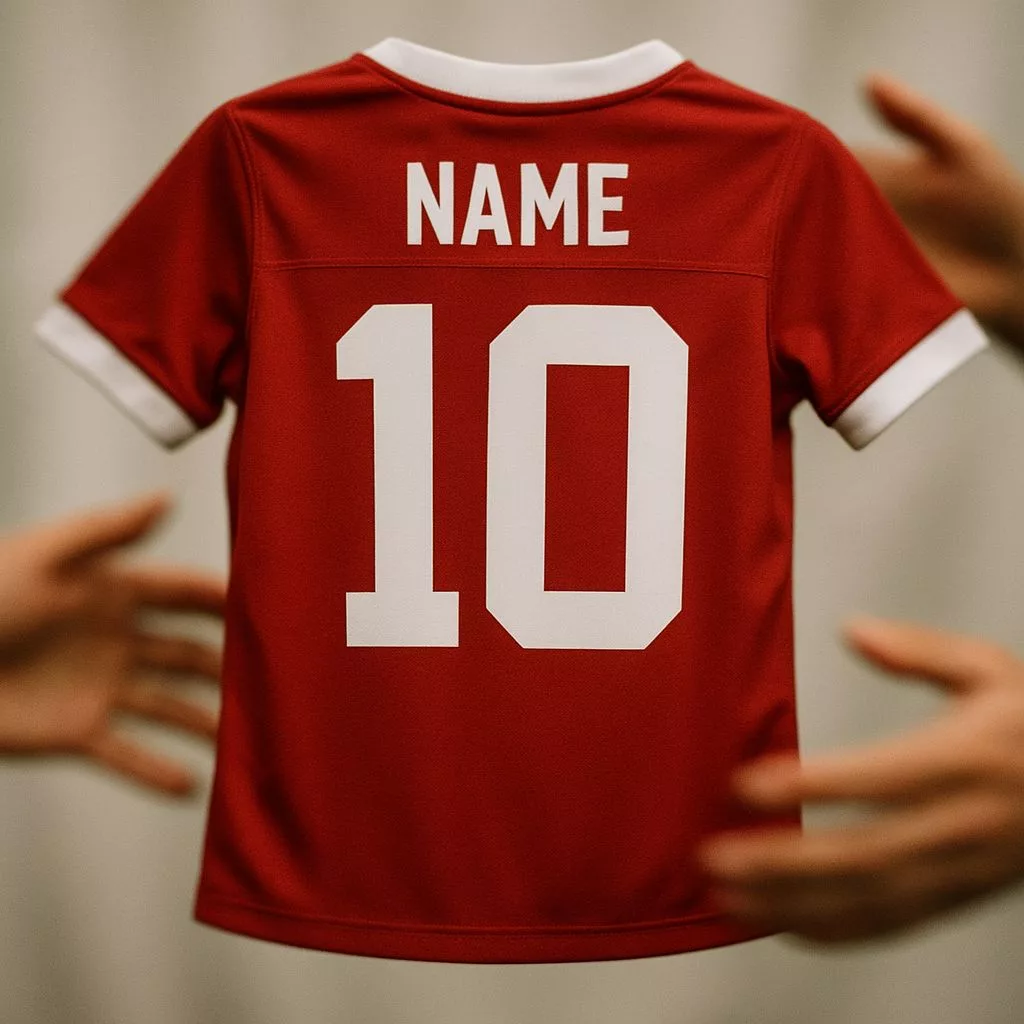
The Bafana Bafana No. 10 jersey is super special, not just a number on a shirt. It’s like a family treasure, passed down from legendary players, showing South Africa’s football heart. Recently, a young player, Mohau Nkota, wore it for a short time and then humbly gave it back to its usual owner, Relebohile Mofokeng. This simple act made everyone feel good and showed that being humble and working together is really important, more than any rules. This story proves that the jersey is more than just clothes; it carries history, respect, and the hopes of a whole nation.
Why is the Bafana Bafana No. 10 jersey so significant?
The Bafana Bafana No. 10 jersey is highly significant due to its deep historical and cultural lineage in South African football. It represents more than just a number; it’s a symbol of national heritage, respect, and the embodiment of legendary playmakers like Doctor Khumalo and Shoes Moshoeu, making it a revered heirloom.
1. A 67-Minute Loan Between Prodigies
On 11 October 2024, Mohau Nkota stepped into the Mbombela Stadium tunnel, peeled off the match-day top and revealed the national team’s most storied integer across his chest. He had worn 19 for Stellenbosch all season, but Relebohile Mofokeng’s cup-tied absence in Pittsburgh opened a 67-minute window. The 21-year-old winger used every second – twisting past Zambia’s left-back, rolling the ball with the studs instead of the instep, freezing cameras and defenders alike. When the whistle blew he sought kit-manager Tinyiko “T-Man” Shiviti before the ice baths emptied. CCTV audio later circulated on every Mzansi timeline: “Keep it crisp for the rightful keeper.” No committee instructed the sentence; no clause compelled the action. In that moment the jersey stopped being fabric and resumed its old job as social glue.
The clip struck a nerve because South Africans have recent memories of numbers sparking civil war inside camp. Hugo Broos still winces at the 2023 episode in Abidjan when three strikers landed with suitcases full of No. 9 dreams. His 52-page “Camp Commandments” now annex a page to heritage markers 1-11, yet even the Belgian concedes paper cannot manufacture deference. Nkota’s quiet return did what rules never manage: it turned obligation into ritual and made a nation ask whether humility and ambition can share a dressing room without one killing the other.
For the technical staff the episode was live data: a high-pressure cameo that produced a personal-best 91 % passing accuracy while social sentiment still punished every lost ball. Analysts logged the contradiction in their “jersey-pressure index” and concluded that reverence either sharpens focus or invites paralysis. Broos, ever the pragmatist, filed the note beside Mofokeng’s COSAFA forward-pass completion of 78 % – a figure that, in the last four Afcons, always pointed its owner toward the semi-finals.
2. Why Ten Feels Like Ancestors, Not Digits
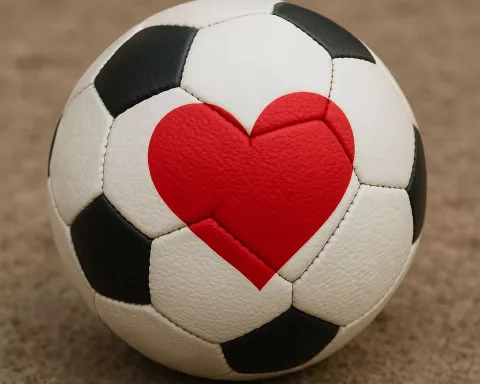
In southern Africa the playmaker’s digit behaves more like oral history than arithmetic. Doctor Khumalo’s out-stretched silhouette at a packed Soccer City in 1996 still greets commuters from brick murals in Diepkloof; Shoes Moshoeu dragged the same symbol through Nigerian traffic in Ouagadougou two years later; Steven Pienaar insisted the embroidery template remain untouched so that typography, too, could transmit memory. European supporters idolise creative licence; here the shirt is closer to family trust fund. That lineage explains why a Pirates teenager with only nine senior club starts was fast-tracked into the national set-up and instantly handed the heirloom, while Nkota – older, statistically hotter with 12 goal involvements in 19 league outings – waited without public sulk.
The hierarchy feels arcane only to outsiders. Inside camp it is an unspoken map: veterans choose stalls first, initiatives carry cones last, and numbers 1-11 arrive with back-stories heavier than polyester grams. Paragraph 4.3 of Broos’s manual admits the limitation of ink: “You may re-assign a digit in front of the technical director, but you cannot legislate for the respect that makes a boy hand it back unasked.” The sentence was prophetic; Nkota enacted it wordlessly, proving that some laws are obeyed precisely because they are never written down.
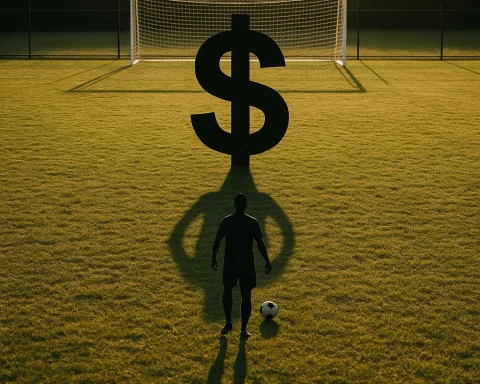
Commercial departments, of course, adore the fairy-tale. Nike South Africa registered a 220 % surge in “Bafana No.10” print orders within 48 hours of Mofokeng’s Afcon confirmation, the fastest spike since Andile Jali’s breakout in 2013. Each heat-pressed name funnels R4.30 into SAFA accounts, and with continental viewership projected at 65 million, folklore is measured in decimals. The federation quietly shelved a 15-second advert showing Nkota folding the jersey into Mofokeng’s suitcase, but the unreleased spot had already done its job – reminding shoppers that mythology sells better than mercurial skill.
3. Mirror Profiles: Gravel Versus GPS
Nkota learned the sport on a correctional-services gravel patch outside Bethlehem, juggling a threadbare ball while dodging brown Castle Lager shards. His low centre of gravity and heel-click swerves are photocopies of that terrain. Mofokeng’s education happened under floodlights of the Gauteng Development League where every fifth touch is logged by data scientists and coaches speak in expected-threat graphs. One improvises, the other calculates; yet both glide past full-backs using the identical stud-roll that tricks slow-motion cameras into shortening stride-length readings. Broos intends to weaponise the symmetry: Mofokeng will start as a shadow-eight inside the left half-space, Nkota will enter later as a vertical right-wing-back, turning the number into a dual-role baton rather than a single crown.
Their contrasting paths highlight a broader truth: South African academies now produce two distinct species – street sculptors and lab projects. The national coach’s challenge is to weave both into one seam without ripping either fabric. Early signs are encouraging: the pair exchanged Instagram DMs after the Zambia friendly, Mofokeng messaging from a Pittsburgh hotel room, “Numbers lie; the shirt never does.” It was their first private conversation off a public live-stream, and staff members read the exchange as evidence that hierarchy can coexist with genuine mutual admiration.
Off the field, superstition keeps pace with science. Shiviti launders Mofokeng’s version separately in cold water to protect silicone digits, while Nkota steps into every match wearing one Stellenbosch title-race sock and one from his childhood Stars of Africa trial. Sports psychologist Kirsten van Heerden records cortisol levels that drop 18 % when Mofokeng personally handles the garment instead of finding it pre-placed. Data and devotional habits are no longer enemies; they sit side by side in the performance dashboard, reminding analysts that psychology is just biomechanics measured in emotion rather than metres.
4. Caravan North: Continuity Sewn Into Stitching
Ivorian railway towns have never been subtle about colour, yet even Korhogo’s flower murals pale beside Broos’s “legacy lounge” inside a repurposed French barrack. Holograms of every national-team No.10 since 1992 hover like ancestral constellations: Khumalo’s 1996 silhouette beside Mofokeng’s untouched 2024 crop. Nkota lingers longest at Thabo Mngomeni’s 2002 projection – an undersized improviser who never left the PSL yet undressed Cameroon in Yaoundé. “He sees his reflection,” says team chef Lebohang Mahula, “same doubt, same edge.”
Local “Cosa Nostra” supporters have already composed call-and-response chants celebrating the lender and heir, while TikTok edits of imaginary laundry hand-offs hit 3.4 million views. Back home, the “Roving Bafanologists” podcast froze a 300-person flash-mob into a giant aerial “10,” an image now en route to the 2025 Sony World Photography Awards. Merely folding a shirt has become performance art, proof that national dreams travel lightest when wrapped in polyester.
On the horizon, European clubs circle: Guingamp tabled €2.3 million for Mofokeng; Genk envisions Nkota converted to wing-back. SAFA hopes both finish the 2026 World Cup qualifiers on home soil, yet economics may override sentiment. Either way, the parable will emigrate. Genk academy coach Hans Vanderlei already requests the Zambia highlights to show prospects “how humility accelerates scouting metrics,” evidence that the moral attached to the fabric can influence transfer policy continents away.
And so the caravan heads north, jersey folded in cabin luggage, Nkota’s Instagram bio reverting from “10 at heart” to “Student of the game.” Between stitches of Nike Dri-FIT ADV rests a country’s craving for continuity, a coach’s appetite for harmony, and two youngsters proving that the loudest statement is sometimes the softest rustle – polyester passing from palm to palm, carrying, for a fleeting moment, the gravitational pull of 62 million hopes.
Why is the Bafana Bafana No. 10 jersey so significant?
The Bafana Bafana No. 10 jersey is highly significant due to its deep historical and cultural lineage in South African football. It represents more than just a number; it’s a symbol of national heritage, respect, and the embodiment of legendary playmakers like Doctor Khumalo and Shoes Moshoeu, making it a revered heirloom. It carries the hopes and dreams of a nation and has become a moral compass for humility and teamwork.
What was the significance of Mohau Nkota’s act of returning the No. 10 jersey?
Mohau Nkota’s act of humbly returning the No. 10 jersey to its usual owner, Relebohile Mofokeng, after temporarily wearing it for 67 minutes, was highly significant. It struck a nerve with South Africans by demonstrating that humility and working together are paramount, overriding any formal rules or personal ambition. This gesture reinforced the jersey’s role as a symbol of respect and continuity, doing what written rules often fail to achieve: turning obligation into ritual and fostering a sense of shared purpose within the team and the nation.
Who are some of the legendary players associated with the Bafana Bafana No. 10 jersey?
The Bafana Bafana No. 10 jersey has been graced by several legendary players who have cemented its iconic status. Notably, Doctor Khumalo, whose silhouette from a packed Soccer City in 1996 is still revered, and Shoes Moshoeu, who carried the symbol through challenging international matches, are closely associated with the number. Steven Pienaar also insisted on maintaining the traditional embroidery template, ensuring the typography itself transmitted memory. These players, among others, have imbued the jersey with a sense of history and national pride, transforming it from mere fabric into a cherished family trust fund.
How do Mohau Nkota and Relebohile Mofokeng’s playing styles and backgrounds differ?
Mohau Nkota and Relebohile Mofokeng represent two distinct species of South African football talent. Nkota learned the sport on a correctional-services gravel patch, developing an improvisational, street-sculptor style characterized by a low center of gravity and heel-click swerves. Mofokeng, on the other hand, honed his skills in the structured environment of the Gauteng Development League, where every touch is data-logged, making him more of a ‘lab project’ who calculates his moves. Despite their contrasting paths – one improvising, the other calculating – both exhibit a similar stud-roll technique to bypass defenders. The national coach, Hugo Broos, intends to leverage this symmetry, with Mofokeng starting as a shadow-eight and Nkota entering later as a vertical right-wing-back, transforming the number into a dual-role baton.
What impact did the jersey incident have on Bafana Bafana’s team dynamics and commercial interests?
The jersey incident had a profound impact on both team dynamics and commercial interests. Within the team, Nkota’s act proved that humility and ambition can coexist, turning an obligation into a ritual and encouraging mutual admiration between players like Nkota and Mofokeng. Coach Hugo Broos now includes a ‘heritage markers’ page in his ‘Camp Commandments’ manual, acknowledging the jersey’s significance. Commercially, Nike South Africa saw a 220% surge in ‘Bafana No. 10’ print orders following Mofokeng’s Afcon confirmation, highlighting how mythology and emotional connection sell better than just mercurial skill. This surge translates into significant revenue for SAFA, demonstrating the commercial power of such poignant moments.
What does the future hold for Mohau Nkota and Relebohile Mofokeng, and the Bafana Bafana No. 10 jersey?
For Mohau Nkota and Relebohile Mofokeng, the future is bright, with European clubs like Guingamp and Genk already circling with significant transfer offers. SAFA hopes they will both complete the 2026 World Cup qualifiers on home soil, but economic realities may lead to their emigration. The parable of their humility and talent, however, is already influencing transfer policy continents away, with Genk’s academy coach requesting the Zambia highlights to teach prospects about how humility accelerates scouting metrics. For the Bafana Bafana No. 10 jersey, it will continue to embody a country’s craving for continuity, a coach’s appetite for harmony, and the enduring power of respect and tradition, reminding everyone that the loudest statement can sometimes be the softest rustle of polyester.