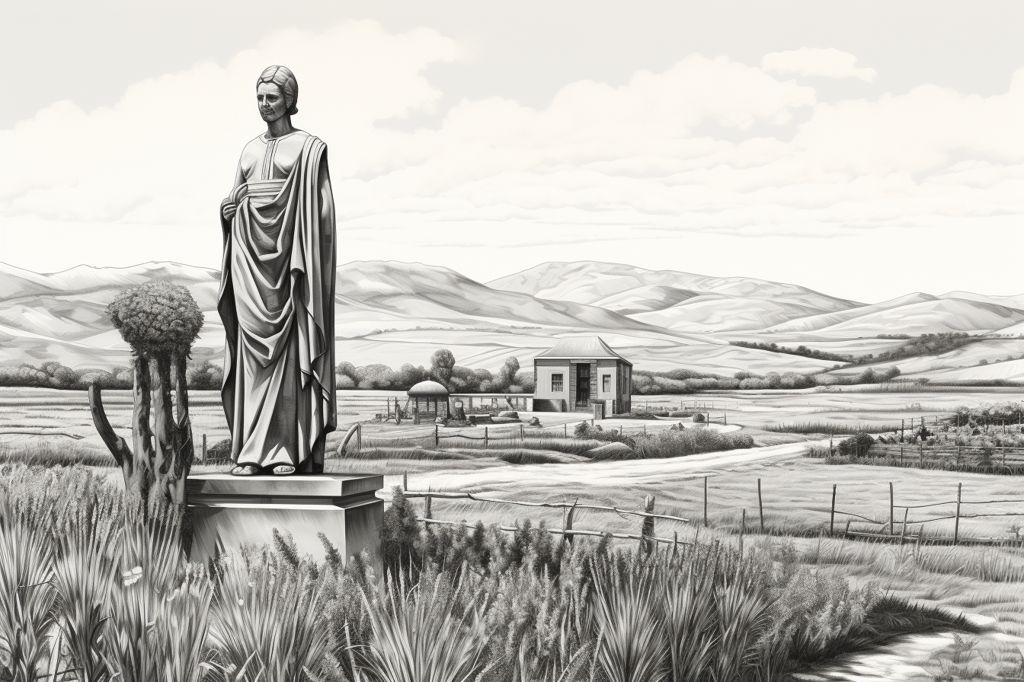
President Cyril Ramaphosa unveiled two statues of Nelson Mandela on Nelson Mandela Day. One statue was unveiled in Mthatha, and the other statue was unveiled in Qunu, Mandela’s final resting place.
A Tribute to Mandela’s Legacy
These statues are not just artistic representations of the past; they are beacons of hope for individuals and communities still suffering from marginalization and poverty. By honoring Mandela in these locations, it serves as an inspiration to young people to remind them that the seeds of greatness lie dormant within each one of us.
The Influence of Traditional Values
Mandela’s formative years were spent in Qunu, where he spent his time tending cattle, listening to the elders’ stories about the bravery of his people, and being cared for by his family. In his autobiography, “Long Walk to Freedom,” Mandela wrote that he hoped to someday serve his people and contribute to the struggle for freedom as he listened to these stories. The Qunu statue depicts Mandela in his Xhosa-Tembu cultural attire, reminding us of the traditional values that shaped his consciousness.
A Tribute to Mandela’s Life
The Mthatha statue portrays Mandela as a statesman, a role for which he was most well-known. Together, these monuments offer a multifaceted tribute to Mandela’s life, showcasing the various influences that molded him into the iconic figure we know today.
A Testament to Mandela’s Enduring Impact
Monuments and museums play a key role in the political and cultural life of any country. They give recognition to those who suffered hardship, repression, exile, or death in pursuit of universal ideals like human freedom. These statues are “the struggle of memory against forgetting,” according to President Ramaphosa. They stand as a testament to Mandela’s enduring impact on South Africa and the world at large.
Investing in Education
In addition to the statues, a library was handed over to Zingisa Comprehensive School in Mthatha on Nelson Mandela Day. This project highlights the importance of investing in education and creating opportunities for young people, exemplifying the values Mandela held dear throughout his life.
Attracting Tourists and Supporting Business
These sites of memorialization and commemoration are not only symbols of national pride but also have the potential to attract tourists, supporting business and job creation in the region. President Ramaphosa has called upon the people of Qunu to protect and look after these monuments to ensure their enduring significance.
Honoring Mandela’s Memory
By commemorating Mandela through these statues, citizens are reminded of their duty to follow his example and strive towards a more just and equal society. As Mandela once said, “As long as poverty, injustice, and gross inequality still exist in our world, none of us can truly rest.” These monuments call us to action, inspire us to build bridges of peace and fight against social injustice and oppression — today, and every day.