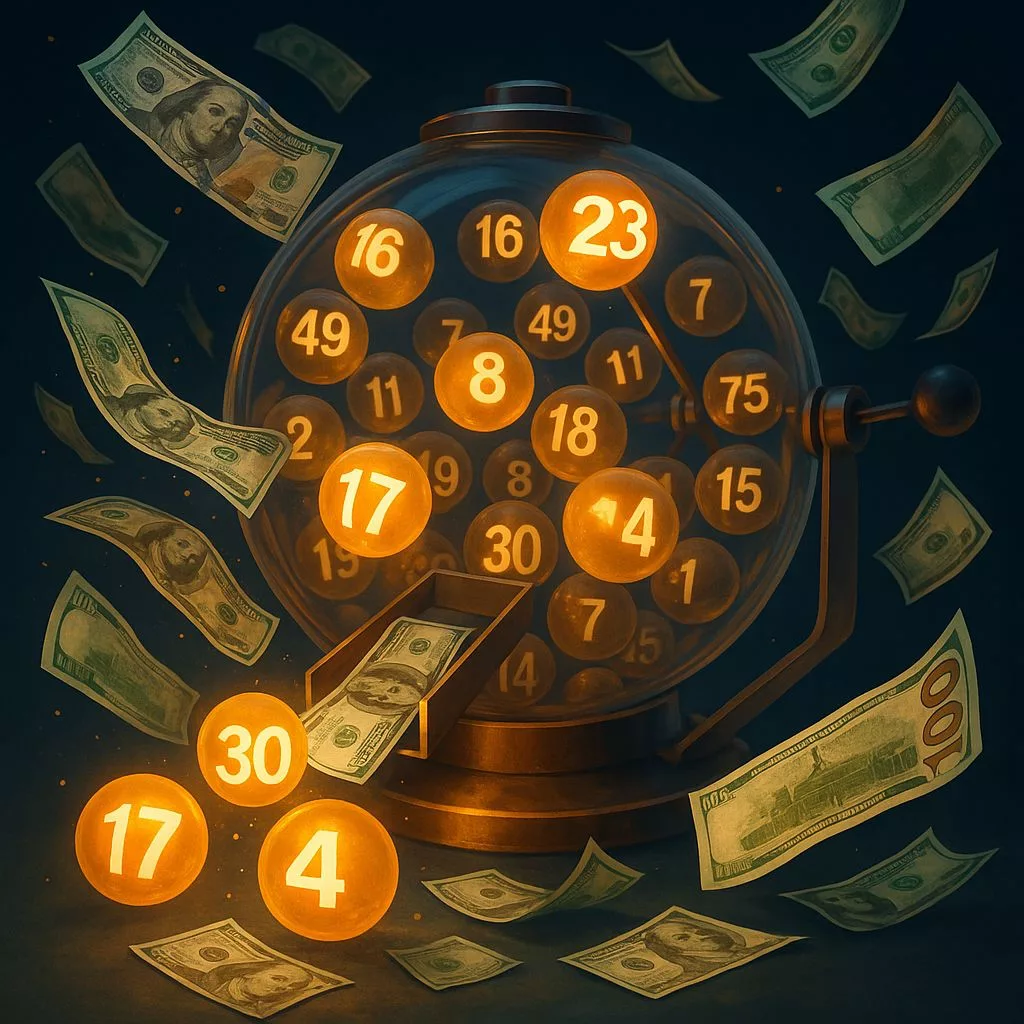
Tonight, a massive R77 million PowerBall jackpot sparkles like a desert mirage, drawing everyone into a wild dream. But wait, it’s not a real pile of cash! If you win, you get paid slowly over 30 years, or you take a much smaller amount right now. The chances of winning are tiny, like 1 in 42 million, but people still line up, hoping for that one lucky ticket. This lottery is a mix of math, dreams, and a little bit of magic, making everyday people imagine a whole new life.
What is the probability of winning the PowerBall lottery?
The probability of winning the PowerBall jackpot is 1 in 42,375,200 for the five-plus-one shot. For any prize, including the R10 refund, the odds are 1 in 18 plays. The PowerBall Plus offers slightly better odds for its jackpot, popping in an average of 9.3 draws compared to the main game’s 14.1 draws.
Section 1 – The Jackpot Illusion & The Paper Chase
Tonight’s R77 million headline is not a pallet of cash waiting in a Randburg vault; it is a discounted promise stretched across three decades of government bonds. Say yes to the 30-year annuity and Ithuba will drip-feed you the full advertised sum. Say “cash, please” and National Treasury rules slash the pile to roughly R38 million before SARS even gets creative with your interest income. That reduced figure could still swap 65 showroom-fresh Corollas for the keys to your dreams, or pour 3.8 million litres of 95-octane into a lifetime of road-trips, yet it is half the neon number hypnotising the nation at 20:58.
The jackpot snowball started 18 months ago when Covid-19 draw suspensions were lifted. Since then 27 roll-overs have each nudged the pot upward by about R2.5 million a pop. Those increments come from real money – R5 here, R7.50 there – dropped across 9 000 terminals, 2 500 spazas and a million banking apps. Thermal paper slides out, dopamine surges, and by supper the country is humming one collective question: “What if?”
From Musina’s taxi rank to Milnerton’s latte lanes the ritual is identical: queue, pay, pretend to read the numbers, fold, tuck, pray. WhatsApp groups trade digits plucked from ouma’s birth year, last month’s municipal bill or the kid’s Grade-1 class total. The choreography never changes, yet hardly anyone dissects the lattice of statistics, psychology and hard economics hiding behind the coloured balls.
Section 2 – The Maths Nobody Googles While Queuing
PowerBall is a two-drum beast: 50 white orbs jostle with 20 red PowerBalls. Your five-plus-one shot at glory sits at 1 in 42 375 200. Translation: the Vatican is 14 times more likely to make you a saint this year than the tumbler is to crown you a rand multimillionaire. Buying a hundred tickets nudges the miracle to 1 in 423 752 – still twice as improbable as dating an astronaut.
Smaller wins hide better odds. Any prize, even the humble R10 refund, lands once every 18 plays. That is slimmer than roulette’s red-or-black coin-flip but kinder than guessing a six-digit OTP on the first stab. Statisticians call the 18-to-1 return “the hook”; players call it “at least I got my money back” and immediately re-invest.
PowerBall Plus looks identical, yet behaves like its mischievous little sibling. Fewer punters cough up the extra R2.50, so prize pools stay thin, but that very leanness lets the jackpot sprint. Plus needs an average of 9.3 draws to pop; the main game ambles along for 14.1. Mathematicians chasing the best bang for a R10 note advise five Plus boards over two main-game boards, pushing the theoretical return from 48 % to 54 % – the closest South Africa ever gets to “positive-value” gambling.
Section 3 – Where Your R5 Really Travels & Who Buys the Most Dreams
Ticket revenue splits like this: 34 % detours to the National Lottery Distribution Trust Fund, bankrolling Olympic kayakers, rural netball courts and stray cheetahs. Half flows back as prizes, 6 % becomes retailer commission – why your corner café smiles at a single-card purchase – and 10 % covers Ithuba’s operating bill, capped at 1 % of gross turnover; the rest buys regulators new pens. Meanwhile R1.8 billion in unchecked slips has trickled to charities since 2015, proof that “I never win” can still do good if you toss the ticket without scanning.
Sales heat-maps glow brightest along the platinum, coal and manganese belts. In Rustenburg, Newcastle, Kathu and Hotazel the average adult burns R312 a month on long-odds hope, 8 % of disposable income. Sandton’s 2196 zip averages R18. Economists label the pattern “desperation elasticity”; philosophers call it the equal-opportunity tax on dreams.
Syndicates have evolved from stokvel tins to encrypted Slack channels. A 42-person Johannesburg agency recently notarised a blockchain time-stamp, programming 42 digital wallets to auto-split within 30 minutes of a draw. Should their numbers hit tonight, Monday’s water-cooler gossip will be handled by smart contract, not screaming matches.
Section 4 – Rituals, Myths & The 90-Day Millionaire Crash-Landing
Frequency charts taunt the pattern-hungry: red ball 14 has dropped 38 times since 2018; red 04 only nine. White ball 30 courts the spotlight at 3.1 %; 49 sulks at 1.4 %. Yet chi-square tests yawn: the spread is random. Still, “hot” numbers outsell “cold” by 18 %, raising the spectre of a split pot should the crowd’s favourites arrive.
Tax collectors leave the capital prize untouched – South Africa is one of six countries that waive income tax on lottery wins. Earn interest on that windfall, however, and SARS greets you with capital-gains or income brackets as high as 45 %. Anonymity is partial: Ithuba must publish name, city and a fuzzy photo. A 2023 High Court ruling narrowed the wiggle room for secrecy, so practice your camera-smile.
Digital tickets are coming. QR-coded entries minted on a private Ethereum fork cannot burn, drown or be eaten by the dog. Push-notifications will kill the unclaimed-prize bonanza for charities and launch instantaneous millionaires before the anchor finishes pronouncing “terms and conditions apply.” Expect full rollout before the 2026 Soccer World Cup – possibly paired with a central-bank digital rand.
Expats in London or Texas already VPN their way to the national site, a technical breach winked at until a 2022 amendment demands FICA linkage to a South African bank account come 2025. The workaround – nominee tickets bought by relatives – needs a notarised loan agreement if you want your windfall back without sparking a family feud.
Neurologists at Wits mapped fMRIs as the fifth white ball matched: dopamine detonated even when the PowerBall failed, the so-called near-miss effect that keeps old tickets wedged in car cubbies like creased promises. Lucky jerseys peak during World Cup years; kaftans spiked 22 % after a recent Amapiano star’s passing, proving superstition is seasonally fashionable.
Data nerds open three tabs at 20:45: Ithuba’s YouTube stream, Treasury’s bond-yield page (a higher R186 yield widens the cash-versus-annuity gap) and a rand-dollar chart (a 1 % swing equals R380 000 on R38 million). A quick JSON import into Excel tells you whether to pop champagne or phone the therapist before the anchor reads the disclaimer.
Should the cosmos dial your exact six numbers, sign the back in blue ballpoint – black photocopies too well – photograph it beside your ID, e-mail the images, and hide the paper inside the least-thumbed cookbook on the shelf. Call Ithuba, refuse the media circus, and demand the silent-room payout. Before sunrise, park R10 million in a 24-hour call account at 8.35 %; the overnight interest alone will cover your first lawyer’s retainer while you decide whether to buy the dealership or just every car on the floor.
Main draw tonight: five white, one red. Plus draw: same again, smaller jackpot, faster fuse. Whether you played great-grandmother’s birthday, a Quick-Pick’s chaos, or the Fibonacci dance, remember the arithmetic is glacial, but hope is combustible. In those 60 televised seconds, a domestic worker and an investment banker share the identical sliver of possibility. The balls feel nothing; they simply ricochet – and for many South Africans that icy impartiality is the most democratic spectacle on the calendar.
What is the R77 million PowerBall jackpot, and how is it paid out?
The R77 million PowerBall jackpot is an advertised sum, not an immediate cash lump sum. If you win, you have two options: either receive the full amount in annual installments over 30 years (an annuity), or take a significantly reduced cash option upfront. The cash option is roughly R38 million due to National Treasury rules and before taxes are applied.
What are the odds of winning the PowerBall jackpot?
The probability of winning the PowerBall jackpot by matching all five white balls and the PowerBall is 1 in 42,375,200. While the odds for winning any prize (even a R10 refund) are better at 1 in 18 plays, the jackpot odds are very slim.
How does the PowerBall Plus game differ from the main PowerBall game?
PowerBall Plus has the same format as the main PowerBall game (five white balls and one red PowerBall) but typically has fewer players. This results in smaller prize pools but also means the jackpot rolls over less often and pops faster, averaging 9.3 draws compared to the main game’s 14.1 draws. Mathematicians often advise playing PowerBall Plus for a slightly better theoretical return.
Where does the money from PowerBall ticket sales go?
Ticket revenue is distributed as follows: 34% goes to the National Lottery Distribution Trust Fund, which supports various good causes like sports and charities. Half (50%) is allocated to prizes, 6% is paid as commission to retailers, and 10% covers Ithuba’s operating costs, capped at 1% of gross turnover. Unclaimed prizes also trickle down to charities.
Are PowerBall winnings taxed in South Africa?
No, South Africa is one of the few countries where the capital prize from lottery winnings is not subject to income tax. However, any interest earned on your winnings, should you invest them, will be subject to capital gains or income tax, potentially as high as 45%.
What should a winner do immediately after realizing they have won?
If you realize you’ve won, immediately sign the back of your ticket in blue ballpoint pen and photograph it along with your ID. Email these images for safekeeping. Then, hide the physical ticket in a secure place. Contact Ithuba, refuse any media attention, and request a silent-room payout. It’s also advisable to park a significant portion of your winnings, such as R10 million, in a high-interest call account immediately to start earning interest while you plan your next steps and consult with financial and legal advisors.