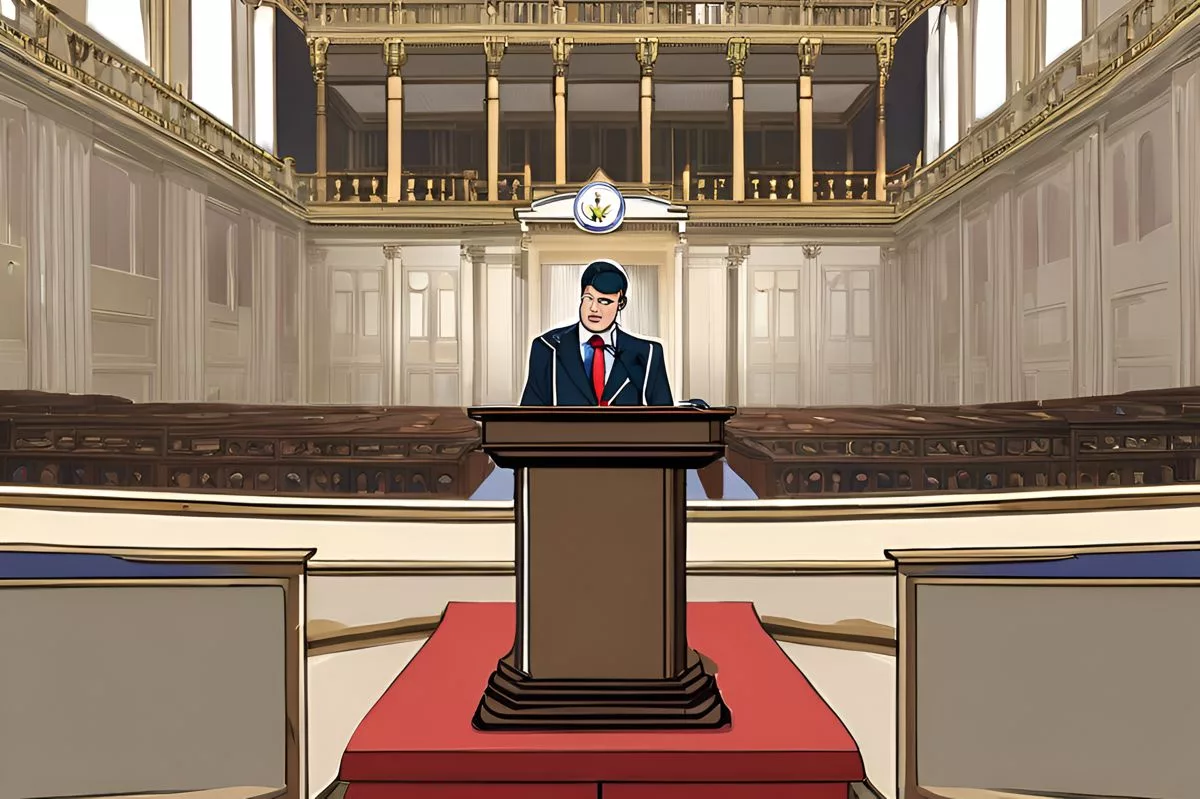
The State of the Nation Address is a significant event for South Africa, and the Parliament is buzzing with activity as it prepares for it. Here, the President presents an overview of the country’s current state and the government’s plan of action. The event takes place in Cape Town City Hall, where the legislative, executive, and judicial powers gather under one roof. Leading the arrangements are the Parliament’s Presiding Officers, and in the run-up to the SONA, various committees are holding crucial meetings to discuss progress and future plans on a range of topics, reflecting the heartbeat of South Africa’s democracy.
What is the State of the Nation Address in South Africa?
The State of the Nation Address (SONA) is a significant event in South Africa’s political calendar, where the President presents an overview of the country’s current state and the government’s plan of action. It serves as a platform to address political, economic, and social issues within both domestic and global landscapes. The SONA is hosted in Cape Town City Hall, and leading the arrangements are the Parliament’s Presiding Officers.
Inside Cape Town City Hall: A Confluence of Constitutional Authority
Nestled within the confines of Cape Town City Hall, an extraordinary fusion of constitutional clout occurs—a fascinating spectacle where South Africa’s triumvirate of state powers—the legislative, executive, and judicial—gather under a singular roof. This week, commencing on the 4th of February 2024, the two Chambers of Parliament are assembling for one such extraordinary event: the 2024 State of the Nation Address (SONA) presented by President Cyril Ramaphosa.
SONA is an event of unmatched significance, permeating not just the political timetable but also the nation’s collective psyche. The President capitalizes on this occasion to share with the populace an overview of South Africa’s current state. It serves as a platform for the nation’s leader to survey an extensive array of political, economic, and social issues within both domestic and global landscapes. The President is also held accountable for the government’s performance and outlines its plan of action.
Leading the arrangements for this pivotal event are the Parliament’s Presiding Officers. Nosiviwe Mapisa-Nqakula, the Speaker of the National Assembly, and Amos Masondo, the Chairperson of the National Council of Provinces, will inform the media on their preparedness to host the SONA. This press briefing is a crucial part of the pre-SONA procedures, guaranteeing that Parliament’s readiness to facilitate this momentous event is effectively relayed to the nation.
A Bevy of Activities: The Run-Up to SONA
In anticipation of the SONA, the parliamentary committees of both Houses have a week brimming with engagements. A sum of twenty-one meetings is on the agenda, tackling a vast array of subjects, from mineral resources and energy to communications and digital technologies, from finance to water and sanitation.
On the 6th of February, the Portfolio Committee on Mineral Resources and Energy has arranged a meeting to ponder and approve the Committee’s 1st Term Programme for 2024. It is a critical aspect of their responsibility to ensure that their programme aligns with the nation’s requirements and the government’s priorities.
Simultaneously, the Portfolio Committee on Tourism will conduct its session centered on the approval of its First Term Committee Programme for 2024. Undeniably, their agenda will involve discussions on strategies to rejuvenate the tourism sector in the aftermath of the pandemic.
Crucial Discussions and Meetings: Taking Stock of Progress and Future Plans
The Finance Standing Committee’s meeting will hold considerable weight as it will include a briefing by the National Treasury on the Pension Funds Amendment Bill. The ramifications of this bill on the nation’s economy and its citizens’ financial well-being make it a significant topic of conversation.
The Committee on Basic Education will host a briefing on the 2023 National Senior Certificate Examinations Outcomes. The meeting will encompass discussions on the eradication of pit latrines, the Committee Report on the International Study Tour of Finland, and the Draft Committee Annual Report 2023.
On the 7th of February, the Portfolio Committee on Agriculture, Land Reform and Rural Development will evaluate the 2022/23 Portfolio Annual Reports of various entities. The meeting will furnish an opportunity to gauge the progress made on land reform and rural development.
The Heartbeat of Democracy: Vibrant, Dynamic, and Inclusive
This week’s crowded schedule epitomizes the energy and dynamic character of South Africa’s legislative process. The meetings offer a stage for the nation’s representatives to negotiate, dispute, and mold policies that impact every aspect of South African existence.
Amid these meetings, it bears mentioning that while ordinary citizens cannot personally introduce bills to Parliament, they can certainly sway legislation. Citizens can advocate MPs or committees to introduce legislation that addresses their concerns, a feature that is foundational to South Africa’s democratic framework.
Finally, public engagement with Parliament extends beyond influencing legislation. Citizens can schedule a tour, attend a debate, or even communicate directly with Parliament through the official contact details provided, thus actively partaking in their nation’s democracy.
As the week unfolds and the SONA approaches, the heartbeat of South Africa’s democracy continues to throb strongly within the walls of the Parliament, mirroring the spirit of the nation and its relentless pursuit of advancement.
What is the State of the Nation Address in South Africa?
The State of the Nation Address (SONA) is a significant event in South Africa’s political calendar, where the President presents an overview of the country’s current state and the government’s plan of action. It serves as a platform to address political, economic, and social issues within both domestic and global landscapes. The SONA is hosted in Cape Town City Hall, and leading the arrangements are the Parliament’s Presiding Officers.
Where is the State of the Nation Address held?
The State of the Nation Address is held in Cape Town City Hall, where the legislative, executive, and judicial powers of South Africa gather under a singular roof.
What meetings and discussions take place leading up to the State of the Nation Address?
In anticipation of the SONA, the parliamentary committees of both Houses have a week brimming with engagements. A sum of twenty-one meetings is on the agenda, tackling a vast array of subjects, from mineral resources and energy to communications and digital technologies, from finance to water and sanitation.
How can citizens influence legislation in South Africa?
While ordinary citizens cannot personally introduce bills to Parliament, they can certainly sway legislation. Citizens can advocate MPs or committees to introduce legislation that addresses their concerns, a feature that is foundational to South Africa’s democratic framework.
How can citizens engage with Parliament in South Africa?
Citizens can schedule a tour, attend a debate, or even communicate directly with Parliament through the official contact details provided, thus actively partaking in their nation’s democracy.
Who leads the arrangements for the State of the Nation Address?
Leading the arrangements for this pivotal event are the Parliament’s Presiding Officers. Nosiviwe Mapisa-Nqakula, the Speaker of the National Assembly, and Amos Masondo, the Chairperson of the National Council of Provinces, will inform the media on their preparedness to host the SONA.