Launch of the Public Transport Facilities Safety Team
In today’s world, urban mobility is essential for the well-being and productivity of city residents. Safeguarding public transport facilities is a key priority with a large segment of the population depending on these services. The City’s Transport Enforcement Unit and the Western Cape Mobility Department have joined forces to create safer transport facilities for all.
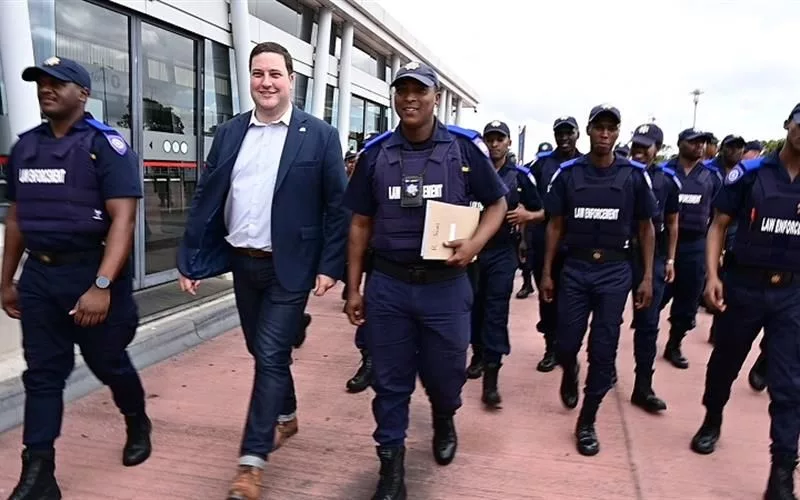
On October 23, 2023, City Mayor Geordin Hill-Lewis announced the establishment of the Public Transport Facilities Safety Team at the Mitchells Plain Town Centre. This new unit will work alongside the Transport Enforcement Unit to protect public transport interchanges and facilities throughout the city. The deployment of the team will be guided by data analysis from the City’s Public Transport Department, pinpointing areas that need immediate safety and security interventions.
At present, the Transport Enforcement Unit has assigned officers to various public transport interchanges, including Bellville, the Station Deck in Cape Town’s central business district, and Joe Gqabi. Once fully trained, the new roving Public Transport Safety Team will be sent to other locations as needed, guaranteeing comprehensive safety and security coverage across the city.
Responsibilities of the Public Transport Safety Team
Mayoral Committee Member for Safety and Security, Alderman JP Smith, detailed the team’s responsibilities, which consist of foot patrols at public transport facilities and inspections to prevent drug trafficking, ensure organized informal trading, and address by-law violations. The officers will have the power to make arrests and issue fines, working closely with colleagues from the Transport Enforcement Unit, Traffic Services, and Law Enforcement.
The City’s recently approved Comprehensive Integrated Transport Plan (CITP) underscores the extent of public transport usage in the region, revealing that 22% of commuters depend on minibus-taxi services, while an additional 9% utilize bus services such as GABS, MyCiTi, and Sibanye. Consequently, nearly one-third of commuters rely on public transport facilities for their daily journeys and other essential trips.
Given the substantial number of people relying on public transport services, Mayoral Committee Member for Urban Mobility, Councillor Rob Quintas, stressed the importance of providing a safe and orderly environment for commuters. He is confident that having officers actively patrolling and preventing crime will significantly improve commuters’ perception of safety.
Collaboration and Support for Enhanced Public Transport Safety
Quintas encouraged the collaboration and cooperation of commuters and operators, asking them to work in partnership with the officers to ensure the safe movement of Capetonians. Similarly, Western Cape Minister of Mobility Ricardo Mackenzie emphasized the significance of secure public transport facilities in fostering economic activity and guaranteeing the efficient mobility of the workforce.
This collaboration between the City’s Transport Enforcement Unit and the Western Cape Mobility Department represents a significant advancement in addressing safety and security issues at public transport facilities. By stationing the Public Transport Facilities Safety Team in high-risk locations and actively patrolling the premises, the city is taking a proactive approach to foster a safer, more secure environment for urban commuters and transport operators alike.
As the Public Transport Safety Team begins its work, it is imperative that all stakeholders—commuters, operators, and authorities—collaborate and support this initiative. In doing so, they will contribute to the development of a safer and more efficient public transport system, ultimately benefiting the entire community.