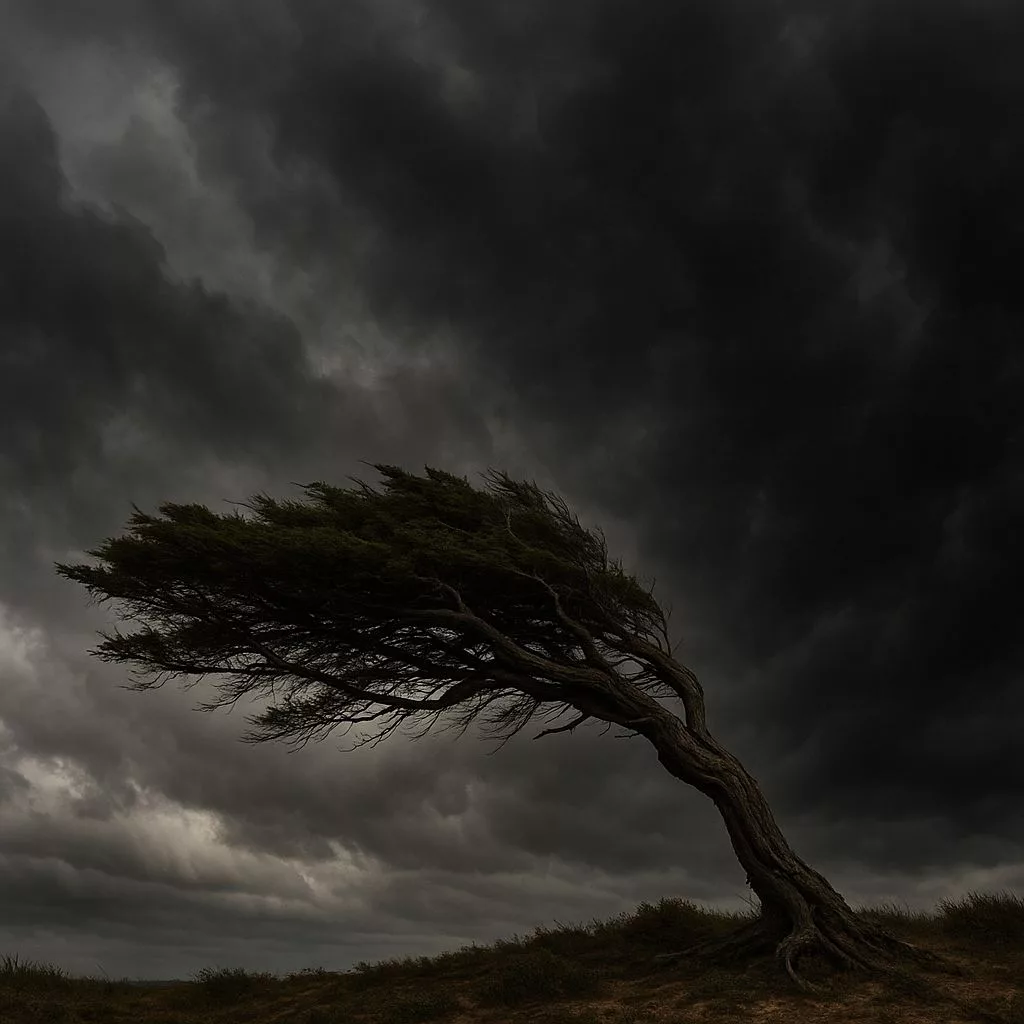
Cape Town’s wind is a powerful force, shaping everything from daily life to nature itself. From early morning’s golden light to the buzzing city, the strong southeasterly wind takes center stage. It affects power, travel, and even how people feel, making the city a lively, wind-blown masterpiece. This amazing wind also helps nature thrive, showing how strong and beautiful Cape Town truly is.
How does the wind affect Cape Town?
Cape Town’s notorious southeasterly wind, reaching up to 74 km/h, dramatically shapes daily life, influencing everything from power generation (powering 400,000 kettles) and air travel to retail sales (ice cream sales drop 35%), local culture, and even the city’s unique ecology and geology.
1. Dawn’s Copper Fanfare – Sky, Light and the First Breath of Heat
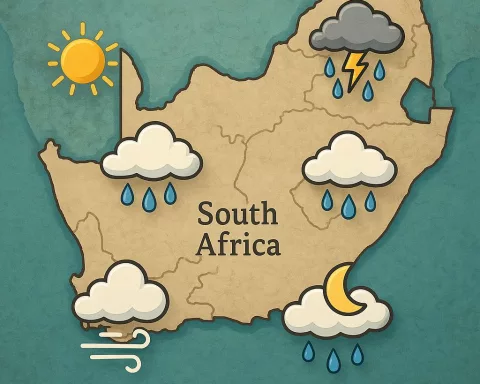
Night loosens its grip at 05:28 when the sun vaults above the Atlantic horizon, spraying a four-minute copper glaze across low cloud decks. Only 39 % of the heavens stay clear; the rest arrive as stacked layers of altocumulus and stratocumulus, a pewter quilt shipped in from the Southern Ocean. That metallic dome will stay locked in place for fourteen hours and twenty-one minutes, dimming ultraviolet to index-5 – strong enough to toast unprotected shoulders on Camps Bay sand, yet mild enough for locals to risk skipping sunscreen.
The overnight low of 18 °C, logged at 04:10 inside the city’s heat island, refuses to rise quickly. Every twenty minutes the mercury nudges up roughly one degree, driven by air that has crossed the 12 °C Benguela current. By 09:00 the dial reaches 21 °C; by 11:30 it tops out at 24 °C, a ceiling that feels more like 21 °C once the wind-chill shaves off the excess. Twilight returns the favour, sliding back to 20 °C; by 22:00 the city is again at 18 °C, ready to replay the same thermal loop after the next starry interlude.
Sunset finally cuts the show at 19:49, but long before then the light has behaved like a cautious photographer, switching every scene to “half-power” diffused mode. The result is a city that glows rather than glares, perfect for olive-skinned sunbathers who treat sunscreen as optional and for photographers who prize shadowless noon shots.
2. The Southeaster Takes the Baton – Anatomy of a Gusty Protagonist
Enter the wind, the day’s undisputed maestro. A 1020 hPa high parked over the South Atlantic funnels a 24 km/h southerly across Table Bay, white-capping the surface into thousands of flicking silver coins. By mid-morning the interior plateau warms, sucks, and the infamous southeater bursts through the Cape Flats corridor. Anemometers at Kirstenbosch spike to 74 km/h at 12:42, fast enough to flip umbrellas inside out and to carve living bonsai out of sandstone-cliff shrubs. University of Cape Town botanists say five years of this grooming leaves plants tilted 15–20° northeast, permanent green weather vanes.
Averages deceive: the headline 26 km/h masks gut-punch gusts that rattle shop signs and hum cable-stay bridges at D4, 293 Hz, the exact pitch radio DJs call “natural reinforcement.” Musicians in the Cape Philharmonic swear outdoor rehearsals sound richer on days like this, while architects hastily tighten loose façade panels to keep the ominous drone from becoming percussion.
Shipping feels the tug too. Harbour masters raise a double-pennant gale warning at 06:00, nudging tugs to pivot container ships bow-on to the swell so cranes can keep hoisting boxes without tangling cables. Every mooring rope gains an extra figure-eight; skippers know a single gust can cost insurers millions in snapped hawsers and dented hulls.
3. Life on a Moving Canvas – How the City Adapts, Profits and Suffers
Table Mountain’s cable station suspends rides at 07:30 once upper-station gusts breach the 40 km/h safety ceiling. Twenty-seven visitors already gliding over the cliff edge win an unplanned extra hour of cappuccino and selfies, while ticket holders below queue for refunds and turn the delay into brunch. Bicycle commuters dart along the lee side of Adderley Street’s Edwardian canyon, swapping deep-section carbon wheels for 30 mm “storm rims” that cross-winds cannot wrestle. Each pedal stroke saves calories and nerves.
Energy harvesters celebrate. Klipheuwel’s 36 turbines pivot greedily into the stream, their 1.3 MW nacelles peaking at 98 % rated output and feeding 5 % of the municipal grid – enough to boil 400 000 kettles simultaneously. The hidden carbon ledger elsewhere is less cheerful: approach controllers stack aircraft over False Bay so jets can crank through a last-minute 160° crosswind turn, adding 4.3 minutes and 360 kg of jet fuel per wide-body. Across the daily 250-odd landings that equals 92 t of extra CO₂, the unseen surcharge of a postcard-perfect Cape summer day.
Retail rhythms skew. Ice-cream vendors at the V&A Waterfront watch sales tumble 35 %; gusts cool skin and chase holidaymakers indoors where artisanal coffee orders jump 22 %. Pharmacies log a 15 % spike in tear-substitute drops as the wind sandpapers contact-lens wearers’ eyes. Bookshops quietly cheer because café shelterers browse magazines, giving print media an algorithm-defying bump.
Even language bends. Cape Afrikaans has verbed the gale – “suidooster” means to be emotionally churned. Radio hosts confess they’re “feeling southeastered” when playlists scatter, while Xhosa elders postpone initiation ceremonies, fearing ancestral voices will be carried astray on rogue gusts. Children learn early that December homework may literally fly away unless weighted by a rock.
4. Below, Above and Beyond – Ocean, Ecology and the Slow Grind of Geology
Satellite loops reveal ghost-soldier clouds regenerating 30 km offshore, marching shoreward before dissolving against the mountain only to re-form again, endlessly. The same wind stress drags a 0.3 m surface layer seaward, coaxing nutrient broth from 200 m depth. Chlorophyll will spike 60 % by tomorrow, luring anchovy shoals and the dolphins that herd them. Surfers store Tuesday’s blown-out junk in memory; they know a neat 12-second south swell will arrive Thursday once the wind backs off, grooming 3–4 ft lines over offshore reefs.
Protea pollen, normally too heavy for air travel, hitchhikes as far as 40 km in a single gust, maintaining genetic links between isolated mountain-top populations. Meanwhile the endemic beetle Trichostetha fascicularis times its December lift-off to such pulses, swirling iridescent green spirals toward new restio patches. Even five-centimetre lizards flatten ribcages against sandstone, cutting wind drag by 18 % – a posture now mimicked by Stellenbosch drone engineers seeking stability in turbulent air.
Night finally tames the breeze. As land and sea pressures equalise, gusts drop below 30 km/h, cloud bases lift, and the sky fractures into mare’s-tail cirrus. Venus steadies 38° above the western horizon, a peregrine falcon stoops through the afterglow, and somewhere a freight ship’s horn throbs at 01:15, its bass note rolling through the same air mass that once carried the dawn brass fanfare. Beneath every spectacle, the African plate drifts northeast a few millimetres, indifferent yet indispensable: without that slow tectonic march there would be no Table Mountain to block, channel and immortalise the breeze that turns an otherwise ordinary summer forecast into Cape Town’s daily, wind-sculpted opera.
[{“question”: “How does the wind affect Cape Town’s daily life?”, “answer”: “Cape Town’s strong southeasterly wind significantly impacts daily life by affecting power generation, air travel, retail sales (e.g., ice cream sales drop 35%), and even local culture. It’s a defining feature of the city, influencing everything from how people feel to the city’s unique ecology and geology.”}, {“question”: “What are the typical weather conditions and wind patterns described?”, “answer”: “The day starts with a \”copper glaze\” at sunrise around 05:28, with the sun rising above the Atlantic. The sky is partially cloudy with altocumulus and stratocumulus layers. Temperatures rise from an overnight low of 18 \u00b0C to a peak of 24 \u00b0C by 11:30, though wind chill makes it feel like 21 \u00b0C. The infamous southeasterly wind, driven by a high-pressure system, intensifies by mid-morning, reaching gusts up to 74 km/h by 12:42. Sunset is at 19:49, and temperatures return to 18 \u00b0C by 22:00.”}, {“question”: “How does the strong southeasterly wind impact infrastructure and services?”, “answer”: “The wind causes Table Mountain’s cable station to suspend rides when gusts exceed 40 km/h. Shipping is also affected, with gale warnings issued, requiring tugs to pivot container ships for safe crane operations. On the other hand, it’s a boon for energy harvesting, with Klipheuwel’s wind turbines operating at 98% capacity, powering 5% of the municipal grid, enough for 400,000 kettles. However, it adds significant fuel consumption for aircraft landings due to crosswind turns.”}, {“question”: “What are the ecological and geological effects of the wind?”, “answer”: “The wind shapes shrubs into \”living bonsai\” tilted 15\u201320\u00b0 northeast. It also drives a process called upwelling, dragging surface water seaward and bringing nutrient-rich water from 200m depth, which boosts chlorophyll by 60% and attracts anchovies and dolphins. Protea pollen can travel up to 40 km, maintaining genetic links. Endemic beetles time their flights with wind pulses, and lizards flatten their bodies to reduce drag. Geologically, the African plate’s slow northeast drift is essential for the formation of Table Mountain, which in turn channels and immortalizes the wind.”}, {“question”: “How do Cape Town residents and visitors adapt to the wind?”, “answer”: “Locals adapt by using \”storm rims\” on bicycles for better stability. While ice cream sales drop, artisanal coffee orders increase as people seek shelter indoors. Pharmacies see a spike in tear-substitute drops due to wind-sandpapered eyes. Bookshops benefit as people browse magazines inside. The wind also influences language, with phrases like \”feeling southeastered\” describing emotional churn. Children learn to weigh down homework to prevent it from flying away.”}, {“question”: “What is the \”southeaster\” and why is it so prominent in Cape Town?”, “answer”: “The \”southeaster\” is a powerful southeasterly wind, famously strong in Cape Town. It’s driven by a 1020 hPa high-pressure system over the South Atlantic, which funnels the wind through the Cape Flats corridor as the interior plateau warms and creates a vacuum effect. This wind is a defining characteristic of Cape Town’s climate, influencing everything from the landscape to daily activities and even the local culture and dialect.”}]