Cape Town’s #SpringCleanCT Drive is an annual campaign that urges citizens to take responsibility for maintaining the cleanliness of their city. The campaign includes a toll-free hotline to report illegal dumping, incentives for information leading to arrests, and a focus on the anti-litter mascot Bingo. Mayor Hill-Lewis issued a rallying call to the public to get involved in keeping the city sparkling clean and preserving the environment for the upcoming tourist season. The drive embodies community spirit, environmental guardianship, and a commitment to sustainability.
What is Cape Town’s #SpringCleanCT Drive?
Cape Town’s #SpringCleanCT Drive is an annual campaign that encourages residents to take an active role in maintaining the cleanliness of their city. With a toll-free hotline to report instances of illegal dumping, incentives are offered for information leading to arrests. The campaign seeks to foster a culture that values cleanliness and order while instilling a sense of city pride. The initiative also extends to the digital world, with residents showcasing their contributions on social media platforms.
Launching the Campaign
As the first blush of spring touched Cape Town, Mayor Geordin Hill-Lewis and Alderman Grant Twigg, the chief executive of the Urban Waste Management Committee, inaugurated the annual Spring Clean Cape Town initiative. The lively Blue Downs neighborhood provided the backdrop to this year’s grand opening, signalling the commencement of a cleaning crusade that would span the entire city.
The campaign, known by the hashtag #SpringCleanCT, calls upon the city’s residents to take an active role in maintaining the cleanliness of their city. The city council encourages each citizen to contribute to the cleanliness of Cape Town, whether by picking up litter or arranging community cleaning gatherings, to ensure the city remains clean, lively, and habitable.
With a goal to combat illegal dumping, the city has set up a round-the-clock, toll-free hotline. Residents can use the number 0800 110077 to report instances of illegal dumping, with incentives offered for information leading to arrests. This measure represents an active approach to prevent environmental damage and nurture a shared responsibility among the citizens.
Shining Spotlight on Bingo
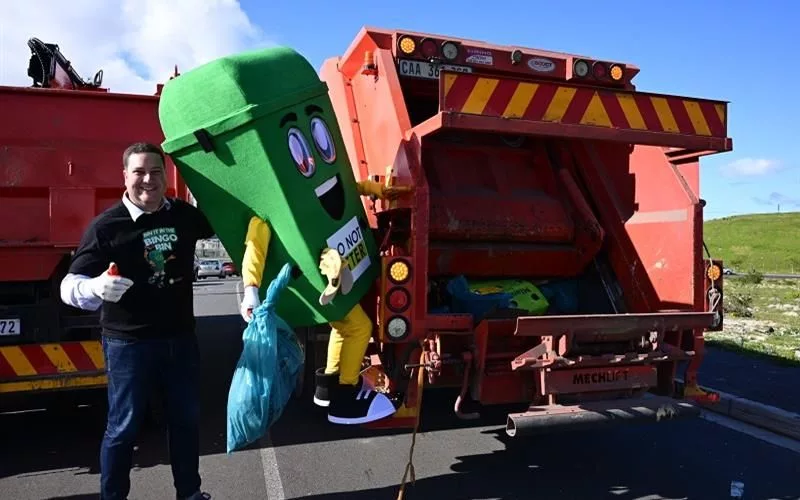
This year’s focus is on Bingo, the city’s anti-litter mascot. In an effort to spread the anti-littering message among varied demographics, Bingo is set to embark on a tour of the city, visiting schools, shopping centers, and city intersections. Bingo, designed as a tangible representation of the city’s green litter bins dispersed throughout Cape Town, is a creative way to remind citizens to dispose of their waste responsibly.
The Spring Clean Cape Town Initiative aims to do more than just cleaning up the city. The campaign seeks to foster a culture that abhors littering and values cleanliness and order. Furthermore, it aims to instill a sense of city pride among the residents of Cape Town, making the city immaculate and inviting as it prepares for the peak tourist season.
Mayor’s Message
In a rallying call to the public, Mayor Hill-Lewis said, “Let’s get our communities, parks, streets, waterways, and beaches looking sparkling clean this spring.” This call to action is not only reflective of Cape Town’s community spirit, but it also signals the city’s dedication to preserving the environment and attracting tourists to its unspoiled landscapes.
This year, Cape Town’s residents, educational institutions, businesses, and civil organisations joined forces to clear nearly 200,000 extra bags of litter. This impressive endeavor underscores the effectiveness of the campaign in previous years. However, Alderman Twigg has challenged the citizens to surpass past waste collection records in this year’s drive, emphasizing the council’s resolve to maintain cleanliness in anticipation of the tourist season.
Beyond the Campaign
The city has also continued to invest substantially in urban waste management. Over the upcoming three years, around R580 million will be allocated for new garbage collection vehicles and processing plants, ensuring consistent services. Additionally, the city plans to invest about R160 million in waste recycling and reduction initiatives. An extra R252 million is set to be allocated towards door-to-door waste collection and area cleaning in informal settlements in the upcoming year.
The campaign also extends to the digital world. Residents of Cape Town are urged to showcase their #SpringCleanCT contributions on social media platforms, using the campaign’s official hashtag. These online exchanges create a virtual community that collectively champions a cleaner city. Be it Twitter, Facebook, or email, the spirit of the campaign is echoed on various digital platforms, promoting cleanliness and community pride further.
Fundamentally, the #SpringCleanCT campaign is more than just an annual cleaning activity. It embodies community spirit, environmental guardianship, and a commitment to cleanliness and sustainability from the city of Cape Town. At its heart, it encourages all residents to participate in creating a cleaner, healthier, and more attractive city that not only benefits them but also the numerous visitors drawn to Cape Town’s allure.
1. What is Cape Town’s #SpringCleanCT Drive?
Cape Town’s #SpringCleanCT Drive is an annual campaign that encourages residents to take an active role in maintaining the cleanliness of their city. With a toll-free hotline to report instances of illegal dumping, incentives are offered for information leading to arrests. The campaign seeks to foster a culture that values cleanliness and order while instilling a sense of city pride. The initiative also extends to the digital world, with residents showcasing their contributions on social media platforms.
2. How does the campaign combat illegal dumping?
With a goal to combat illegal dumping, the city has set up a round-the-clock, toll-free hotline. Residents can use the number 0800 110077 to report instances of illegal dumping, with incentives offered for information leading to arrests. This measure represents an active approach to prevent environmental damage and nurture a shared responsibility among the citizens.
3. What is the focus of this year’s campaign?
This year’s focus is on Bingo, the city’s anti-litter mascot. In an effort to spread the anti-littering message among varied demographics, Bingo is set to embark on a tour of the city, visiting schools, shopping centers, and city intersections. Bingo, designed as a tangible representation of the city’s green litter bins dispersed throughout Cape Town, is a creative way to remind citizens to dispose of their waste responsibly.
4. What is the Mayor’s message regarding the campaign?
In a rallying call to the public, Mayor Hill-Lewis said, “Let’s get our communities, parks, streets, waterways, and beaches looking sparkling clean this spring.” This call to action is not only reflective of Cape Town’s community spirit, but it also signals the city’s dedication to preserving the environment and attracting tourists to its unspoiled landscapes.
5. How is the city investing in waste management?
The city has continued to invest substantially in urban waste management. Over the upcoming three years, around R580 million will be allocated for new garbage collection vehicles and processing plants, ensuring consistent services. Additionally, the city plans to invest about R160 million in waste recycling and reduction initiatives. An extra R252 million is set to be allocated towards door-to-door waste collection and area cleaning in informal settlements in the upcoming year.
6. How can residents participate in the campaign digitally?
Residents of Cape Town are urged to showcase their #SpringCleanCT contributions on social media platforms, using the campaign’s official hashtag. These online exchanges create a virtual community that collectively champions a cleaner city. Be it Twitter, Facebook, or email, the spirit of the campaign is echoed on various digital platforms, promoting cleanliness and community pride further.