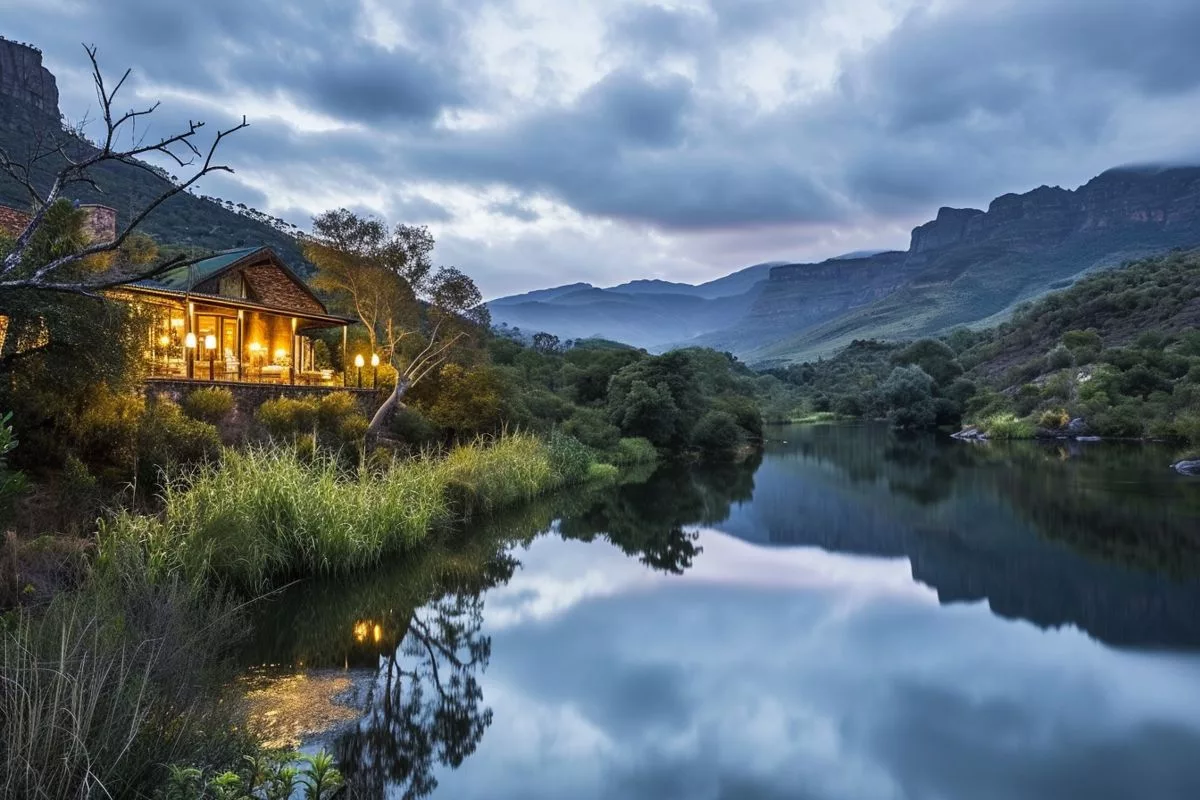
Wolwekloof Resort, located near Ceres in the Witzenberg Municipality, was once a sanctuary for people of colour during the apartheid era. Now, CapeNature is investing R3.7 million to restore and renovate the resort, while maintaining its historical authenticity. The project includes the construction of new pool areas, fences, barbecue areas, and walkways to create a nature sanctuary for visitors to relax and create beautiful memories. In addition to revitalizing the local community, the resort has become an important contributor to the national economy and part of the National Department of Tourism and CapeNature partnership, providing a multitude of travel options for holidaymakers.
Wolwekloof Resort: A Beacon of Historical Relevance and Renewal
Discover the transformation of Wolwekloof Resort from a sanctuary for individuals of colour during the apartheid era to a nature sanctuary for visitors to relax and create beautiful memories with their loved ones. CapeNature’s R3.7 million restoration project aims to retain the historical authenticity of Wolwekloof while augmenting the visitor experience by renovating the existing pools, constructing new pool areas, installing fences, creating new barbecue areas, and constructing walkways. The resort has become an important contributor to the national economy and part of the National Department of Tourism and CapeNature partnership, providing a multitude of travel options for holidaymakers.
A Significant Past and a Promising Future
The Wolwekloof Resort, tucked away near Ceres in the Witzenberg Municipality, holds a substantial historical importance. Its past is notably marked by the apartheid era, functioning as a sanctuary for individuals of colour during times of societal upheaval. The resort, established in the far-off year of 1978, primarily attracted visitors from the Cape Flats and the neighbouring Wolwekloof communities.
However, the resort experienced a period of uncertainty when it was no longer open to the public and was occupied by different government departments and non-profit organizations. The tides changed for Wolwekloof when CapeNature, the biodiversity conservation authority, took over its administration. This marked the beginning of a new era for the resort.
The Restoration Journey
Upon assuming control, CapeNature began working towards reviving the resort’s former grandeur. A significant financial endeavour estimated at R3.7 million was launched to breathe new life into the site. This project, generously backed by the department, endeavours to retain the historical authenticity of Wolwekloof while augmenting the visitor experience.
Included in the project are a variety of tasks such as renovating the existing pools, constructing a new pool area, installing fences around pools, creating new barbecue areas, and constructing walkways. The overall objective is to transform the site into a nature sanctuary, where visitors can relax and create beautiful memories with their loved ones.
An Economic Booster and a Tourism Hotspot
In addition to revitalizing the local community, the resort has become an important contributor to the national economy. Tourism is an integral part of our flourishing economy, injecting billions annually and providing numerous jobs. Tourism Minister Patricia de Lille underscored the necessity of diversifying our tourism offerings to attract and welcome more tourists.
The synergy between CapeNature and the National Department of Tourism (NDT) has played a critical role in restoring Wolwekloof Resort’s prominence as a tourist destination. This cooperative effort not only bears witness to the potency of partnership but also exemplifies how collaboration can significantly propel the local tourism economy. The resort is one among five tourism projects under the NDT CapeNature partnership, providing a multitude of travel options for holidaymakers.
Broadening the Scope
The revival of the Wolwekloof Resort is part of the department’s provincially funded state-owned assets maintenance program. This scheme collaborates with the Development Bank of Southern Africa, which has taken on the responsibility to execute and oversee numerous infrastructure projects across the nation. The agenda includes the maintenance and improvement of provincial state-owned attractions as an element of the Presidential Employment Stimulus Programme.
As we gaze into the future, we are eager to witness the public unveiling of Wolwekloof Resort in 2024. This event will undoubtedly usher in a new era in the resort’s chronicle, one that pledges a harmonious blend of historical importance, natural splendour, and rejuvenated infrastructure. Thus, we not only anticipate tranquil pools, tasteful barbecue areas, and serene walkways, but we also look forward to its contribution to the national economy, job creation, and the preservation of our collective historical heritage.
1. What is the history behind Wolwekloof Resort?
Wolwekloof Resort was once a sanctuary for people of colour during the apartheid era. It primarily attracted visitors from the Cape Flats and the neighbouring Wolwekloof communities.
2. Who is investing in the restoration of Wolwekloof Resort?
CapeNature is investing R3.7 million to restore and renovate the resort while maintaining its historical authenticity.
3. What is included in the restoration project?
The restoration project includes the construction of new pool areas, fences, barbecue areas, and walkways to create a nature sanctuary for visitors to relax and create beautiful memories.
4. What is the significance of the Wolwekloof Resort to the national economy?
The Wolwekloof Resort has become an important contributor to the national economy and part of the National Department of Tourism and CapeNature partnership, providing a multitude of travel options for holidaymakers.
5. What is the scope of the provincially funded state-owned assets maintenance program?
The provincially funded state-owned assets maintenance program aims to maintain and improve provincial state-owned attractions as an element of the Presidential Employment Stimulus Programme.
6. When can we expect the public unveiling of Wolwekloof Resort?
The public unveiling of Wolwekloof Resort is expected to take place in 2024.