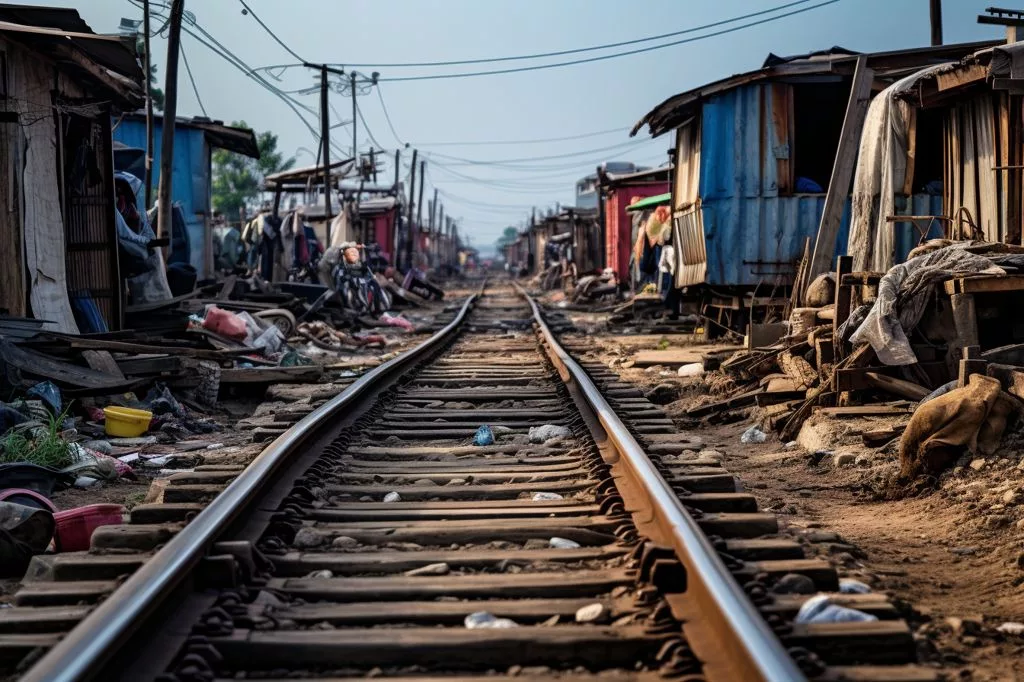
The shutdown of Cape Town’s Central Line due to theft and vandalism has resulted in households settling on the rail reserve, posing challenges for their relocation. Despite over 1,250 families being temporarily moved, finding permanent relocation land remains difficult due to the estimated cost of R117 million and challenges in land acquisition. Conversations with the National Treasury indicate that funding may be obtained during the mid-term budget adjustment, but securing land for the permanent relocation of households presents another obstacle. The project’s primary risk factor is the time required to finalize permanent housing, with communities seeking assurances regarding their eventual relocation.
What are the challenges facing the relocation of households on Cape Town’s Central Line?
The shut down of Cape Town’s Central Line due to theft and vandalism resulted in households settling on the rail reserve. While some families have been temporarily relocated, finding permanent relocation land remains difficult due to the estimated cost of R117 million and challenges in land acquisition. The project’s primary risk factor is the time required to finalize permanent housing, with communities seeking assurances regarding their eventual relocation.
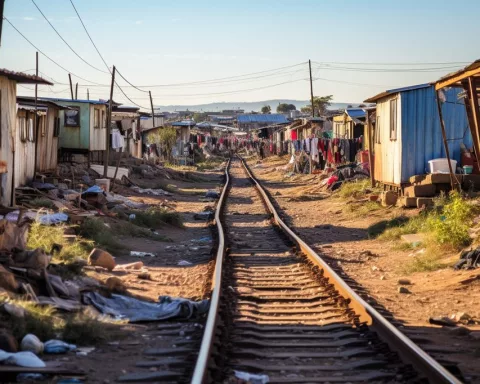
Cape Town, South Africa’s Central Line, is experiencing difficulties in reestablishing rail services and moving families who have settled on the line. The line was shut down in October 2019 as a result of theft and vandalism, with numerous shacks constructed on the rail reserve during the Covid-19 lockdown in 2020. Although the rail service is slated to partially restart in March of next year, the long-term relocation of households continues to be a significant issue.
Meeting the Parliament’s Standing Committee on Public Accounts
During a session of the Parliament’s Standing Committee on Public Accounts (SCOPA), it was discovered that approximately 4,000 households were situated on PRASA-owned property beyond Nyanga in Philippi. To date, over 1,250 families have been temporarily relocated, allowing the rail line to be restored as far as Nyanga. Finding land for permanent relocation, on the other hand, remains a formidable challenge.
Ndumiso Mkhwanazi, the Housing Development Agency (HDA) provincial head, informed SCOPA that R117 million is required to permanently move Langa families. Additionally, 3,941 households are situated on PRASA land in Philippi and Khayelitsha. As an interim measure, 891 households will be relocated to land adjacent to the Stock Road railway station in Philippi. The rezoning process for the Langa families’ permanent relocation site is expected to be completed by March of next year, with the project’s anticipated completion in February 2025.
Challenges in Permanent Relocation and Land Acquisition
Securing land for the permanent relocation of the Philippi and Khayelitsha households presents another obstacle, with an estimated R50 million needed for land acquisition. Conversations with the National Treasury indicate that funding may be obtained during the mid-term budget adjustment. However, the time required to finalize permanent housing is the project’s primary risk factor, as communities seek assurances regarding their eventual relocation.
PRASA and HDA are anticipated to enter into a funding agreement to cover costs associated with land acquisition, which includes the reimbursement of R12.7 million provided by the HDA and the estimated R50 million required for the second phase of land acquisition. In the end, the land will be transferred to the City to facilitate basic service provision.
Meanwhile, the land at the Stock Road station is being evaluated for temporary housing suitability, and the relocation of the remaining families along the rail line has yet to be discussed. PRASA CEO Hishaam Emeran stated that they had conducted detailed discussions with ward residents and contractors, discussing job opportunities and resuming work on the Philippi station. Moreover, the City of Cape Town has agreed to provide services to the temporary relocation site.
SCOPA’s Future Assessments and Land Acquisition Disputes
SCOPA will reconvene in November to assess the project’s progress. A disagreement has arisen over land acquisition, with the City of Cape Town returning R50 million provided by the Department of Human Settlements for land acquisition, stating that they could not spend the funds within the two months remaining in the fiscal year. The Department of Cooperative Governance and Traditional Affairs is mediating the issue, with an intergovernmental meeting taking place on 18 September to address the matter. The human settlements department agreed to approach the treasury for the R50 million “that was lost,” but the treasury has not yet supported the request.
The revival of the Central Line and the relocation of households along the line emphasize the complex challenges faced by local authorities in balancing development, relocation, and community concerns. As the project progresses, it is essential to keep local communities informed, engaged, and reassured about their long-term housing prospects.
1. What led to the shutdown of Cape Town’s Central Line?
The shutdown of Cape Town’s Central Line was due to theft and vandalism.
2. What challenges have arisen due to the shutdown of Cape Town’s Central Line?
The shutdown of Cape Town’s Central Line has resulted in households settling on the rail reserve, posing challenges for their relocation. Finding permanent relocation land remains difficult due to the estimated cost of R117 million and challenges in land acquisition.
3. How many families have been temporarily relocated due to the shutdown of Cape Town’s Central Line?
Over 1,250 families have been temporarily relocated so far.
4. What is the estimated cost of relocating Langa families permanently?
The estimated cost of permanently moving Langa families is R117 million.
5. How many households are situated on PRASA-owned property beyond Nyanga in Philippi?
Approximately 4,000 households are situated on PRASA-owned property beyond Nyanga in Philippi.
6. What is the estimated cost of land acquisition for the permanent relocation of Philippi and Khayelitsha households?
The estimated cost of land acquisition for the permanent relocation of Philippi and Khayelitsha households is R50 million.
7. What is the primary risk factor of the project?
The primary risk factor of the project is the time required to finalize permanent housing, with communities seeking assurances regarding their eventual relocation.
8. What is the role of SCOPA in the Central Line project?
SCOPA (Parliament’s Standing Committee on Public Accounts) is responsible for assessing the progress of the Central Line project. They will reconvene in November to assess the project’s progress.