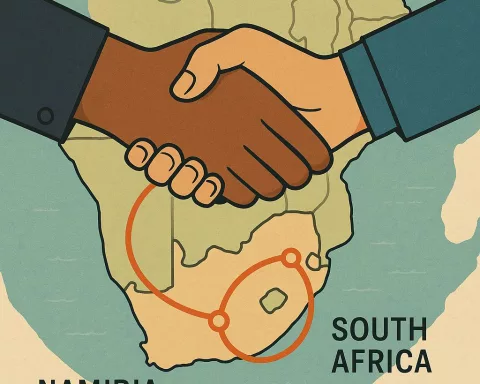
Starlink’s rumored arrival in South Africa has sparked fierce debate, mainly because the EFF fears it might bypass important laws meant to empower Black South Africans and protect the nation’s independence. While Starlink promises fast internet, especially for rural areas hungry for better connections, critics worry it could bring foreign control and damage South Africa’s hard-won social justice. The EFF accuses the government of rushing deals that favor global companies over the people’s rights. This clash reveals a deeper struggle: how South Africa balances new technology with its history and fight for true equality.
What is the controversy surrounding Starlink’s rumored entry into South Africa?
The controversy centers on concerns that Starlink’s entry could bypass South Africa’s Black Economic Empowerment (BEE) laws, threatening national sovereignty. The EFF opposes regulatory easing, fearing foreign influence may undermine democratic processes and social justice efforts in the country.
The Controversy Unfolds
In early May 2024, South Africa’s political climate faced a fresh storm of debate. News broke that President Cyril Ramaphosa might try to ease regulatory requirements for Starlink, Elon Musk’s ambitious satellite internet network, clearing a path for its entry into the country. The revelation ignited immediate backlash from the Economic Freedom Fighters (EFF), a party renowned for its uncompromising stance on issues of sovereignty, justice, and transformation. To the EFF, such a move signaled not only a breach of due process but a painful echo of old injustices, raising fierce questions about South Africa’s hard-won independence and the role of global business interests in shaping national policy.
The timing heightened tensions. President Ramaphosa traveled to the United States, a nation with a complicated history of both supporting and challenging South Africa’s ongoing project of democracy. Against this backdrop, rumors swirled that Starlink’s impending arrival signaled a deeper shift – one that risked swapping national aspirations for global profit. For many observers, the debate crystallized a broader struggle: South Africa’s attempt to balance its post-apartheid narrative with the demands and temptations of international capital.
Starlink’s global reputation as a harbinger of technological progress only complicated the discussion. While many see its technology as a way to leap over longstanding obstacles in infrastructure and opportunity, others worry that unchecked foreign influence could sideline the very communities South African policy seeks to uplift.
Starlink, Opportunity, and Uneasy Promises
Elon Musk’s Starlink holds out the promise of rapid, dependable internet delivered straight from a web of satellites circling the globe. This model, designed to reach remote regions where fiber cables and cell towers rarely venture, appeals to millions across South Africa who still live on the wrong side of the digital divide. For rural students longing for quality online lessons and small business owners eager to reach wider markets, Starlink shines as a symbol of hope.
The lure of a fully connected South Africa is powerful. Visionaries imagine classrooms where teachers and students never battle spotty signals, and entrepreneurs in villages connect to global commerce with the same ease as their urban peers. The vision echoes the optimism of the 1990s, when newfound freedom brought a sense that anything was possible for the country’s youth and future economy.
Yet, the dream carries its own complications. New technology rarely arrives in a vacuum. Each innovation stirs up questions about who benefits, who gets left behind, and how best to embrace progress without sacrificing the principles that millions fought to establish. The Starlink debate, therefore, is about more than satellite dishes and download speeds. It is about how South Africa defines its future and who gets to shape that path.
Navigating South Africa’s Regulatory Landscape
Any foreign telecommunications player seeking a foothold in South Africa must navigate a complex regulatory environment. The Independent Communications Authority of South Africa (ICASA) holds the mandate for issuing licenses and ensuring compliance. As recently as March, ICASA stated that Starlink had not initiated the licensing process – highlighting both the importance and difficulty of regulatory approval in the country.
A major hurdle stands in the form of Black Economic Empowerment (BEE) requirements. These policies demand that telecommunications licensees allocate a 30% ownership stake to groups previously sidelined by apartheid. BEE’s purpose reaches beyond economic redress; it aims to alter patterns of ownership and opportunity that have long favored a privileged minority. For international firms like Starlink, these terms can seem stringent. Elon Musk has openly criticized BEE, calling the rules unnecessary and discriminatory. His public frustration has ignited fierce debate about whether South Africa’s attempts at economic justice clash with global business norms or simply reflect a sovereign nation’s right to define its terms.
BEE remains a flashpoint in South African policy and politics. Advocates argue that without hard targets, transformation would stall and old hierarchies would reassert themselves. Detractors counter that BEE sometimes enriches only a small elite, leaving broader inequalities untouched. Nevertheless, the framework stands as a line in the sand, and any move to sidestep it, especially at the behest of foreign corporations, provokes anxiety about eroding national autonomy and reversing social gains.
The EFF’s Fierce Response
The Economic Freedom Fighters responded to the Starlink rumors with unmistakable urgency. Party leaders accused President Ramaphosa of seeking to undermine constitutional order, alleging that he intended to guarantee Starlink’s entry to South Africa as a diplomatic favor to the United States. For the EFF, this was more than a regulatory shortcut – it amounted to a capitulation that placed private interests above the will of the people.
The EFF’s critique draws on a deep well of anti-colonial rhetoric. The party accused Ramaphosa of sacrificing South Africa’s sovereignty to satisfy the ambitions of powerful foreign actors, including Elon Musk and American political leaders like Donald Trump. In their eyes, the president has no right to circumvent Parliament or sideline independent regulators. The Constitution, they argue, is clear: only the legislative branch, not the executive, holds the authority to make decisions of such national significance.
Moreover, the EFF links the Starlink controversy to broader battles over transformative laws like the National Health Insurance Act, the Basic Education Laws Amendment Act, and the Expropriation Act. Each of these statutes represents a milestone in the country’s efforts to address historical injustice and create a more equitable society. For the EFF, any attempt to dilute or bypass this legislative framework signals a betrayal of the very principles the post-apartheid state was built upon.
Sovereignty, History, and the Search for Justice
The EFF’s skepticism did not arise in isolation. South Africa’s journey from colonization to democracy has left a trail of broken promises and ambiguous relationships with foreign investors. From the days when outside interests dominated the nation’s mines and resources, the struggle for economic self-determination has always been intertwined with questions of ownership and control. BEE emerged as an attempt to rewrite these old power dynamics, redistributing opportunity to those once excluded.
Still, the pursuit of transformation has faced criticism. Some argue that BEE enriches a select few rather than the broader population. Despite this, many see the policy as essential, a protective measure against the resurgence of economic colonialism in a new digital form. The specter of Starlink bypassing BEE regulations awakens anxieties not just about missed economic opportunities, but about the erosion of sovereignty and the risk of repeating past mistakes.
Innovation, especially in the tech sector, often enters environments shaped by history and social realities. South Africa’s case is no different. Every new technology carries the potential to either bridge divides or deepen them, depending on how laws and leaders respond to its arrival.
Leadership, Law, and the Risks of Expediency
The debate over Starlink underscores the importance of checks and balances in South Africa’s democracy. The EFF insists that Parliament, not the president or his cabinet, must set the rules for transformative projects. Independent regulators like ICASA exist precisely to ensure that decisions align with the broader public interest, rather than serving private entities or political expediency.
South Africa’s political history is full of moments when leaders, feeling the pressure of international markets or strategic imperatives, have tested the limits of executive power. Each such episode leaves its mark, shaping public trust in institutions and influencing future debates about reform and modernization.
The current controversy thus represents more than a conflict over internet access or investment. It is a vivid reminder that the institutions created to safeguard democracy remain both fragile and essential. The tension between swift modernization and methodical, inclusive policy-making is not new, but in the digital age, the stakes feel higher than ever before.
The Ongoing National Conversation
As South Africans debate Starlink’s possible entry, the conversation extends far beyond technical questions of licensing and regulation. At stake are fundamental questions about self-determination, justice, and the kind of society the country wishes to become. Across townships, universities, and halls of parliament, voices rise to assert that progress must not come at the expense of hard-earned rights and local agency.
Activists, referencing the work of visionaries like Steve Biko and Frantz Fanon, frame the debate as part of a larger movement for dignity and empowerment. Artists, educators, and entrepreneurs each bring their own perspectives, weighing the real benefits of greater connectivity against the memories of exclusion and exploitation. For many, the Starlink saga encapsulates South Africa’s ongoing journey toward a future shaped not just by technology, but by the values forged in its long quest for justice.
Whether Starlink’s entry becomes a story of inclusive progress or a cautionary tale of lost autonomy remains to be seen. For now, the issue stands as a testament to the perpetual struggle to define progress on local terms, ensuring that every promise of innovation serves the collective good and honors the country’s complex history.
FAQ: Starlink’s Rumored Entry into South Africa and the EFF’s Opposition
1. What is the main controversy surrounding Starlink’s rumored entry into South Africa?
The controversy centers on fears that Starlink’s entry might bypass South Africa’s Black Economic Empowerment (BEE) laws, which are designed to empower historically marginalized Black South Africans and protect national sovereignty. The Economic Freedom Fighters (EFF) oppose any regulatory easing that could allow foreign companies like Starlink to operate without complying fully with these transformative policies. They argue that such moves risk undermining democratic processes and social justice efforts.
2. Why does the EFF strongly oppose Starlink’s potential arrival?
The EFF views the rumored government efforts to fast-track Starlink’s licensing as a betrayal of South Africa’s sovereignty and constitutional order. They accuse President Cyril Ramaphosa of prioritizing foreign business interests, particularly those of Elon Musk and American political figures, over South African laws and people’s rights. The EFF emphasizes that Parliament, not the executive, should approve such significant decisions and warns that bypassing laws like BEE threatens the country’s hard-fought social transformation.
3. How does Starlink’s technology promise to benefit South Africa?
Starlink offers high-speed satellite internet designed to reach remote and rural areas where traditional infrastructure like fiber optics and cell towers are lacking. This could help bridge the digital divide by providing reliable internet access to students, entrepreneurs, and communities currently underserved by existing networks. Improved connectivity has the potential to enhance education, commerce, and overall economic opportunity in many parts of South Africa.
4. What is Black Economic Empowerment (BEE), and why is it significant in this debate?
BEE is a set of policies aimed at redressing the economic inequalities created by apartheid by requiring companies, especially in critical sectors like telecommunications, to allocate a percentage of ownership and control to Black South Africans. The policy’s goal is to transform patterns of ownership and create more inclusive economic participation. Critics of Starlink’s entry fear that bypassing BEE would perpetuate historical injustices, while supporters of reform argue that BEE is essential to maintaining South Africa’s sovereignty and social justice commitments.
5. What role does the Independent Communications Authority of South Africa (ICASA) play in Starlink’s potential launch?
ICASA is the regulatory body responsible for issuing licenses to telecommunications operators and ensuring compliance with South African laws, including BEE requirements. As of early 2024, Starlink had not yet started the formal licensing process with ICASA, highlighting the regulatory challenges foreign companies face. ICASA’s involvement is crucial to maintaining transparency, protecting public interest, and enforcing policies that promote local empowerment.
6. How does this debate reflect broader tensions in South Africa’s path toward modernization?
The Starlink controversy encapsulates South Africa’s ongoing struggle to balance rapid technological progress with the need for social justice and sovereignty. While new technologies can bring opportunity, they also raise difficult questions about who benefits and whether change respects the country’s history and hard-won rights. The debate underscores the importance of democratic institutions and inclusive policy-making in shaping a future that honors both innovation and equity.
If you want to learn more about BEE and South African telecommunications regulation, resources from ICASA and government websites provide detailed information on licensing and empowerment policies.