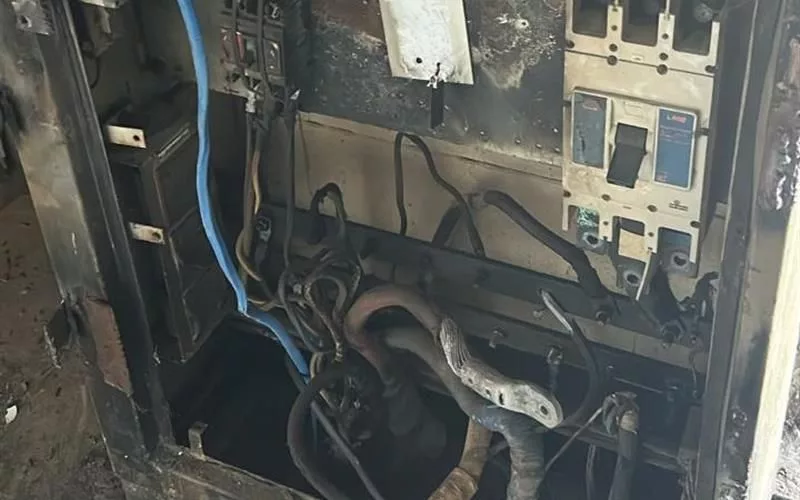
Early one morning in Cape Town’s Tafelsig neighborhood, anger over illegal electricity cuts exploded into violence at the Swartklip Road Pump Station. Attackers smashed cameras, stole power cables, and left the vital sewage pumps broken and silent. This caused dangerous sewage build-up, threatening health and safety for the whole community. The crisis reveals how deep poverty and mistrust can turn essential city services into battlegrounds, showing that fixing pipes and wires isn’t enough without healing the people they serve.
What caused the attack on Cape Town’s Swartklip Road Pump Station and what are its impacts?
The attack on Swartklip Road Pump Station was fueled by tensions over illegal electricity disconnections in Tafelsig. It led to stolen equipment, pump failures, sewage risks, and public health threats. The crisis highlights the deep link between infrastructure, inequality, and community trust in Cape Town.
The Day the Pumps Went Silent
Early one August morning, tension simmered across Tafelsig, a neighborhood accustomed to struggle. At the heart of this community, the [Swartklip Road Pump Station](https://capetown.today/cape-towns-weapon-against-power-cuts-the-steenbras-dam/) pulsed as a critical lifeline, quietly managing the city’s wastewater flow. But on this particular day, the system buckled under more than just sewage – years of frustration, deprivation, and conflict ignited into chaos.
City workers had recently swept through, severing illegal electricity connections strung throughout the area. These makeshift lines, crafted by desperate hands, had delivered light and warmth to homes otherwise left in darkness. For many, they symbolized both resilience and necessity – evidence of a community unwilling to accept exclusion from city services. Yet, for officials, these connections posed grave risks: fires, outages, and constant strain on infrastructure. The city’s cleanup operation, though meticulously planned and preceded by community consultations, felt to some like a direct attack on their survival.
Not long after the last illegal cable was removed, retaliation struck. A group of individuals stormed the pump station, overwhelming the private security guards, who, afraid for their safety, abandoned their posts. The attackers systematically destroyed every CCTV camera around the facility, ensuring no digital record would remain. With grim efficiency, they tore out valuable power cables and stripped equipment, leaving behind a silent, gutted shell. As if to punctuate their message, illegal connections quickly reappeared, restoring power – not to the city’s system, but to the tangled web of unauthorized users.
Roots of Desperation
The violence and destruction that day did not spring from nowhere. Cape Town’s townships, including Tafelsig and Mitchells Plain, have long wrestled with the legacy of inequality. Reliable electricity remains out of reach for countless families, despite official promises. Many residents resort to illegal connections not out of malice, but out of necessity – children need light to study, food must stay cold, and homes require warmth in winter’s chill.
City officials argue their hands are tied. Each illegal wire that taps into the grid increases the risk of fires and outages, not just for those using them but for entire neighborhoods. The pump station itself had already endured repeated outages, each one threatening to unleash raw sewage into homes and streets. The city insists it followed procedure: public meetings, warnings, and engagement with local leaders before any action was taken. Yet, the disconnections still landed as a blow, confirming the suspicion that the city’s priorities lie elsewhere.
This clash mirrors patterns seen in cities worldwide. When people feel ignored or excluded, they often take matters into their own hands. Scholar Mike Davis famously described such urban landscapes as “fortress cities,” where division and distrust fester and erupt around the boundaries of critical infrastructure. In Tafelsig, the struggle for electricity became a struggle for dignity.
Consequences for an Entire Community
The aftermath of the attack on Swartklip Road Pump Station rippled far beyond the facility’s walls. With pumps offline, Mitchells Plain’s sprawling sewage system teetered on the brink of collapse. Wastewater, once safely whisked away, now threatened to surge back into homes, streets, and playgrounds. The specter of disease – cholera, dysentery, and other waterborne threats – loomed ominously over the community.
The financial toll proved staggering. Millions of rands in specialized equipment disappeared overnight. The city, forced into crisis mode, scrambled to organize repairs and prevent a full-scale public health disaster. Authorities offered a R100,000 reward for information leading to the arrest of those responsible and the recovery of stolen assets, and promised anonymity for tipsters to protect them from retaliation.
But technical solutions can only go so far. The rapid restoration of illegal connections after the attack highlighted a vicious cycle – enforcement begets resistance, repairs invite further sabotage, and trust between citizens and officials erodes a bit more each time. The city faced an impossible dilemma: protect its infrastructure at the risk of alienating the very people it serves, or let the system falter and endanger all.
A Crisis of Urban Governance
Public infrastructure has always stood as a symbol of progress and shared purpose. From ancient aqueducts to Victorian-era sewers, societies have expressed their ambitions through the construction of systems meant to serve all. In South Africa, and particularly in the Cape Flats, engineers once dreamed that new waterworks and electrical grids would help erase the divides of the past.
Yet infrastructure is more than steel and concrete – it depends on collective will and social trust. When that trust collapses, even the best-designed systems become fragile. The battered pump station now serves as a monument to this reality. Its ruined state starkly illustrates what happens when policy and lived experience diverge, when a state’s machinery comes to be seen as both lifeline and adversary.
This episode joins a global history of contested infrastructure. From sabotage of colonial railways to the riots and blackouts of 1970s New York, the battle over utilities often becomes a battle over belonging. Artists and writers – South Africa’s William Kentridge and Athol Fugard among them – have long chronicled how ordinary lives intertwine with the machinery of exclusion and control, infusing these events with broader meaning.
Paths Toward Healing and Change
In the wake of destruction, the City of Cape Town faces daunting challenges. Restoring the pumps and replacing stolen cables will require both money and time. More urgent still is the task of rebuilding trust. Officials must move beyond token consultations, engaging deeply with residents to understand the daily realities that drive desperate acts. Only by addressing root causes – poverty, exclusion, and lack of opportunity – can the cycle of sabotage and repair be broken.
For families in Mitchells Plain, the future remains uncertain. Will the next round of repairs bring relief or fresh conflict? Can the city adapt and respond to the needs of those left on the margins, or will infrastructure continue to serve as a flashpoint for anger and division? These questions remain unanswered, suspended in the uneasy twilight between crisis and resolution.
What is clear is that Cape Town’s story is not unique. Cities everywhere must grapple with the hard truths exposed by events like the Swartklip Road attack. The fate of infrastructure, and the communities it serves, will depend not just on engineering or enforcement, but on the difficult work of building a shared sense of purpose in the face of adversity. Only then can the silent machinery beneath our feet return to its proper task – quietly binding the city together, rather than tearing it apart.
FAQ: Cape Town’s Swartklip Road Pump Station Attack and Infrastructure Crisis
1. What triggered the attack on the Swartklip Road Pump Station in Cape Town?
The attack was sparked by anger and frustration over the city’s recent disconnection of illegal electricity connections in the Tafelsig neighborhood. Residents, relying on these unauthorized power lines as a necessity for daily life, perceived the removals as threats to their survival and dignity. This tension escalated into violence, resulting in the destruction and theft of vital pump station equipment.
2. What were the immediate consequences of the pump station attack for the community?
The destruction of equipment and theft of power cables at the pump station caused critical sewage pumps to fail, leading to dangerous sewage build-up in Mitchells Plain. This posed serious public health risks, including potential outbreaks of cholera, dysentery, and other waterborne diseases, while also threatening homes, streets, and public spaces with contamination.
3. Why do residents in areas like Tafelsig rely on illegal electricity connections despite the risks?
Many families in Tafelsig and similar neighborhoods face deep poverty and exclusion from reliable municipal services. Illegal connections provide essential electricity for lighting, cooking, heating, and refrigeration, helping residents meet basic needs. These connections are often viewed as acts of resilience and survival rather than criminal behavior, highlighting systemic inequalities in access to utilities.
4. How has the city responded to the attack and the underlying issues it exposed?
The City of Cape Town has condemned the attack, offered a R100,000 reward for information leading to the perpetrators’ arrest, and committed to repairing the damaged infrastructure. Prior to disconnections, officials conducted community consultations and warnings. However, the cycle of disconnections and sabotage underscores the challenge of enforcing regulations without alienating vulnerable communities. The city recognizes that rebuilding trust and addressing poverty are critical to lasting solutions.
5. What broader lessons does this crisis reveal about urban infrastructure and social trust?
The crisis illustrates that infrastructure is not just physical systems but also social contracts relying on trust and inclusion. When communities feel ignored or excluded, infrastructure can become a site of conflict rather than connection. This phenomenon is seen globally, where marginalized urban populations sometimes resist control measures perceived as unjust, emphasizing the importance of combining engineering solutions with social and economic justice efforts.
6. What steps can help prevent future attacks and improve relations between the city and residents?
Long-term prevention requires more than repairs and enforcement. Authorities must engage deeply with communities to understand their needs and develop inclusive, affordable access to services. Investing in poverty alleviation, dialogue, and participatory governance can reduce desperation and mistrust. Enhancing security at critical infrastructure while fostering collaboration rather than confrontation is key to breaking the cycle of vandalism and improving service delivery.