Cape Town’s firefighters showcased their exceptional strength and perseverance in the annual Toughest Fire Fighters Alive competition, where they competed against over 250 firefighters from more than 20 South African municipalities in a series of challenging time trial courses. Despite the grueling nature of their work, these courageous individuals consistently rise to the challenge, putting their lives on the line to protect their communities. Their remarkable success in the competition underscores their unwavering commitment to public service and provides a beacon of hope in the face of ongoing challenges such as wildfires and other emergencies.

The emergence of the Patriotic Alliance and the increasing influence of opposition parties like the EFF signifies a changing political environment in South Africa. South African municipal byelections in October 2023 saw the ANC and DA hold onto two seats each, but the EFF and Patriotic Alliance won two seats each, reflecting a shift in the political atmosphere. Voter turnout varied, indicating voter apathy or a lack of confidence in the electoral process.
The Special Investigating Unit (SIU) has won two High Court cases regarding the South African Broadcasting Corporation’s R185 million physical security tender. The Court invalidated the interim board’s decision to award the tender to Mafoko Security Patrols Pty Ltd instead of the recommended service provider and dismissed an application by the former interim board to review and nullify an SIU report recommending they be declared delinquent. The SIU welcomed the judgments, stating that they were significant for consequence management and accountability.
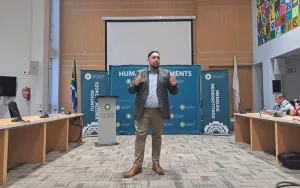
Humanities and Social Sciences are crucial in shaping democratic values, encouraging inclusivity, and enhancing cultural comprehension. Despite the focus on STEM, these fields allow us to connect with different languages, cultures, and value systems to foster crosscultural understanding and respect. Education should prioritize critical thinking skills for meaningful participation in a democratic society. Humanities and Social Sciences have a vital role in transforming societies, embracing diversity, and adapting to technological advancements to enhance human experiences. Supporting these fields at an institutional level enriches policymaking processes, offering options for reimagining the education landscape.
The Department of Police Oversight and Community Safety (POCS) in the Western Cape has achieved its 15th consecutive clean audit, demonstrating its dedication to financial and performance management, governance, and service delivery to its citizens. This remarkable achievement is a testament to the department’s work ethic and commitment to creating safer communities across the Western Cape. The POCS aims to maintain this high level of excellence in their daily operations and reduce the murder rate by half by 2029 while ensuring that residents can live in enhanced, dignified, safe, and peaceful environments.
The Health Sector AntiCorruption Forum (HSACF) is a group of individuals from civil society, private sector, and public sector that work together to prevent corruption and fraud in the health sector. They aim to enhance prevention, detection, civil litigation, and prosecution of corrupt activities in the health sector. The forum has made progress in investigations, but also expressed concern over increasing fraudulent medicolegal claims. The Special Investigations Unit (SIU) has been granted authority to probe allegations of corruption, fraud, and maladministration in the National Department of Health. The HSACF supports the Legal Practice Council (LPC) in removing fraudulent lawyers from the roll of attorneys.
Flash, a scared horse in training, ran down the busy M5 highway in Cape Town during rush hour, causing concern for his safety and that of drivers. The Cape of Good Hope SPCA sprang into action to save Flash, providing first aid before taking him to their horse care facility. Following a remarkable recovery, Flash found a loving and permanent home, highlighting the power of empathy and community spirit in overcoming adversity. His story serves as a poignant testament to the incredible potential for empathy and collaboration within communities.
The Western Cape’s Justice System Struggles: Aiming for Efficiency and Better Policing
The Western Cape’s justice system is facing an increasing number of dismissed cases, particularly those related to genderbased violence. The Court Watching Brief Unit has identified delays in investigations, missing police dockets, and failure to present the accused in court as the main causes for these dismissals. Premier Alan Winde and provincial minister Reagen Allen have highlighted the burden on police officers and the need for a consistently efficient police service. They have also called for a change in SAPS management and emphasized the importance of datadriven strategies to combat crime.
South African President Cyril Ramaphosa calls for an immediate cessation of hostilities and advocates for the establishment of humanitarian corridors to provide aid to those in need. He emphasizes the importance of empathy, understanding, and diplomatic efforts in resolving conflicts and urges the global community to support the peace process. President Ramaphosa also calls for the formation of a viable Palestinian State coexisting with Israel within the 1967 borders.
Fostering Rapid Progress: Kgetlengrivier Local Municipality’s Thuntsha Lerole Initiative
The Thuntsha Lerole Initiative by Kgetlengrivier Local Municipality is a collaborative approach to addressing service delivery issues. The initiative involves various departments and public entities working together to deliver projects such as repairing potholes, providing social support services, empowering womenled projects, and aiding vulnerable groups within the community. The program’s success is attributed to its integrated approach and cooperative governance, which has established the foundation for longterm growth and progress.
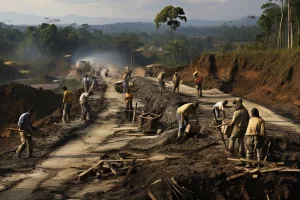
South Africa’s Expanded Public Works Programme (EPWP) is entering a new era with the announcement of the Khawuleza Model, which aims to create over five million new opportunities and focus on enhancing community infrastructure, developing participant skills, and promoting entrepreneurship. The program will prioritize critical national challenges such as road maintenance, waste management, and energy efficiency projects and aims to foster a selfreliant population capable of making meaningful contributions to South Africa’s social and economic landscape. The government also plans to draw inspiration from successful global initiatives and revitalize workshops to offer practical skills and handson experience to participants.
Fostering a Brighter Future: Prioritizing Youth Mental Health as a Fundamental Human Right
The Health Department of Cape Town has launched an awareness program to educate and address the stigma surrounding mental illness among young people. The program is tailored for grade 11 students at Mountview High School in Hanover Park and aims to foster resilience and provide a safe space for those who need it. This initiative is a joint effort between the Hanover Park community and City Health, seeking to address the mental health difficulties faced by young people. Through education, empathy, and a commitment to mental health as a human right, we can create a brighter future for our youth and society as a whole.
A Brighter Future Unfolds: Empowering 20 Mitchells Plain Homeowners with Title Deeds
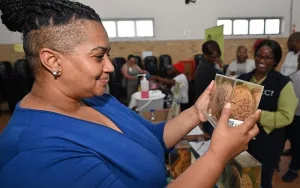
The title deeds initiative in Cape Town provides secure tenure and opportunities to those who need it most. On October 11, 2023, 20 title deeds were presented to beneficiaries of delayed transfer properties in the Mitchells Plain region, unlocking a world of possibilities and a promising future. By bestowing these title deeds, the City enables its citizens as property owners, offering secure tenure and the opportunity to create a life filled with purpose and potential. This program benefits not only individual homeowners but also uplifts communities and fortifies the city’s socioeconomic fabric.
The National Health Council in South Africa is a crucial forum for decisionmakers in the public health system to collaborate and address vital issues impacting the nation’s healthcare. Its goals include launching new vaccines, evaluating the risk of avian influenza infections in humans, widening online birth registrations, and improving maternity and neonatal care guidelines. The council aims to optimize resource distribution and facilitate the effective delivery of health services by addressing challenges such as medicolegal claims and cost containment measures proposed by the National Treasury. Overall, the council’s initiatives signify a leap towards ensuring equitable healthcare for all residents of South Africa.
The Western Cape government in South Africa is working to improve the judicial system by pinpointing areas of inefficiency through the Court Watching Brief Unit (CWB). The CWB focuses on priority courts and its latest statistics showed that police inefficiencies led to 63 cases being recorded, with over 40% being related to genderbased violence. The government is also working to strengthen the South African Police Service (SAPS) through the Law Enforcement Advancement Plan to ensure a safe and prosperous region.
Ditsobotla Local Municipality in South Africa is addressing instability and poor service provision with the Ditsobotla Financial Recovery Plan. The plan aims to revive governance structures, financial management, and service delivery through a threephase approach of rescue, stabilization, and sustainability, with a focus on collaboration. The plan will be executed over at least three years and comprises four key pillars. The intervention team will work to identify and address immediate issues, reinforce governance structures, enhance financial management, and restore crucial services to the community.