Lion’s Head, a beautiful city mountain, becomes a glowing hotbed of danger, especially during peak season. Treacherous paths, extreme heat, and overcrowding lead to frequent accidents and medical emergencies. Hikers often face disorientation, falls, and even death, requiring constant rescues. Despite the risks, many still flock to its slopes, sometimes unprepared, turning a scenic climb into a life-threatening ordeal.
What are the dangers of hiking Lion’s Head?
Lion’s Head poses several dangers, including treacherous paths with sudden drops, extreme heat exposure leading to heatstroke, overcrowding, and inadequate gear. Hikers often face disorientation, falls, and medical emergencies, especially during peak season, necessitating frequent rescues by emergency services.
Dawn: The Rock That Wakes Up Stretching
At first light the quartzite exhales. Between seven and ten the slope swells so fast you can feel the skin of the dome push against your boot-soles, as though the whole 669 m hump is inhaling sunlight and expanding like a lung. Granite tors mutter – tick-tick – while heat ripples rise off the north-west wall and bend the distant city into liquid glass. One wrong step on the cork-screw path and that flex becomes a spring, flinging a body outward.
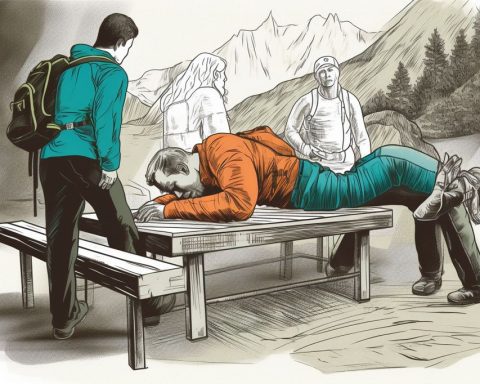
That is exactly what happened last Thursday. A 56-year-old Munich engineer kissed his wife over Sea Point coffee, promised to be back before the toast cooled, then mis-placed a sneaker on the final scramble. He dropped thirty metres, folding around a fynbos tuft so dry it could have flared at the strike of a match. By the time Wilderness Search & Rescue (WSAR) crested the ridge the summit wind carried the scent of sun-baked pine and dusted rooibos; the engineer’s pulse had already joined the mountain’s metronome.
The death register had barely clicked shut when the festive-season counter lurched forward. Lion’s Head does not grow taller in December, yet it gains mass: every extra heartbeat thickens the air, every rubber sole scuffs moisture from the scree, every selfie pause narrows the 60 cm thread of trail into a single-lane choke point with zero slack.
Morning: Rotor-Wash and Radio Code-Words
Friday’s first blade-beat came at 08:12. The British consulate rang Western Cape EMS: a 65-year-old Yorkshire grandmother had slumped on the exact flake that took the German, palms welded to her temples as if holding her skull together. AMS pilot André Bezuidenhout – 1 800 hours of plucking broken bodies off the park – slid a BK-117 beneath the shadow of Signal Hill so rotor wash would not sand-blast the queue inching upward. Her pressure gauge read 210/120; she puked into the O2 mask while the aircraft banked toward Green Point athletics track.
Before the skids cooled, rescuers jogging downhill met a Cape Town trio: Dad in polyester rugby stripes, Mum cradling an empty 500 ml Coke, daughter fifteen and grey with the vertigo that hits when Instagram fantasy collides with real altitude. They were roped down 1944-era staples left by Italian POWs whose cement initials now resemble strips of biltong. Three incidents in twenty-four hours – yet these are considered pre-season tremors.
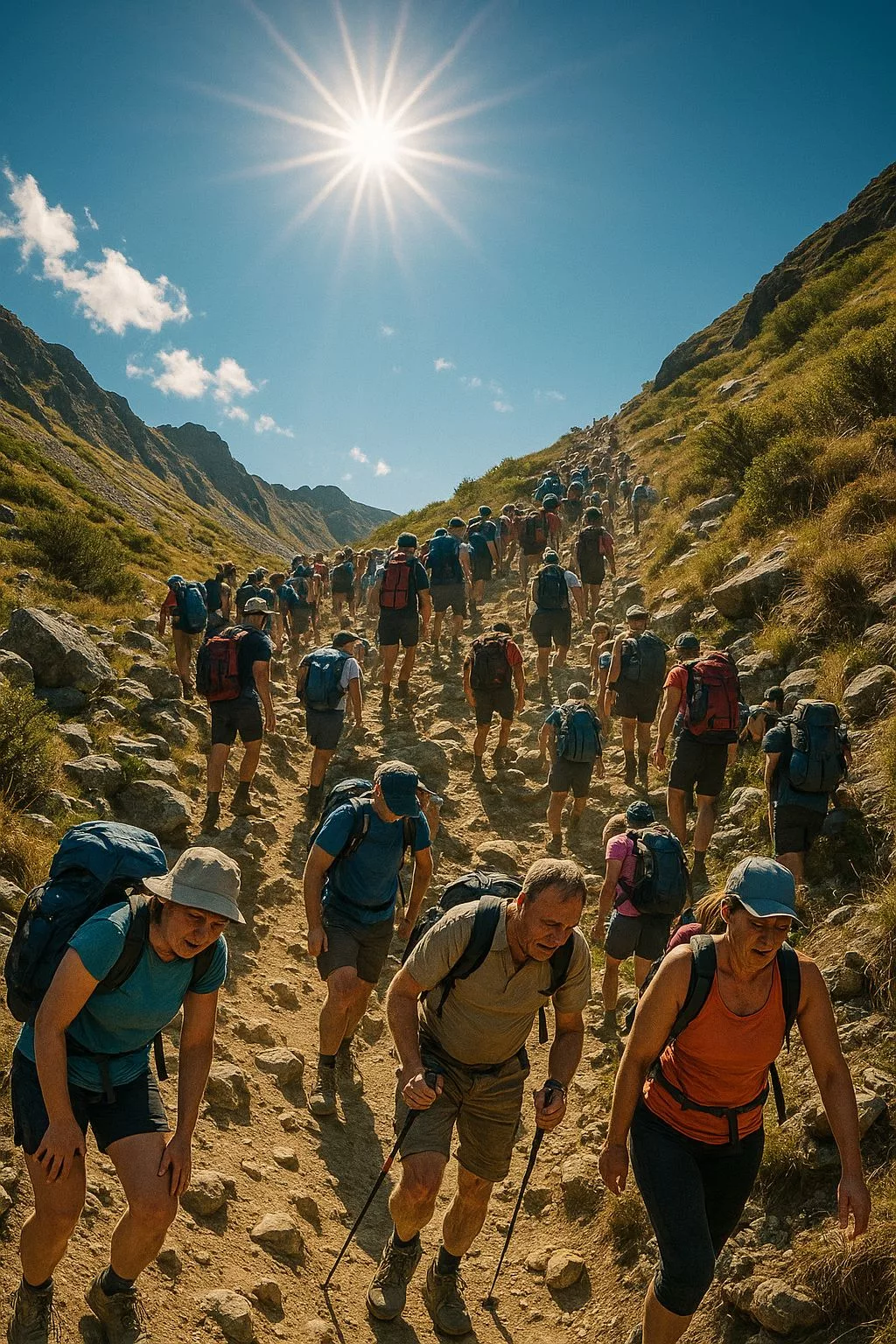
Between 15 December and 15 January the daily census rockets from 1 200 to well over 3 500 boots. Social-tagging surges at 17:30 when sunset chasers race the beacon, then slither back in darkness, batteries flat and head-torches forgotten in Uber cup-holders. A volunteer physiotherapist calls the crush “human-factor weather”: the moment rock, air and crowd synthesise a new, meaner climate.
Midday: Where the Mountain Tilts
Half-way up, Lion’s Head flips its personality. The lower contour – wide, pine-shaded, sandy – feels like a municipal lawn; Strava rarely clocks pulses above 110 bpm. Then you reach the saddle joining the peak to the Twelve Apostles and the ground tilts 35°. Width collapses to two feet, dune sand gives way to brittle, iron-stained quartzite, and the remaining 400 m horizontal becomes a vertical puzzle of rungs, chains and 200 m of exposure.
Because downhill traffic must face outward while yielding the rail to ascenders, the trail behaves like a single-server queue with no buffer. Drop a bottle, pause for TikTok, twist an ankle and the disturbance ricochets both ways. After eleven o’clock the northwest face radiates like a pizza oven; core temps sail past 38 °C precisely when finger strength matters most.
Rescuers recognise three escalating acts of this heat-theatre: the “pink flush” when cheeks glow but skin stays dry; the “belay stutter” when a climber forgets the sequence of hand-holds and asks the same question twice; and the “summit freeze” where peripheral vessels clamp and fingers stiffen despite 28 °C air. There is no alpine stream up top – only sticky fynbos resin that smells suspiciously like dagga – so medics ration 5 ml splashes over the radial arteries every half-minute, hoarding the rest for the walk-down.
Afternoon: Friction, Falcons and Frozen Water Bottles
Post-mortem notes reveal the German wore approach shoes with decade-old rubber. Above 40 °C, aged compounds skate across polished quartzite with the same grip as ice – coefficient below 0.3. Quietly, WSAR and local gear shops swap discounts for worn footwear; the soles are sliced and tested at the University of Cape Town to decide where crews should etch micro-grooves or extend staple landings. It is mountain redesign by failure analysis.
Wind is now measured by a temporary anemometer bolted to the summit cross. Gusts above 55 km/h make the chains hum like cello strings and ground the helicopter. Every phone pinging the Lion’s Head tower receives a “go / no-go” SMS in Afrikaans, English, isiXhosa and, newly, German – an addition lobbied by the consulate.
Veterans hike with one-litre bottles frozen rock-solid overnight; the melt-rate delivers zero-degree water at the exact moment core cooling is critical. GPS traces show that congestion forces hikers to cover 2.1 km of foot-on-ground to travel 1.4 km of map distance – extra metres that double the recommended 50 ml-per-kilometre ration. Meanwhile a private Instagram tag – #LHclosecall – maps 170 near-misses for every fatal fall; the hottest cluster sits twelve vertical metres below the beacon where 1890s adze scars still show as half-moons. A proposed via ferrata on the north face awaits environmental approval; the cliff hosts a pair of peregrine falcons that breakfast on dassies at dawn.
Rescuers carry red-filtered torches to preserve night vision, borrowed from astro-photographers who climb to shoot the Milky Way sliding over the city bowl. During full moon the beacon’s shadow creeps across Signal Hill at two millimetres per second, an improvised sundial against which dispatchers measure response. If wind stays under 45 km/h and the cable-car anemometer stays green, a helicopter can be on scene in twenty-two minutes; above that threshold six litter-bearers need two hours to the nearest tar.
International roaming can hijack emergency calls through maritime switchboards that have never heard of Lion’s Head. Dialling 112 and repeating “Cape Town mountain rescue” forces the local tower; operators keep crib-sheets of key words – Beinbruch instantly tells them a German caller has a broken leg.
And still the human rosary coils upward. Children begin in slops and finish duct-taped into strangers’ spare shoes; electrolyte sachets pass hand-to-hand like contraband. A portable speaker pounds 120 bpm afro-tech, masking the metallic clack of loosened rungs – rescuers list it as a hazard. At 11:47 a man in denim shorts tries to overtake on the outside of a chain traverse, torso cantilevered above a hundred-metre gulp. A WSAR spotter descending with the Yorkshire patient keys his radio and says one word: “Zebra.” He blocks the queue with his body, asks for sixty seconds. Denim complies; the ledger records nothing, but another potential headline is quietly subtracted from the mountain’s summer account.
What makes Lion’s Head dangerous, especially during peak season?
Lion’s Head becomes particularly dangerous during peak season due to a combination of factors: treacherous and narrow paths, extreme heat leading to heatstroke, and severe overcrowding. This often results in disorientation, falls, and medical emergencies, making rescues a frequent occurrence. The sheer volume of hikers (from 1,200 to over 3,500 daily between Dec 15 and Jan 15) exacerbates these issues, turning a scenic trail into a life-threatening ordeal.
What specific physical changes does the mountain undergo during the day that contribute to its danger?
As the day progresses, the mountain’s physical characteristics change significantly. From 7 AM to 10 AM, the quartzite expands due to heat, making the slope feel as though it’s pushing against boots. By midday, the mountain’s personality flips; the lower, shaded path gives way to a 35-degree incline with brittle, iron-stained quartzite. The northwest face radiates like a pizza oven after 11 AM, with core temperatures soaring past 38 °C, precisely when finger strength is crucial for navigating the chains and rungs.
What are the common types of accidents and medical emergencies experienced on Lion’s Head?
Hikers on Lion’s Head frequently experience disorientation, falls, and various medical emergencies. Examples include fatal falls from missteps, heatstroke (evidenced by symptoms like the “pink flush,” “belay stutter,” and “summit freeze”), and cardiac events such as high blood pressure. Dehydration is also a significant concern, especially given the extra distance hikers cover due to congestion and the lack of water sources on the upper slopes.
How does overcrowding impact safety on Lion’s Head?
Overcrowding significantly compromises safety by turning the narrow 60 cm trail into a single-lane choke point with zero slack. This congestion forces hikers to cover more ground than the map distance, increasing energy expenditure and dehydration risk. It also creates a