
A long history on the False Bay coast
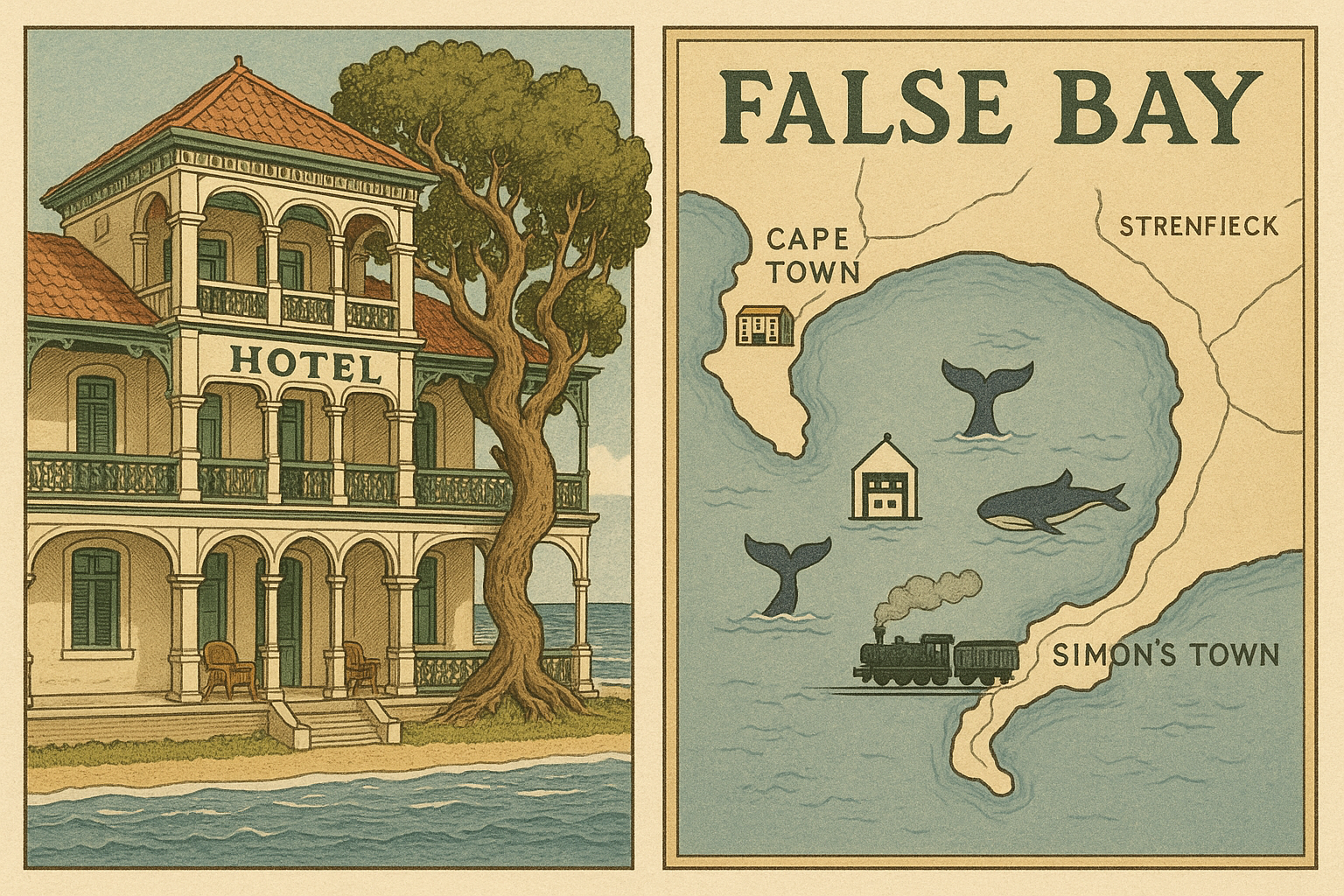
Discover Cape Town's oldest seaside hotel, beautifully restored on False Bay. Experience history, culinary delights, and unique charm.
The False Bay Hotel, an old inn from 1904, has truly come back to life! It's the oldest licensed seafront hotel in False Bay, Cape Town. This special place has seen whales, helped in World War II with a secret radar, and is now all about being green and helping its community. It's truly a hotel that refused to die, and it's ready for new stories.
What is The False Bay Hotel?
The False Bay Hotel is the oldest still-licensed seafront inn on False Bay, Cape Town, South Africa. Originally opened in 1904, it recently reopened after a restoration. Known for its unique history, including whale sightings, a secret radar in WWII, and a significant role in local culture, it now focuses on sustainable practices and community involvement.
Get Cape Town news in your inbox
Stay updated with the latest stories from the Mother City.
1. A Crescent That Forgives
Cape Town’s two coasts argue like rival siblings.
The Atlantic shore shouts: cliffs slam into surf, sunsets detonate in fuchsia shockwaves, kelp lashes the rocks like bullwhips.
Swing south, drive twenty minutes over the ridge, and the world exhales. False Bay stretches out a lazy arm of warmer, turquoise patience. Here the sand feels like sifted icing sugar, the southeaster loses its teeth, and the light spreads like melted butter across 30 kilometres of gentle curve. Between the railway line and the spring-tide mark, Victorian bathhouses sag gracefully, inter-war cottages lean seaward, and rusted anchors sprout geraniums.
It is inside this softer amphitheatre that the oldest still-licensed seafront inn on the bay tiptoed back to life. No billboards, no champagne-sabering influencers - just a quiet repaint in Pompeian red, the rehanging of brass numerals, and the sudden scent of steamed milk drifting from a kitchen that had been dark since 2018. One morning the tide licked a freshly gilded sign reading simply “The False Bay House,” and locals understood the conversation between building and ocean had resumed.
2. 1904: Railway, Salt and Whale-Sightings
When the hotel first unlocked its teak doors in November 1904, the Cape Town–Simon's Town railway had just doubled its weekend runs to cope with city dwellers hungry for ozone. A second-class return cost two shillings and sixpence - about a labourer’s daily wage - yet clerks, teachers and widowed shipping heiresses surrendered the coins gladly for the promise of “taking the air.”
Architect John Thomas Pratt sold the owner, retired tea planter Agnes Cloete, on a timber skeleton perched on brick pylons that would “flex with the salt instead of fighting it.” His blueprints angled the wrap-around veranda at 23° to harvest both dawn light and the prevailing breeze, crowned the roof with a turret for spotting whales, and floated a 70-seat dining hall around a single twelve-metre mahogany slab shipped from Glasgow.
The earliest guest registers read like a Cape roll-call: the Molteno reformists, the De Villiers Graaff wool dynasty, a 24-year-old medical student named Abdullah Abdurahman who would soon become the first person of colour elected to City Hall. They came for the heated seawater baths - rail tankers delivered 38-degree brine that was reheated in copper cauldrons - and for the thrill of electric bulbs powered by a coal-fed dynamo whose throb forced waiters to master lip-reading.
3. Jazz, Sharks and a Secret Radar
By the Roaring Twenties the hotel had sprouted an east wing where every chamber offered its own bath - an extravagance for South Africa at the time. Cast-iron lacework from Wolverhampton replaced weathered timber, and the turret gained an extra storey so that cocktail sippers could watch Union-Castle liners steam past the Point, timing their martinis to the five-o’clock siren.
In January 1930 London’s Daily Sketch splashed “Mermaid v. Monster” across page three after British actress Millicent “Bunny” Carew insisted a “fish the size of a double-decker” had launched her paddleboard skyward. Marine scientists later blamed a seven-gill cowshark, but the yarn seeded four decades of “Shark Week” revelry: midnight screenings of Jaws, themed dinners, and children queuing for cardboard dorsal fins.
War arrived in 1942 when the Union Defence Force commandeered the property. Waiters became cipher clerks, the mahogany table vanished under maps, and the turret housed a coastal-radar transceiver tracking U-boat silhouettes near Cape Point. Soldiers sandbagged the rose garden and poured a reinforced bunker that, come 1945, morphed into a wine cellar. During the recent restoration, builders found ration crates stamped “1943” and a bundle of love letters between two radar operators who later married and founded New Zealand’s first marine-electronics company.
4. Disco, Decline and Stubborn Hope
Post-war prosperity rerouted holidaymakers: cheap flights to Durban, highway billboards promising all-year sunshine. By 1975 occupancy limped along at thirty percent. Staff sawed the monumental dining slab into fragments to make room for an orange shag carpet and a mirror-ball. The tidal pool silted up; seagulls colonised sun-faded deckchairs.
Yet the place would not surrender. Retired teachers paid monthly rent for north-facing rooms, filling sketchbooks with pelican watercolours. Dawn fishermen brewed coffee on portable gas rings wedged against the seawall. Behind the bar, Jimmy “Two Seas” April kept a battered tin where regulars dropped coins for staff Christmas boxes; that same tin now rests under museum glass, exhaling the ghost of cane spirit and brine.
Rescue arrived as subtraction. Heritage architects stripped 1970s add-ons, revealed yellow-wood planks beneath disco flooring, and plucked the sun deck off the turret to expose Pratt’s 1903 galvanised rivets. Lime mortar mixed with crushed seashells re-pointed exterior walls, while under-floor heating coils and fibre-optic cables slipped invisibly beneath Victorian boards. The entire edifice now rests on cricket-ball-sized seismic isolators designed to shrug off a once-in-a-century storm surge.
5. Rooms, Bells and a Hidden Turret
Each of the 28 sleeping chambers borrows its name from a wreck visible from the window. “Arniston” still carries a hand-painted zodiac ceiling; headboards were carved from the ballroom’s scarred maple, every scuff preserved under clear resin. Bathrooms favour white terrazzo freckled with local quartz, their tap handles cast to mimic vintage train vents - yet they hide Toto toilets with heated seats, imported for the Tokyo whale-watchers who re-book the west wing every August.
At five sharp the salvaged bell from the Clan Stuart rings on the veranda, summoning neighbours to buy kitchen off-cuts: yellowtail collars for soup, octopus bits for curry, fish cheeks for cats. Prices appear in wax crayon; chalk, staff grumble, melts in the salt mist.
Officially the staircase leaps from Room 28 to 30 - Pratt hated prime numbers. Yet a linen-cupboard door disguises a spiral stair that climbs into the turret’s whale-lookout. The circular hideaway, unlisted on any website, rents by whispered password. Guests must keep the porthole open for the weathervane, log cetacean sightings in a waterproof ledger, and leave behind something that “floats.” The shelf already hosts a single ballet pump, a foil origami whaler and a vial of 1960s Chanel No. 5 that still leaks sunshine and memory.
6. Kelp, Bats and Tomorrow’s Tide
Climate projections say the bay could rise anywhere between 40 cm and 1.2 m by 2100. Instead of armouring the hotel with concrete, engineers sculpted a “sacrificial berm” disguised as a children’s rock-pool garden; every five years volunteers can lift the outer sandstone blocks and relay them higher up the slope, turning coastal defence into beach theatre. Two hundred metres offshore, local fishers tend rows of baby giant kelp that will weave themselves into a living breakwater, blunting storm surf while fattening wild abalone. The inn has pre-purchased a decade of harvest rights, ensuring tomorrow’s menus feature farmed sea greens rather than wild ones - an edible insurance policy.
Back on the veranda the 118-year-old whale-gum sheds curls of bark onto sun-bleached planks. Cape sugarbirds sip dawn nectar; at dusk silver-leaf bats dive toward gin-and-tonic glasses, hoovering 2 000 mosquitoes per guest per night. A freight train moans inland, the Roman Rock lighthouse blinks every fifteen seconds, and boulders under the foundations clack their “bones of the wreck” as the tide turns.
The building refuses to freeze in amber. Forty-four staffers own fifteen percent of the operation through a guest-funded equity trust; micro-loans at zero interest buy solar geysers for their homes or university fees for their children. The hotel, like the bay, survives by listening - adjusting, rising, forgiving.
What is The False Bay Hotel?
The False Bay Hotel is the oldest still-licensed seafront inn on False Bay, Cape Town, South Africa. Originally opened in 1904, it recently reopened after a restoration. Known for its unique history, including whale sightings, a secret radar in WWII, and a significant role in local culture, it now focuses on sustainable practices and community involvement.
Where is The False Bay Hotel located?
The False Bay Hotel is situated in False Bay, Cape Town, South Africa. It's located on the warmer, more tranquil side of Cape Town's coast, offering a gentle curve of sand and protection from the harsher Atlantic winds.
What is the history of The False Bay Hotel?
Opened in November 1904, the hotel was designed by John Thomas Pratt and built for Agnes Cloete. It quickly became a popular destination for city dwellers seeking fresh air and heated seawater baths. During World War II, it played a secret role as a coastal-radar transceiver. After a period of decline in the post-war era, it has now been meticulously restored, preserving its historical elements while integrating modern sustainability.
What unique features does the hotel offer?
The hotel boasts several unique features, including rooms named after shipwrecks visible from the windows, a salvaged bell from the Clan Stuart used to call neighbors for kitchen off-cuts, and a hidden spiral staircase leading to a whale-lookout turret that rents by whispered password. It also has a "sacrificial berm" disguised as a rock-pool garden for coastal defense and utilizes a living breakwater of kelp.
How is The False Bay Hotel committed to sustainability and community?
The hotel is deeply committed to sustainability, pre-purchasing a decade of harvest rights for farmed sea greens and implementing a dynamic coastal defense system that adapts to rising sea levels. For the community, 44 staffers own fifteen percent of the operation through a guest-funded equity trust, providing micro-loans for solar geysers or university fees for their children.
What kind of restoration efforts were undertaken?
The restoration involved stripping 1970s additions, revealing original yellow-wood planks, and re-pointing exterior walls with lime mortar mixed with crushed seashells. Modern amenities like under-floor heating and fiber-optic cables were discreetly integrated. The entire structure now rests on seismic isolators designed to withstand severe storm surges, ensuring its longevity.

Oliver Daniels is a Cape Town journalist who chronicles the intersection of food, migration and identity in South Africa's kitchens—from wood-fired Gugulethu braai spots to Constantia vineyards. Born and raised on the slopes of Devil’s Peak, he still starts each week with a dawn walk across Table Mountain to catch the first Atlantic light before filing copy.
View all articles →